 English
 العربية
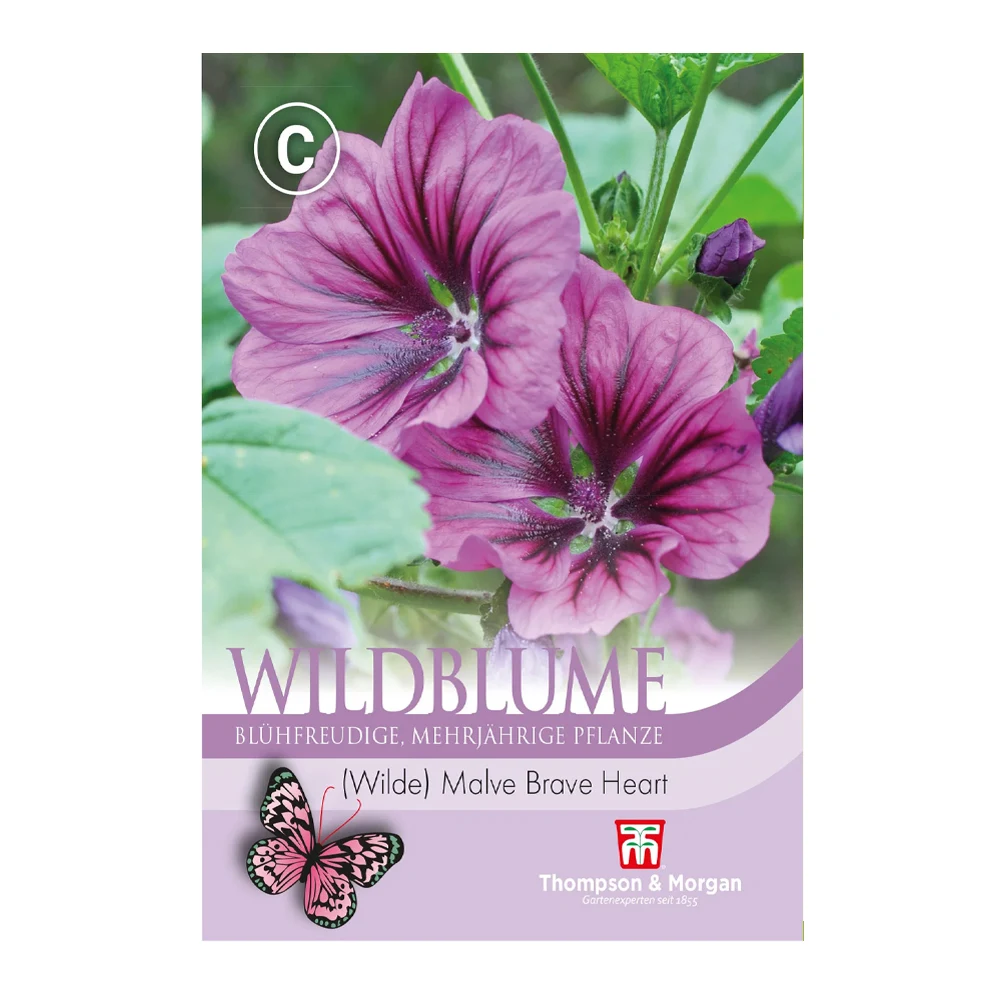
Malve Brave Heart
1,950 KWD
Malve Brave Heart is a wonderful herbaceous perennial often treated as an annual, bearing tall spikes of saucer-shaped, mauve-pink flowers with darker veining — fantastic for adding height to ornamental borders and an excellent cut flower whose blooms are extremely attractive to bees. Tall spikes of mauve-pink flowers veined in dark purple reaching 90–150 cm tall — one of the most striking vertical statements available from a cool-season sowing, combining the wild grace of the common mallow with a flower coloق and vein pattern of exceptional visual depth.
In stock
Malve Brave Heart Seeds
Mallow ‘Brave Heart’ (Malve sylvestris — Thompson & Morgan)
Malve sylvestris, the common mallow, is one of the oldest cultivated and recorded plants in human history. Its consumption has been reported to have originated as early as 3000 BCE. Archaeological studies in the region of Syria have shown the existence of Malve sylvestris seeds in dental calculus from human fossils, leading to the conclusion that the consumption of this species is longstanding, due both to it being an edible plant and to its possible medicinal properties.
The word mallow is derived from Old English mealwe, which was imported from Latin malva, cognate with Ancient Greek malakhē — both perhaps reflecting a broader Mediterranean term for the plant. This linguistic connection is particularly direct in French, where the flower gave its name to the color: the word mauve is simply the French version of malve — the color was named after the flower, not the other way round.
Malve sylvestris is native to Europe, North Africa, and Southwest Asia, growing throughout the Mediterranean basin. In folk medicine it has been administered to treat inflammatory conditions; as a culinary plant the young leaves are consumed raw in salads, while leaves and shoots are used in soups or consumed boiled. The Greeks and Romans claimed its emollient and laxative properties and several ethnobotanical surveys conducted in Europe highlight the potential of this neglected local resource — roots, shoots, leaves, flowers, fruits, and seeds are applied in infusions, decoctions, poultices, liniments, lotions, and gargles.
Brave Heart is a named cultivar selected by Thompson & Morgan for its exceptionally tall growth and deeply veined flower cooler. It produces tall spikes of mauve-pink flowers veined in dark purple, classified as a mallow and French hollyhock type. The lavender flowers carry dark purple veins — heat and drought tolerant with rich blooms for many months. The vein pattern of Brave Heart is one of its most distinctive qualities — the deep royal-purple lines that radiate from the center of each mauve-pink petal create a visual depth and complexity that solid-color flowers cannot achieve, and this intricate patterning is visible at distance, making the plant effective as a border statement even before individual blooms are examined closely.
Brave Heart is a cousin to the garden hollyhock with similar satiny flowers, bright mauve in color, with dramatic royal–purple stripes. The botanical relationship to the hollyhock (Alcea) is genuine — both belong to the color family and share the characteristic open funnel-shaped five-petalled flower form, the mucilaginous properties of the plant tissues, and the attractiveness to specialist mallow-feeding insects. The difference lies in habit: where hollyhocks produce a single stiff spike, Malva sylvestris produces a more branching, naturalistic flowering structure with blooms emerging from multiple stems simultaneously.
Brave Heart will reseed moderately once established. As a butterfly garden plant, the larvae of painted lady butterflies feed voraciously on this plant — and the blooms will also attract the adult butterflies.
Variety Details
- Botanical Name: Malve sylvestris
- Variety: ‘Brave Heart’ (also written ‘Braveheart’)
- Breeder: Thompson & Morgan (UK)
- Common Names: Mallow, Common Mallow, French Hollyhock, Mauritanian Mallow
- Origin of species: Native to Europe, North Africa, and Southwest Asia — Mediterranean basin
- Seed Type: Open pollinated
- Plant Type: Herbaceous perennial — usually grown as a hardy annual or biennial
- Family: Malvaceae
Key Features
- Thompson & Morgan variety — tall spikes to 90–150 cm, one of the tallest mallow cultivars available
- Mauve-pink flowers with dramatic deep royal-purple veining — color with exceptional visual depth
- Continuous flowering over many months — cut back after first flush for a second round of blooms
- Excellent cut flower — tall stems and long-lasting blooms
- Heat and drought tolerant — performs through warm spells in the cool season
- Fully edible — flowers and young leaves both culinary-grade with mild, pleasant flavor
- Outstanding pollinator value — nectar and pollen-rich blooms attract bees, butterflies, and beneficial insects
- Larvae of painted lady butterflies feed on the foliage — high wildlife value
- Moderate self-seeder — naturalizes reliably once established
- Fast germination: 14–21 days at 18–21°C
Plant Information
- Height: 90–150 cm
- Spread: 40–60 cm
- Plant Type: Herbaceous perennial grown as a hardy annual or biennial
- Habit: Tall, upright, branching — multiple flowering stems
- Flower Size: 4–5 cm across
- Flower Form: Saucer-shaped, open five-petalled
- Flower Color: Mauve pink with deep royal-purple veining
- Fragrance: None
- Foliage: Rounded, palmately lobed, rich dark green
Germination Instructions
- Sow Malve seeds from September to October for cool-season germination.
- Seed is best sown in a cold frame but can also be sown directly where the plants are to flower.
- Malve seed germinates quickly and easily, typically within 14 to 21 days at 18–21°C.
- For indoor propagation fill pots or trays with seed compost, soak well and then allow to drain.
- Sow at a depth of 6 mm, two to three seeds per cell, and thin to the strongest seedling once established.
- Keep the growing medium consistently moist throughout germination.
- Transplant to final position when seedlings have four to five true leaves, spacing 40–50 cm apart.
- Malve seedlings have a long taproot and do not like root disturbance — use individual pots rather than shared trays where possible and transplant carefully.
- In North African conditions, Malve sylvestris has an autumn-winter germination pattern with flowering from February to June — a natural seasonal behavior that aligns perfectly with Kuwait’s cool-season garden calendar and confirms the species’ suitability as a cool-season ornamental in Gulf conditions.
- For Kuwait: direct sow outdoors in October–November or start indoors in September.
- Kuwait’s moderate autumn temperatures are well within the germination range for Malve, and no special cold treatment is required.
- The species’ native Mediterranean and North African distribution mean it is climatically pre-adapted to conditions very similar to Kuwait’s cool season.
Growing Tips
- Grow Malve sylvestris ‘Brave Heart’ in moist but well-drained soil in full sun.
- When the first flowers are over, cut back the stems to encourage a second flush of blooms.
- The species is notably tolerant of poor, dry soils — heat and drought tolerant with rich blooms for many months.
- Water consistently during establishment but reduce once the plant is well rooted — overwatering encourages soft growth that is more susceptible to wind damage.
- Space plants at 40–50 cm to provide good air circulation.
- The tall stems of 90–150 cm may require light staking in exposed positions — insert a single bamboo cane at planting time and tie loosely as the plant grows.
- All species of Malve have edible leaves and a mild flavor making them a popular addition to salads.
- Mallow flowers are edible too and can be used as a sweet, decorative garnish for desserts such as jellies, mousses, or as decoration on a frosted cake.
- Deadhead or cut regularly to maintain continuous flowering. Leave a few seed heads at the end of the season to allow natural self-seeding.
Gulf Planting Season
- Direct sowing outdoors: October to November
- Indoor sowing: September, transplant October–November
- Peak flowering season: December to March
- Second flowering flush: April (if cut back after first flush)
- Note: Malve sylvestris is native to the Mediterranean and North African region where its natural germination occurs in autumn with flowering from late winter through spring — a seasonal pattern that maps directly onto Kuwait’s cool growing season.
- This natural climatic pre-adaptation makes Brave Heart one of the most reliable cool-season ornamentals in this catalogue for direct outdoor sowing in Kuwait, requiring no special germination setup.
- The species’ heat and drought tolerance means it will continue to perform through the transitional warm spells of late March and April better than many other cool-season annuals, extending the display season significantly.
- Once established, plants may self-seed moderately in subsequent seasons — an advantage for gardeners who want a self-renewing cool-season planting without re-sowing each year.
Garden & Floral Uses
- Brave Heart is a wonderful herbaceous perennial often treated as an annual, bearing tall spikes of saucer-shaped mauve-pink flowers with darker veining — fantastic for adding height to ornamental borders and an excellent cut flower.
- The 90–150 cm height makes it a natural back-of-border plant where its tall, multi-stemmed flowering spikes provide architectural presence and vertical movement through the cool season.
- In naturalistic and cottage-garden style plantings, Brave Heart’s branching, informal habit blends effectively with other tall cool-season ornamentals such as Benary’s Giant zinnia, cosmos, and sunflower — its mallow-family open flower form providing a structural contrast to the daisy-type composites that dominate cool-season planting.
- As a cut flower, the tall stems and continuous production of saucer-shaped blooms make Brave Heart excellent filler and feature material for mixed arrangements.
- The mauve-pink and deep purple vein color combination works particularly well with white, cream, and silver-foliage companions — white lisianthus, cream stock, and silver dusty miller create a sophisticated cool-toned arrangement in which
- Brave Heart provides both height and the most distinctive color element.
- The edible flowers and leaves of Malva sylvestris have been consumed since ancient times across the Mediterranean and Southwest Asia.
- In the Gulf kitchen, the young leaves can be added to salads or cooked as a leafy vegetable in the manner of spinach.
The flowers, with their striking, purple-veined mauve coloring, make visually dramatic garnishes for cold mezze dishes, soft cheese preparations, and dessert platters.
Only logged in customers who have purchased this product may leave a review.
Related Products
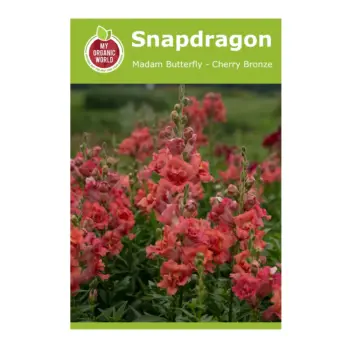
Madam Butterfly Cherry Bronze snapdragon produces elegant double azalea-like flowers in warm cherry bronze tones on tall plants about 60–75 cm. A premium variety for cutting gardens and ornamental borders.
Packet Size: Contains 25 seeds.
Repacked in Kuwait
In stock
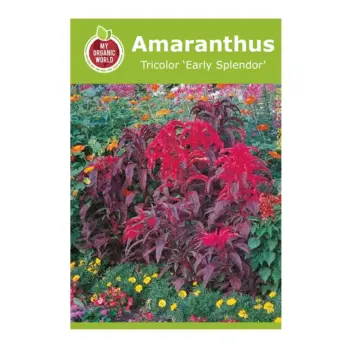
Amaranthus tricolor Early Splendor produces striking foliage in shades of deep red, burgundy, and green on upright plants about 60–90 cm tall. A colorful ornamental plant ideal for borders and landscape planting.
Repacked in Kuwait
Packet Size: Contains 100 seeds.
In stock
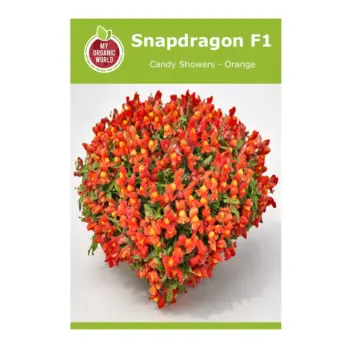
Candy Showers Orange snapdragon produces bright orange flowers on compact trailing plants about 15–25 cm tall. A colorful variety ideal for containers, hanging baskets, and garden borders.
Packet SizeL Contains 25 seeds.
Repacked in Kuwait
In stock
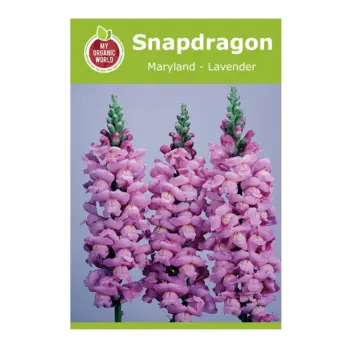
Snapdragon Maryland Lavender produces soft lavender flower spikes on strong plants about 100 cm tall. A refined variety ideal for cutting gardens and cool season borders.
Packet Size: Contains 25 seeds.
Repacked in Kuwait
In stock
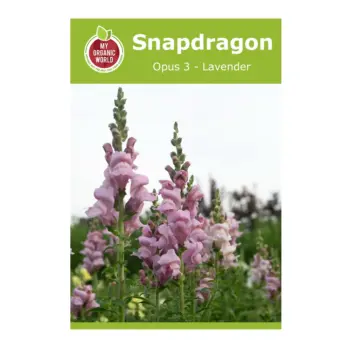
Snapdragon Opus 3 Lavender produces soft lavender flower spikes on compact to medium plants about 65 cm tall. An early flowering variety ideal for containers, borders, and uniform bedding displays.
Packet Size: Contains 25 seeds.
Repacked in Kuwait
In stock
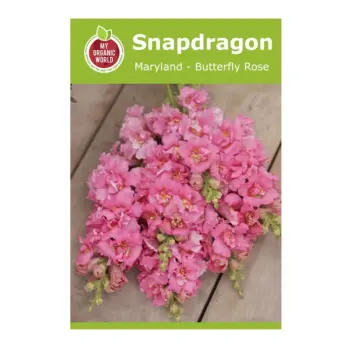
Snapdragon Madam Butterfly Rose produces elegant double azalea-like flowers in soft rose tones on tall plants about. A refined variety ideal for cutting gardens and ornamental borders.
Packet Size: Contains 25 seeds.
Repacked in Kuwait
In stock
Reviews
There are no reviews yet.