 English
 العربية
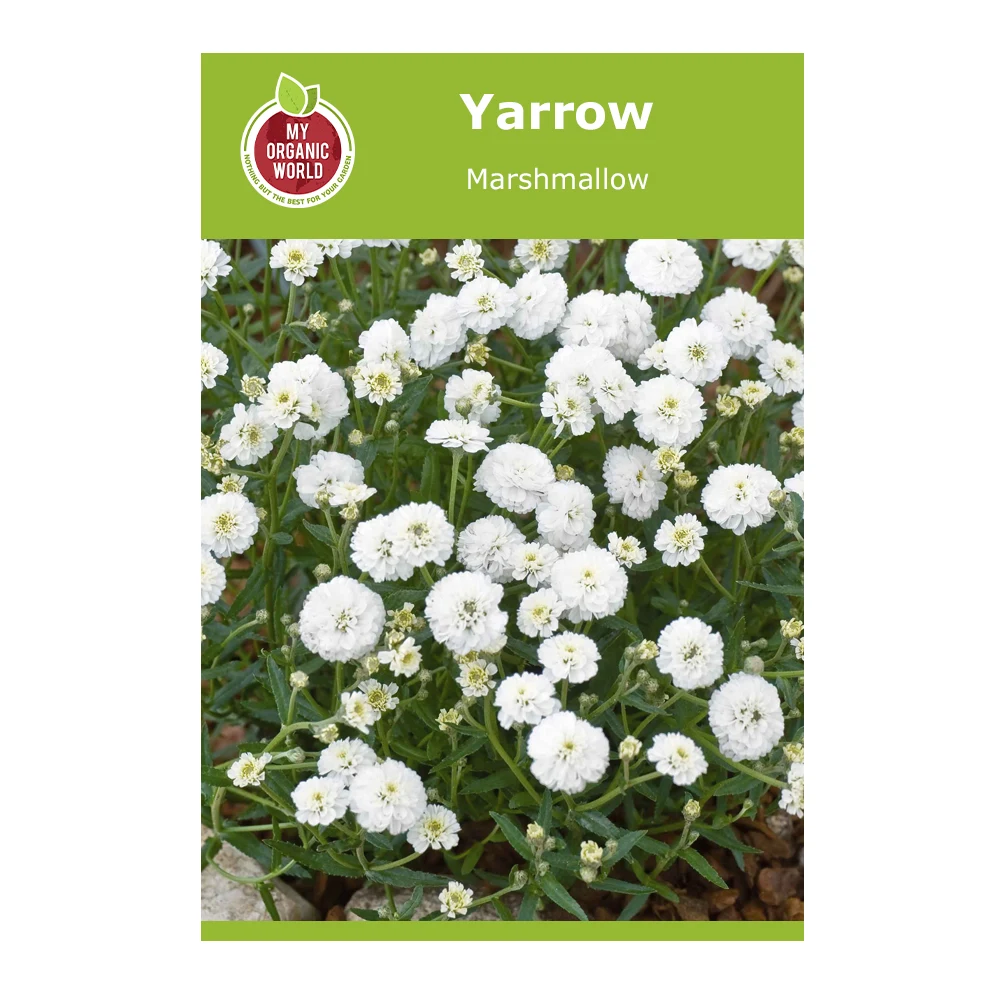
Yarrow Marshmallow
1,500 KWD
Yarrow Marshmallow the flowers look exactly like tiny marshmallows or popcorn buttons — a vigorous, cheerful plant that provides the essential white noise in a border, breaking up bold colors and knitting planting schemes together. Unmatched as a cut flower filler, lasting well in water and drying beautifully for winter arrangements. Achillea ptarmica ‘Marshmallow’ is a compact, clump-forming perennial known for its charming double creamy-white pom-pom-shaped flowers and slender green foliage — a favorite for cottage-style gardens and floral arrangements.
Repacked in Kuwait
Packet Size: Contains 25 seeds.
Only 1 left in stock
Yarrow Marshmallow Seed
(Achillea ptarmica — Sneezewort — Double White Pom-Pom Yarrow)
Yarrow Marshmallow is a fundamentally different plant from the two Achillea millefolium varieties elsewhere in this catalogue, despite sharing the same genus and common name. Achillea ptarmica is a different species from the common Yarrow Achillea millefolium. In the wild it is known as Sneezewort and grows in damp meadows — this means Marshmallow tolerates wetter soils much better than standard Yarrow.
The botanical and visual differences between the two species are significant: where Achillea millefolium has finely divided, feathery, fern-like foliage and broad flat-topped corymb flower heads, Achillea ptarmica has narrow, lance-shaped, slightly serrated leaves and small, individually rounded flower heads borne in loose branching clusters. The Marshmallow cultivar takes this naturally rounded flower head and doubles it — producing highly double white flowers on compact plants with a pom-pom appearance that gives the variety its evocative name.
This plant grows from rhizomes — underground stems — and will slowly spread to form a generous clump, giving plenty of material to divide and share after a few years. The rhizomatous habit distinguishes it further from Achillea millefolium, which is primarily a taproot-forming species. In a garden bed, established Marshmallow plants gradually expand laterally, creating an increasingly productive colony of flowering stems rather than a single fixed clump.
The practical value of Achillea ptarmica ‘Marshmallow’ in cut flower work has been recognized for generations. It is unmatched as a cut flower filler — lasting well in water and drying beautifully for winter arrangements. It provides the essential white noise in a border, breaking up bold colors and knitting planting schemes together.
The small, perfectly spherical double flower heads are precisely the size and form that works as a filler alongside larger focal flowers — big enough to be individually noticeable but small enough not to compete with the focal blooms. In white, this makes Marshmallow the yarrow equivalent of white gypsophila or white waxflower — but with the practical advantage of longer vase life and more structural integrity.
Bloom time is summer through autumn — June to September in northern European climates — with plants attracting bees, butterflies, and other pollinators. Special features include deer resistance and drought tolerance. The plant is an herbaceous hardy perennial in USDA Zones 3–8.
Variety Details
- Botanical Name: Achillea ptarmica
- Variety: ‘Marshmallow‘
- Common Names: Sneezewort, White Yarrow, Marshmallow Yarrow
- Important distinction: Achillea ptarmica — NOT Achillea millefolium — a different species with different flower form, foliage, and soil tolerance
- Seed Type: Open pollinated – pelleted
- Plant Type: Hardy perennial — flowers first year from seed if sown early
- Family: Asteraceae
- Growth habit: Rhizomatous — spreads gradually to form expanding clumps
- Flower Color: Double creamy-white — pom-pom form
Key Features
- Achillea ptarmica — not millefolium — completely different pom-pom flower form from flat-topped yarrow
- Double creamy-white spherical flowers resembling tiny marshmallows or popcorn buttons
- The essential white filler in the cutting garden — provides white noise between bold focal colors
- Unmatched as a cut flower filler — long vase life, dries beautifully, color-stable when dried
- Compact height of 50–70 cm with strong branching stems — high stem productivity per plant
- Rhizomatous spreader — forms expanding clumps, improving in productivity each season
- Tolerates wetter soils than Achillea millefolium — more forgiving in Kuwait’s irrigated beds
- Hardy perennial — first-year flowering if sown early, permanent garden feature
- Outstanding pollinator value
- Deer resistant
- Seeds require light to germinate — surface sow
Plant Information
- Height: 50–70 cm
- Spread: 40–50 cm (expanding with rhizome spread each season)
- Plant Type: Hardy perennial — first-year flowering if sown early
- Habit: Upright, branching, rhizomatous — expanding clump-forming
- Flower Form: Small double pom-pom — spherical, fully double, 1–2 cm across
- Flower Color: Double creamy-white
- Foliage: Narrow, lance-shaped, slightly serrated — different from feathery millefolium foliage
- Soil Tolerance: More moisture-tolerant than Achillea millefolium
- Vase Life: Good fresh — color-stable when dried
Germination Instructions
- Sow on compost surface — germinates in 1 week at 18–20°C. Light is required for germination.
- Surface sow onto moist, well-drained seed compost and press gently in without covering.
- Mist lightly or bottom water to avoid dislodging seeds.
- Maintain 18–20°C throughout germination.
- Once seedlings have two true leaves, transplant into individual 8 cm pots and grow on at 13–15°C before outdoor transplanting at 30–40 cm spacing.
- Note on cold stratification: yarrow seeds benefit from a cold period prior to planting — store seeds in a damp paper towel in a sealed plastic bag in the refrigerator for one month before sowing to improve germination uniformity.
- For Kuwait, this cold stratification is performed in the household refrigerator in August before the September sowing.
- For Kuwait: sow indoors in air-conditioned conditions in September for October–November transplanting. The earlier the sowing within the August–September window, the greater the chance of first-year flowering in December–January.
- As a perennial, plants established in the first cool season will return and improve in the second and subsequent seasons without re-sowing.
Growing Tips
- Grow in full sun to partial shade in moist but well-drained, loamy or clay soil.
- Unlike Achillea millefolium which prefers dry conditions, Achillea ptarmica tolerates and even prefers more moisture — though it remains drought tolerant once established.
- Deadhead to extend the bloom period.
- Divide every few years to maintain vigor and prevent the center from dying out — the rhizomatous spreading habit means divisions are readily available from the outer edges of established clumps.
- For cut flower harvest, cut when the majority of double flowers in the cluster are fully open but before pollen becomes visible.
- For drying, hang upside down in a warm airy place — the double white flowers retain their form and color well.
- In Kuwait’s irrigated raised beds where soil moisture is more controlled than in open ground, Marshmallow’s greater moisture tolerance compared to millefolium varieties makes it easier to integrate into mixed cutting beds without the underwatering concerns that affect the drier-preferring millefolium species.
Gulf Planting Season
- Indoor sowing with refrigerator pre-chilling (optional but recommended): August, sow September
- Germination indoors: September at 18–20°C
- Transplant outdoors: October–November
- Peak flowering season: December to March (first year if sown early)
- Perennial establishment: returns each cool season with increasing stem productivity
- Note: Yarrow Marshmallow is the only Achillea ptarmica in this catalogue and occupies a unique role that neither Flowerburst Red Shades nor Summer Berries Mix can fill — the white pom-pom filler.
- In the Kuwait cool-season cutting garden, all three yarrow varieties serve different and complementary functions: Flowerburst Red Shades provides bold warm-red flat corymbs, Summer Berries Mix provides soft multi-color flat corymbs, and Marshmallow provides the essential white pom-pom filler that ties every arrangement together.
- The three grown simultaneously in the same bed cover every structural and color need that yarrow-family flowers can provide to the cutting garden.
Garden & Floral Uses
- Marshmallow provides the essential white noise in a border — breaking up bold colors and knitting planting schemes together.
- It is unmatched as a cut flower filler, lasting well in water and drying beautifully for winter arrangements.
- The small spherical double flowers are the perfect scale for filler work — large enough to register individually in an arrangement but small enough to support rather than compete with larger focal flowers.
- In bouquets, a few stems of Marshmallow surrounded by lisianthus, ranunculus, anemone, and yarrow in stronger colors creates the visual breathing room that transforms a dense arrangement into something light and elegant.
- Larkspur and Delphinium: the tall solid blue spikes of these flowers rise beautifully out of the soft white cloud of Achillea ptarmica Marshmallow.
- Roses: the romance of roses is enhanced by the soft, informal nature of the white pom-poms.
- In the Kuwait garden, Marshmallow planted in groups of five or more at the back of a raised bed cutting garden alongside the red and colored yarrow varieties, Benary’s Giant zinnia, and ageratum creates a layered cutting garden that provides every structural element needed for mixed bouquet work — tall focal flowers, medium structural flowers, and the small-scale white filler that completes every arrangement.
Only logged in customers who have purchased this product may leave a review.
Related Products
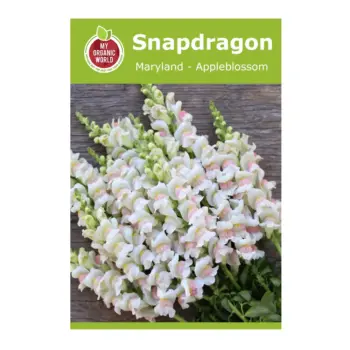
Snapdragon Maryland Appleblossom produces soft blush pink flowers with creamy tones on medium-tall plants about 100 cm. A refined variety ideal for cutting gardens and borders.
Packet Size: Contains 25 seeds.
Repacked in Kuwait
In stock
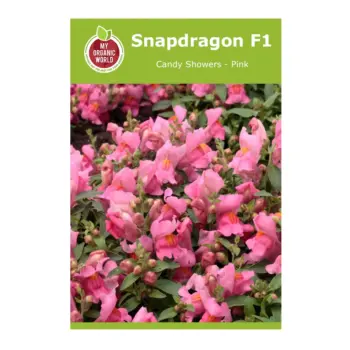
Candy Showers Pink snapdragon produces soft pink flowers on compact trailing plants about 15–25 cm tall. A colorful variety ideal for containers, hanging baskets, and garden borders.
Packet Size: Contains 25 seeds.
Repacked in Kuwait
In stock
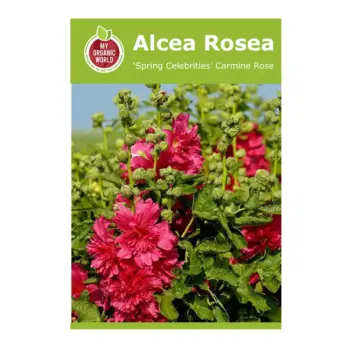
Spring Celebrities Carmine Rose hollyhock seeds, a striking dwarf hollyhock producing large, ruffled double blooms in brilliant carmine-rose shades from its first year. Compact habit makes it ideal for containers, small gardens, and raised bed plantings throughout the Gulf cool season.
Repacked in Kuwait
Packet Size: Contains 10 seeds.
In stock
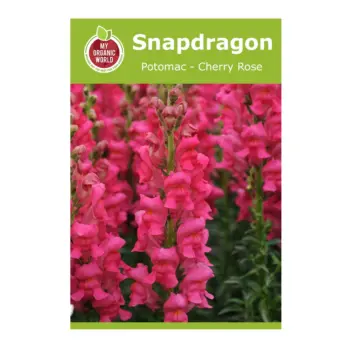
Snapdragon Potomac Cherry Rose produces strong upright spikes of cherry rose flowers on tall plants about 100–120 cm. A professional cut flower variety ideal for borders and cutting gardens.
Packet Size: Contains 25 seeds.
Repacked in Kuwait
In stock
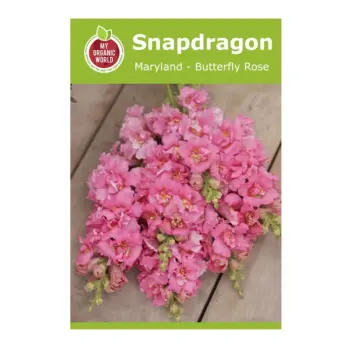
Snapdragon Madam Butterfly Rose produces elegant double azalea-like flowers in soft rose tones on tall plants about. A refined variety ideal for cutting gardens and ornamental borders.
Packet Size: Contains 25 seeds.
Repacked in Kuwait
In stock
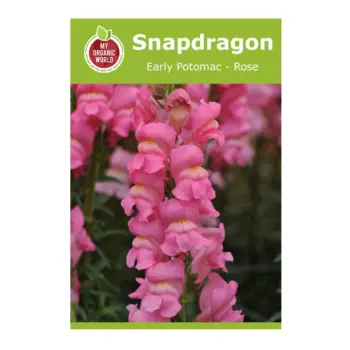
Early Potomac Rose snapdragon produces tall spikes of soft rose-pink flowers on strong stems about 100 cm tall. An excellent variety for cutting gardens, borders, and pollinator friendly plantings.
Packet Size: Contains 25 seeds.
Repacked in Kuwait
In stock
Reviews
There are no reviews yet.