 العربية
 English
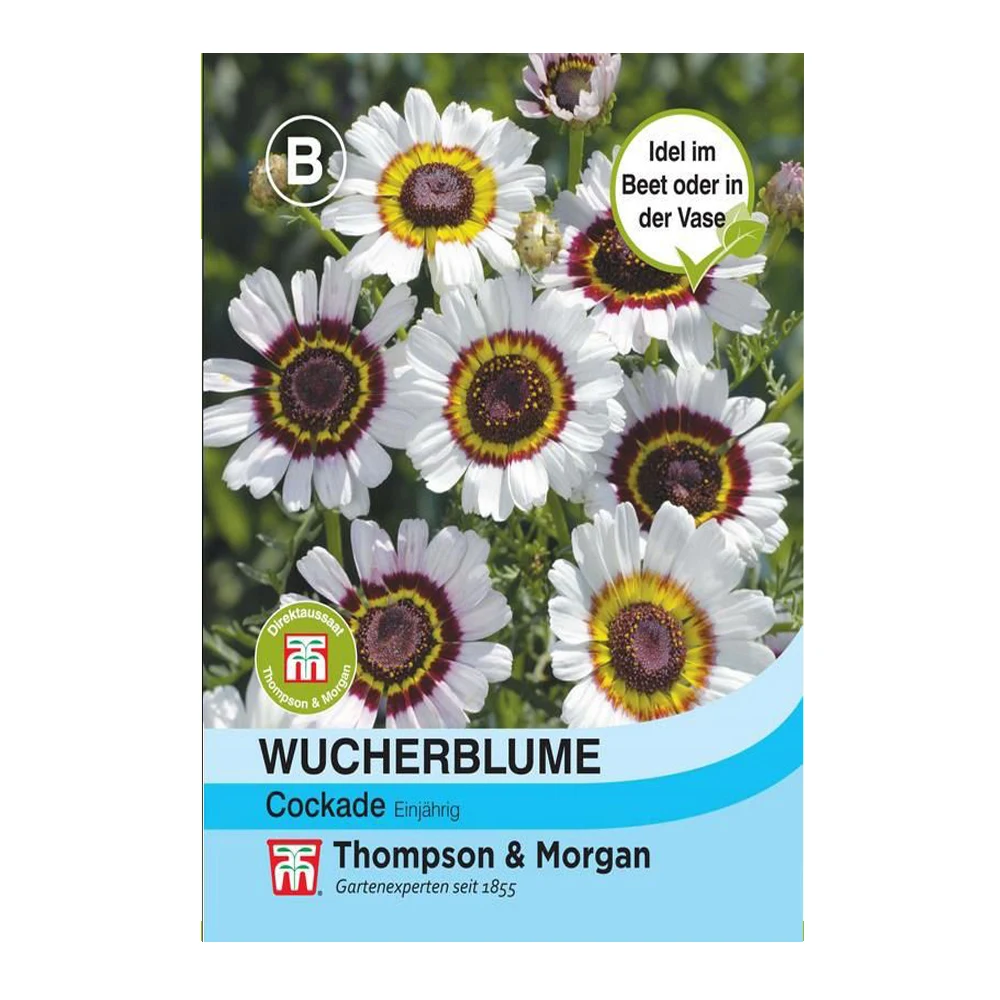
Chrysanthemum carinatum Cockade
1,950 د.ك
Chrysanthemum carinatum ‘Cockade’ seeds — the classic Tricolor Daisy from Morocco, producing bold white daisy flowers with a striking brown-red center ringed in yellow and red on strong upright stems to 70 cm. Hardy annual, excellent cut flower, outstanding pollinator value. Ideal for Kuwait cool-season borders, drifts, and cutting gardens.
نفدت الكمية
Chrysanthemum carinatum Cockade Seeds
Chrysanthemum carinatum ‘Cockade’ (Tricolor Daisy — Annual Painted Daisy)
Chrysanthemum carinatum ‘Cockade’ is one of the most visually dramatic hardy annuals available from seed — a plant whose flowers stop the eye from a considerable distance. Known as the Tricolor Daisy or Painted Daisy, it is an annual herbaceous plant native to Morocco and North Africa, where it grows on rocky slopes and disturbed ground in full sun. In cultivation it has been refined over generations into a series of named varieties, of which Cockade is among the most bold and structurally distinctive.
The Cockade Tricolor Daisy stands out from afar due to its pronounced color contrast. The white ray petals surround a brown-red heart circled in yellow and red — a color scheme that can vary among individual flowers within the same planting. This zoned, ringed pattern is the defining characteristic of the species as a whole: each blossom features a single row of ray flowers surrounding a dark reddish-brown to nearly black central disc, with the ray flowers displaying two, three, or more concentric rings of color. In Cockade, this pattern is expressed in its most graphic form — white outer petals, a warm yellow intermediate zone, and a deep brown-red center that resembles a bullseye or military cockade, from which the variety takes its name.
The stems are sturdy and upright, reaching 70 cm, with highly dissected leaves bearing linear segments that are slightly succulent and of a blue-green glaucous color. This glaucous foliage is a direct inheritance from the plant’s North African coastal origin, where the slightly waxy leaf surface reduces water loss in hot, dry conditions. It also provides attractive contrast to the vivid flower colors throughout the season.
The blossoms are borne just above the aromatic foliage of divided, fern-like, dark-green leaves. The flowers are produced continuously and in large numbers on well-branched plants, making Cockade one of the most reliable and long-flowering of the cool-season annuals suited to the Gulf garden. It has been cultivated for its edible young shoots in China and is valued across different cultures both as an ornamental and as a cut flower. The long vase life and strong stems make it commercially viable for small-scale cut flower production as well as home arrangements.
Taxonomically, this plant has undergone several reclassifications. Its current accepted botanical name is Ismelia carinata, with synonyms including Chrysanthemum carinatum and Glebionis carinata. It is the sole species in the genus Ismelia. In the horticultural trade it continues to be sold under the familiar name Chrysanthemum carinatum, which remains widely understood and used.
Variety Details
- Botanical Name: Chrysanthemum carinatum (syn. Ismelia carinata, Glebionis carinata)
- Variety: ‘Cockade Common Names: Tricolor Daisy, Painted Daisy, Annual Chrysanthemum, Summer Chrysanthemum
- Family: Asteraceae
- Origin: Morocco, North Africa
- Seed Type: Open pollinated
- Plant Type: Hardy annual
Key Features
- Dramatic tricolor flower pattern: white outer petals, yellow intermediate ring, deep brown-red center
Bold, graphic bullseye pattern visible from a considerable distance - Strong upright stems to 70 cm — excellent cut flower with good vase life
- Glaucous blue-green fern-like foliage provides ornamental value throughout the season
- Continuous, prolific flowering over an extended season
- Highly attractive to bees, butterflies, and beneficial insects
- Hardy annual — tolerates cool temperatures and light frost
- Tolerates poor to moderately fertile, well-drained soils
- Fast germination: 7 days at optimal temperature
- Caution: known skin and eye irritant — handle with care and wash hands after contact
Plant Information
- Height: Up to 70 cm
- Spread: Up to 40 cm
- Plant Type: Hardy annual
- Habit: Upright, well-branched, bushy
- Flower Size: Up to 7 cm across
- Flower Form: Single daisy with concentric color zones
- Foliage: Finely divided, fern-like, blue-green glaucous, slightly aromatic
Germination Instructions
- Germination occurs within 7 days when seeds are placed on the surface of damp germination paper or seed compost at 15°C in darkness.
- Sow seeds 6 mm deep in good quality seed compost, cover lightly, and maintain consistent moisture throughout the germination period.
- Do not allow the compost to dry out before germination.
- For direct outdoor sowing, prepare the ground to a fine tilth, sow in rows 23 cm apart at 6 mm depth, and thin seedlings to 15 cm apart when large enough to handle.
- For indoor sowing, transplant into individual 7 cm pots once seedlings have developed two or three true leaves and grow on before planting out at final spacing of 30–40 cm.
- Germination rate: approximately 85%.
Growing Tips
- Grow in full sun in well-drained soil of moderate to poor fertility.
- Like most North African natives, Cockade performs best when the soil is not over-enriched — excessive nitrogen produces lush foliage at the expense of flower production.
- The plant is compact and bushy, and the blossoms are borne continuously throughout the season — deadheading faded flowers regularly prolongs the flowering period significantly.
- Water regularly until fully established, then reduce to moderate irrigation.
- Good air circulation between plants reduces the risk of fungal issues in humid or still-air conditions — maintain the recommended spacing of 30–40 cm. Handle plants and seeds with gloves as the foliage is a known skin and eye irritant in some individuals.
- Pinching young plants at 15–20 cm encourages bushier, more heavily branching growth and increases overall flower production.
Gulf Planting Season
- Indoor sowing (seed trays): September to mid-October
- Transplant outdoors: mid-October to November
- Direct sowing outdoors: October to November
- Peak flowering season: November to March
- Note: Chrysanthemum carinatum is native to North Africa and is climatically well-suited to Kuwait’s cool season. It performs equally well in direct sowing and transplanting.
- In Kuwait’s sandy, well-draining soils and cool-season temperatures, it will establish rapidly and flower prolifically from November onward.
- The glaucous, drought-adapted foliage is a natural advantage in the Gulf environment, and plants will tolerate the brief warm spells that occasionally occur in the middle of the cool season without significant setback.
Garden & Floral Uses
- Cockade is a lovely choice for borders, flower beds, and containers, and its long-lasting flowers are excellent in fresh-cut arrangements.
- It is also well suited to cottage gardens, wildlife gardens, and naturalistic mass plantings where the bold flower pattern creates maximum visual impact.
- The strong, straight stems and long vase life make it one of the most practical cool-season cut flowers available from direct-sown seed, with no staking or special support required.
- In the garden it works beautifully in large drifts where the tricolor pattern multiplies into a tapestry effect, as well as in mixed annual borders where its upright habit and bold flower form contrast effectively with softer, more airy plants such as cosmos and nigella.
- It is highly attractive to bees, butterflies, and hoverflies, making it a valuable addition to any pollinator-focused planting scheme.
فقط العملاء الذين قاموا بتسجيل الدخول للموقه وقاموا بشراء هذا المنتج يمكنهم اضافه تقييم.
منتجات ذات صلة
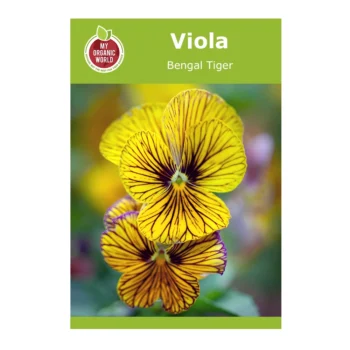
Viola Cornuta Bengal Tiger seeds. Exciting yellow flowers with dark brown tiger stripes.
Early and free-flowering, great for small vases.
Compact plants bloom from early winter to spring.
Start indoors now for fall/winter planting. Prefers cool, moist soil, full/part sun.
Repacked in Kuwait
Packet 20 seeds
متوفر في المخزون
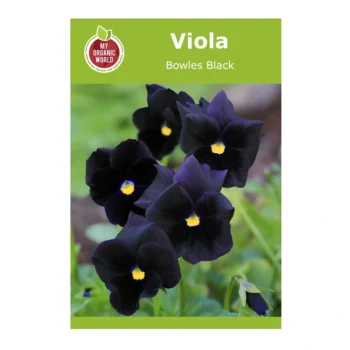
Viola Cornuta Bowles Black seeds. Charming antique pansy with deep purple to black flowers and a yellow eye.
Great for beds, pots, and rock gardens.
Start indoors for fall/winter/spring blooms.
Surface sow, full to part sun.
Repacked in Kuwait
Packet 25 seeds
متوفر في المخزون
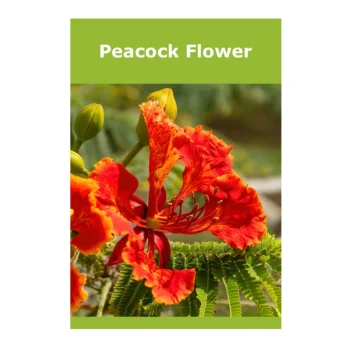
Grow vibrant orange tropical beauty with Peacock Flower seeds!
These easy-to-cultivate plants produce flamboyant orange blooms that attract butterflies and hummingbirds. Perfect for adding an exotic touch to warm climate gardens.
فقط 1 متبقي في المخزون
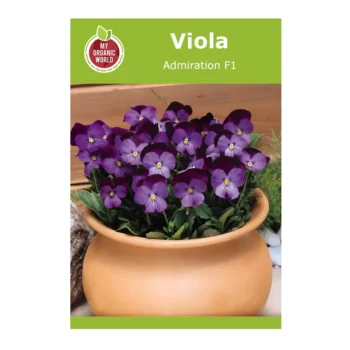
Viola Cornuta Admiration F1 seeds produce large, deep navy blue flowers with yellow eyes.
Great for cut flowers with long vase life. Attracts butterflies, bees, and birds.
Low maintenance and easy to grow in full sun to partial shade.
Ideal for beds, baskets, containers, and ground cover.
Repacked in Kuwait
Packet 50 seeds
متوفر في المخزون
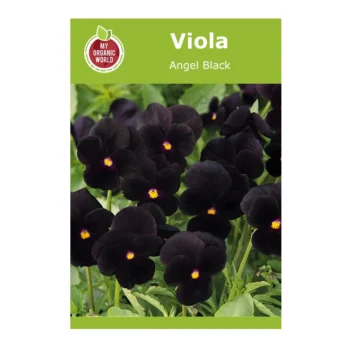
Viola Angel Black seeds. Captivating viola with velvety, almost black blooms.
Adds drama to gardens/containers.
Compact, prolific bloomer in cool seasons.
Plant in late fall for winter/spring blooms. Partial shade. Cover seeds to germinate.
Repacked in Kuwait
Packet 25 seeds
فقط 1 متبقي في المخزون
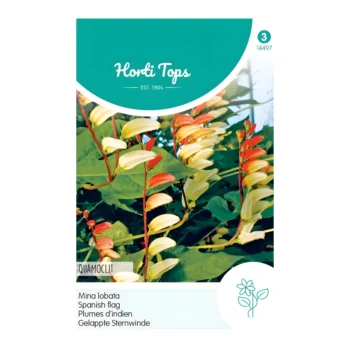
Quamoclit Lobed Star Winds seeds: fast-growing climbing vine, bicolored scarlet/yellow star flowers, reaches 6.5 ft.
فقط 1 متبقي في المخزون
التقييمات
لا توجد تقييمات حتى الآن.