 العربية
 English
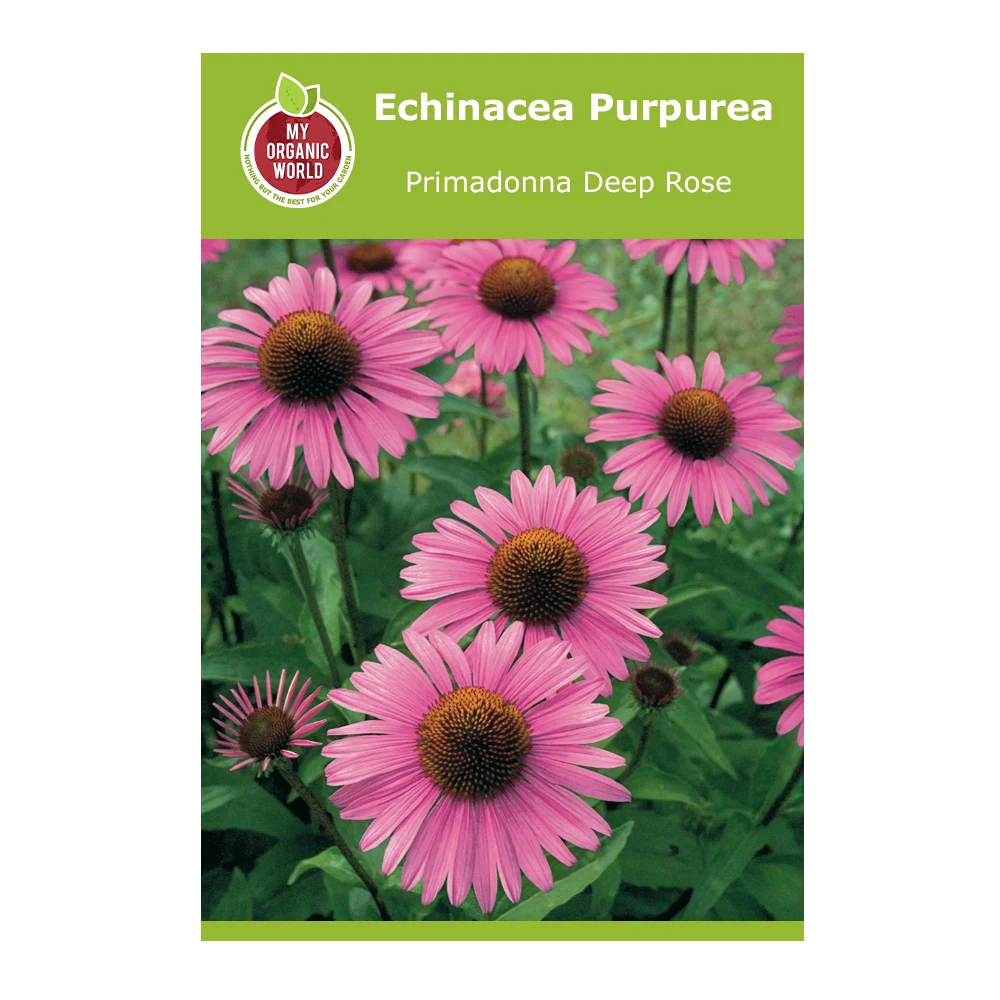
Echinacea Purpurea Primadonna Deep Rose
1,500 د.ك
Echinacea purpurea Primadonna Deep Rose is a professional-grade perennial coneflower — widely regarded by professional growers as the finest Echinacea variety for cut flower production. It produces large, fragrant, deep rose-pink flowers of 12–15 cm diameter with slightly drooping ray petals surrounding prominent dark orange-brown center cones, on strong self-supporting stems reaching 75 cm. Heat and drought tolerant once established, long-lived, and highly attractive to bees and butterflies.
Packet Size: Contains 20 seeds.
Repacked in Kuwait
نفدت الكمية
Echinacea Purpurea Primadonna Deep Rose Seeds
(Purple Coneflower — Deep Rose)
Echinacea purpurea, known as Purple Coneflower, is a prairie native from North America in the Asteraceae family — one of the most beloved and versatile perennials in the garden, valued equally for its ornamental beauty, its proven medicinal properties, its exceptional value to pollinators, and its outstanding performance as a long-lasting cut flower.
Primadonna Deep Rose is the premium selection within this species, bred by Benary to deliver full, vigorous and floriferous plants with clear single colors in a warm, deep rose tone that is both striking in the garden and highly sought-after in floral design.
Many professional growers consider Primadonna Deep Rose to be the best Echinacea to grow for cut flowers — a testament to the variety’s superior stem quality, flower size, and overall reliability. Large flowers reaching 12–15 cm in diameter feature slightly drooping deep rose rays with rounded, dark orange-brown center cones, held on sturdy, well-branched stems that do not need staking.
Primadonna Deep Rose is a German cultivar with abundant large and fragrant deep rose-colored flowers, heat and drought tolerant, and grows easily in average, dry to medium, well-drained soil in full sun to part shade. The fragrance of the flowers is a distinguishing quality — faintly sweet and honey-like — that makes cut stems particularly pleasant indoors. The dark orange-brown central cone provides a bold textural contrast to the rose petals and becomes an ornamental feature in its own right as the season progresses, remaining architecturally attractive even as a dried seed head through autumn.
As a perennial, Echinacea forms dense, long-lived clumps that expand over time and can be divided every 4–5 years. Plants that are allowed to self-seed will naturalize in the garden and return reliably season after season. The flowers attract bees, butterflies, and other beneficial pollinators throughout the blooming period, and goldfinches and other seed-eating birds will visit the dried cone heads in autumn for the seeds.
An important note for Gulf growers: Echinacea purpurea is a perennial that benefits from a cold vernalization period to achieve full flowering in its first season. Without a cold period of several weeks below 10°C, flowering in the first year will be limited, though the plant will establish and grow.
In the Gulf, where natural winter temperatures are mild, plants sown in autumn will grow through the cool season and may produce some flowers in late winter to spring, but full second-year flowering will be more generous and robust. For growers who want first-year flowering, starting seeds in a cooler environment (indoors with some cold treatment) or accepting limited first-season blooms while plants establish is the practical approach.
Variety Details
- Variety: Primadonna Deep Rose
- Series: Primadonna
- Breeder: Benary (Germany)
- Family: Asteraceae
- Flower color: Deep rose-pink
- Flower diameter: 12–15 cm
- Petal form: Slightly drooping ray florets — characteristic Echinacea silhouette
- Center cone: Dark orange-brown, prominent and rounded
- Height: 75–85 cm
- Spread: 45 cm
- Fragrance: Faint sweet honey-like fragrance
- Best uses: Cut flower, perennial border, bedding, landscape, pollinator garden, medicinal herb garden
- Germination: 10–14 days at 20–22°C with light
Key Features
- Regarded by professional growers as the best Echinacea for cut flower production.
- Large fragrant deep rose-pink flowers of 12–15 cm diameter.
- Strong self-supporting stems to 75 cm — no staking required.
- Full, vigorous, floriferous plants from Benary — professional-grade breeding.
- Heat and drought tolerant once established.
- Long-lived perennial — forms dense, expanding clumps over time.
- Outstanding pollinator plant — attracts bees and butterflies throughout bloom period.
- Seed heads attractive through autumn — architectural garden feature.
- Both fresh cut and dried flower use.
- Medicinal heritage — Echinacea purpurea is the most widely cultivated medicinal species in the genus.
Plant Information
- Height: 75–85 cm
- Spread: 45 cm
- Plant type: Perennial (hardy zones 3b–8b; grown as long-lived annual in Gulf)
- Family: Asteraceae
- Habit: Upright, clump-forming, well-branched
- Fragrance: Faint sweet, honey-like
- Sun: Full sun to partial shade; best in full sun
- Soil: Average to fertile, well-drained soil, pH 6.0–6.5 — tolerates poor and dry soils
- Water: Regular watering to establish; drought tolerant once established
- Spacing: 45–60 cm apart
Seed Germination
- Seed depth: Surface sow or very light cover — seeds require light to germinate
- Germination time: 10–14 days at 20–22°C
- Ideal germination temperature: 20–22°C
- Surface sow on moist, fine, well-drained seed-starting compost at 20–22°C.
- Cover very lightly or leave uncovered as light aids germination.
- Keep consistently moist throughout germination. Supplemental lighting during germination speeds germination and improves uniformity.
- Do not overwater — keep evenly moist but not saturated.
Growing Tips
- Sow Primadonna Deep Rose seeds on the surface of a fine, moist, sterile seed-starting compost at 20–22°C. Cover very lightly or leave uncovered.
- Keep consistently moist in a bright, warm position. Germination takes 10–14 days. Supplemental lighting during germination improves speed and uniformity.
- Once seedlings develop their third pair of true leaves, transplant into individual 10 cm pots or containers.
- Grow on at a cooler temperature of 10–13°C to encourage strong, compact growth.
- Feed weekly with a balanced calcium nitrate fertilizer at 100–200 ppm nitrogen once established.
- Transplant to final garden position or large containers at 45–60 cm spacing in full sun to partial shade in well-drained, fertile soil.
- Echinacea tolerates poor soil and drought once established — avoid overly rich or wet conditions which can promote fungal disease.
- No staking required.
- Deadhead spent blooms regularly to encourage continuous new flower production throughout the season.
- Leave some flower heads at the end of the season to self-seed and to provide seed for wildlife.
- Divide established clumps every 4–5 years in early autumn or spring to maintain vigor.
- For cut flower use, harvest stems when the central cone is fully formed and at least half of the ray petals are open.
- Place immediately in clean water.
- Echinacea is a good fresh cut flower with a vase life of 7–10 days, and also dries well when hung upside down.
- In Gulf conditions, plants sown in September–October will establish through the cool season and produce their first flowers in late winter to early spring. Full perennial performance improves in the second year if plants are kept in the ground or in large containers year-round.
Gulf Planting Season
- Best sowing time in the Gulf: September–October (indoors)
- Transplanting: November
- Expected first flowering: February–April (limited first year; fuller from second year onward)
- Note: Echinacea is a perennial — plants that survive and establish through the Gulf summer in a sheltered, well-watered position will deliver significantly better flowering in the second season.
- Drought tolerance supports Gulf summer survival with minimal care.
Garden and Floral Uses
- Cut flowers — best Echinacea variety for professional cut flower production
- Mixed bouquets — warm rose tones pair with rudbeckia, lavender, and cottage garden flowers
- Perennial borders and beds
- Cottage and wildflower gardens
- Pollinator gardens — outstanding for bees and butterflies
- Medicinal herb garden — Echinacea purpurea is a leading immune-support herb
- Dried flowers and architectural seed heads
فقط العملاء الذين قاموا بتسجيل الدخول للموقه وقاموا بشراء هذا المنتج يمكنهم اضافه تقييم.
منتجات ذات صلة
Madam Butterfly Cherry Bronze snapdragon produces elegant double azalea-like flowers in warm cherry bronze tones on tall plants about 60–75 cm. A premium variety for cutting gardens and ornamental borders.
Packet Size: Contains 25 seeds.
Repacked in Kuwait
متوفر في المخزون
Candy Showers Pink snapdragon produces soft pink flowers on compact trailing plants about 15–25 cm tall. A colorful variety ideal for containers, hanging baskets, and garden borders.
Packet Size: Contains 25 seeds.
Repacked in Kuwait
متوفر في المخزون
Snapdragon Maryland True Pink produces clear true pink flower spikes on strong plants about 100 cm tall. A reliable variety for cutting gardens and bright border displays.
Packet Size: Contains 25 seeds.
Repacked in Kuwait
متوفر في المخزون
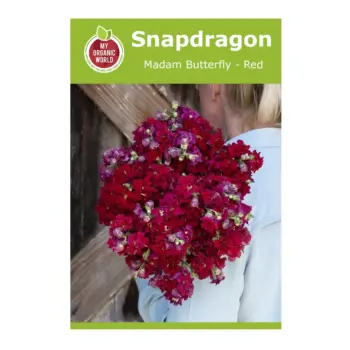
Snapdragon Madam Butterfly Red produces rich red double azalea-like flowers on tall plants about 60–75 cm. A striking variety ideal for cutting gardens and ornamental borders.
Packet Size: Contains 25 seeds.
Repacked in Kuwait
متوفر في المخزون
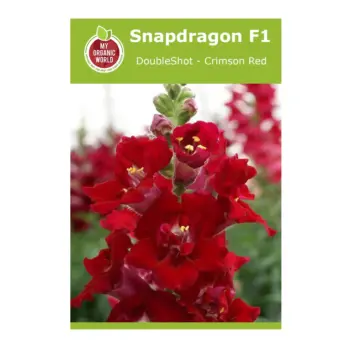
Snapdragon F1 DoubleShot Crimson Red produces deep crimson red double flowers on compact plants about 45–50 cm tall. A colorful variety suitable for containers, borders, and cool season garden displays.
Packet Size: Contains 25 seeds
Repacked in Kuwait
متوفر في المخزون
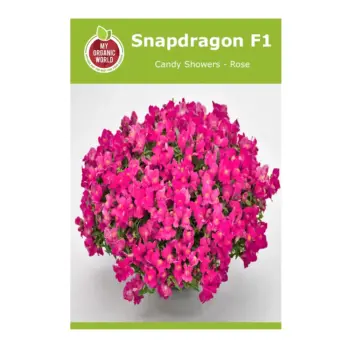
Candy Showers Rose snapdragon produces rose pink flowers on compact trailing plants about 15–25 cm tall. A colorful variety ideal for containers, hanging baskets, and garden borders.
Packet Size: Contains 25 seeds.
Repacked in Kuwait
متوفر في المخزون
التقييمات
لا توجد تقييمات حتى الآن.