 العربية
 English
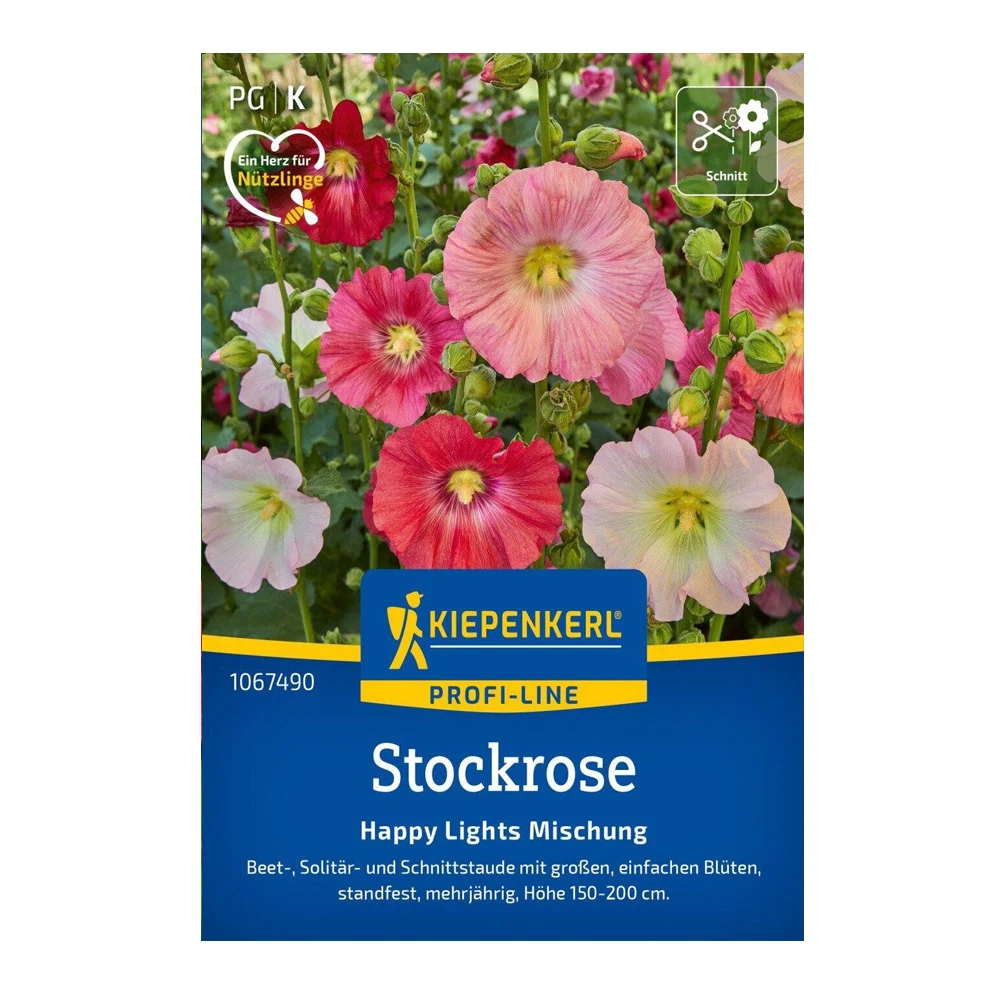
Hollyhock Happy Lights Mix Seeds
1,950 د.ك
Hollyhock Happy Lights Mix is a reported by multiple seed sources, including Park Seed, to have won Europe’s highest seed award for its unique colour range and rust resistance.” — the Fig-leaved or Antwerp Hollyhock — a substantially more robust, rust-resistant, and longer-lived plant than the common hollyhock Alcea rosea. Alcea ficifolia is a lesser-known hollyhock species native to Siberia, introduced at the end of the 16th century and commonly known as the Antwerp or Fig-leaved Hollyhock due to its attractive, unusual palmate foliage. It is a substantially more robust plant than the common hollyhock and unlike the biennial forms which produce a single spire, Alcea ficifolia produces many upright stems emerging from the base, resulting in a bushy form. It is considered a perennial and will act like one if cut back after blooming and is shown to have the best levels of resistance to rust. Happy Lights Mix delivers a bold blend of white, yellow, pink, red, purple, copper, and bronze single flowers on tall plants of 150–210 cm — the most structurally significant variety in any cool-season border planting.
نفدت الكمية
Hollyhock Happy Lights Mix Seeds
(Alcea ficifolia — Fig-leaved Hollyhock — Antwerp Hollyhock)
Hollyhock Happy Lights Mix is an Alcea ficifolia — the Fig-leaved Hollyhock, also known as the Antwerp Hollyhock — a hardy perennial hollyhock species botanically and horticulturally distinct from the more commonly grown Alcea rosea.
The distinction matters: where Alcea rosea is a biennial producing a single flowering spire in its second year before dying, Alcea ficifolia is a true short-lived perennial that produces multiple upright stems from the base simultaneously, creating a bushy, multi-stemmed plant of considerably greater visual presence and productivity. Alcea ficifolia perennializes very well, especially if the flower stalk is cut off after the majority of the blossoms have gone to seed.
Happy Lights Mix — recognized for its unique color range as an old-fashioned, rust-resistant variety that flowers the first year if sown early. The cooler range of Happy Lights Mix — white, yellow, pink, red, purple, copper, and bronze — covers the full warm and cool spectrum available within the hollyhock genus and includes the copper and bronze tones that are characteristic of the Alcea ficifolia species and are not found in standard Alcea rosea mixes. These warm metallic tones are among the most distinctive and sought-after colors in cottage garden planting.
The defining horticultural advantage of Alcea ficifolia over Alcea rosea is rust resistance. Hollyhock rust — caused by the fungal pathogen Phragmidium alceae — is the most common and damaging disease of the common hollyhock, producing orange-brown pustules on the undersides of leaves that progressively defoliate the plant and reduce flowering.
Happy Lights has been developed to be more resistant to rust disease, which often infects and disfigures the leaves of hollyhocks. In Kuwait’s warm, dry climate, the risk of fungal rust is lower than in temperate humid European conditions, but the structural robustness and multi-stem perennial habit of Alcea ficifolia remain significant advantages over Alcea rosea in terms of plant longevity and flowering productivity across the cool season.
The plants grow to around 150–200 cm tall and produce large, single saucer-shaped flowers that are 8 to 12 cm (3 to 5 in) wide. The flowers open in succession from the base of each stem upward — the characteristic hollyhock flowering pattern that ensures the stem is never fully in bloom at one moment but provides a sustained progression of open flowers across the full stem length over several weeks. This sequential flowering habit makes Happy Lights Mix one of the most long-lasting flowering plants in the cool-season garden, with individual plants remaining in active flower for 6 to 10 weeks.
Variety Detail
- Botanical Name: Alcea ficifolia × rosea (natural hybrid)
- Common Names: Fig-leaved Hollyhock — Antwerp Hollyhock
- Variety: Happy Lights Mix
- Breeder: Kiepenkerl
- Award: Reported European seed award winner for unique colour range and rust resistance — cited by multiple seed sources including Park Seed
- Seed Type: Open-pollinated
- Plant Type: Short-lived hardy perennial — flowers first year from early sowing
- Family: Malvaceae
- Native: Alcea ficifolia parent native to Siberia
- Habit: Multi-stemmed, bushy, tall upright — multiple spires from base — wind-sturdy habit confirmed by Kiepenkerl
- Height: 150–200 cm
- Spread: 60–75 cm
- Flower Form: Single, open-faced, saucer-shaped — 8–12 cm diameter
- Flower Colours: White, pink, red, and soft cream — warm blend as shown on Kiepenkerl packet
- Foliage: Rounded to slightly lobed — characteristic of the ficifolia × rosea hybrid
- Pollinator Certification: Kiepenkerl certified beneficial insect habitat
- Edible: Flowers and young leaves edible
- Uses: Bedding, specimen planting, cut flower — Beet-, Suitable as a specimen plant — effective as a standalone visual accent- and (confirmed Kiepenkerl)
- Germination: 10–21 days at 18–21°C
Key Features
- Kiepenkerl — professional German seed
- Reported European seed award winner for unique color range and rust resistance — cited by Park Seed and multiple specialist seed sources
- Kiepenkerl certified beneficial insect and pollinator habitat
- Alcea ficifolia × rosea natural hybrid — combines rust resistance and multi-stem perennial habit with broader color range
- Standfest — wind-sturdy habit confirmed by Kiepenkerl; more structurally stable than standard hollyhocks
- Multi-stemmed bushy perennial habit — multiple upright spires from the base versus single spire of Alcea rosea biennial
- Outstanding rust resistance — best rust resistance in the hollyhock genus
- Warm color blend — white, pink, red, and soft cream as shown on Kiepenkerl packet
- large, single open-faced flowers 8–12 cm confirmed by Kiepenkerl
- Sequential bottom-to-top flowering — sustained 6–10-week flowering display per stem
- Flower first year from early sowing
- Self-seeding — naturalizes in suitable garden conditions
- Outstanding cut flower performance — Schnitt confirmed on Kiepenkerl packet; tall sturdy standfest stems
- Perennial character confirmed by Kiepenkerl
- Heat tolerant — confirmed by multiple sources
Plant Information
- Height: 150–210 cm
- Spread: 60–75 cm
- Plant Type: Short-lived hardy perennial — self-seeding, flowers first year from early sowing
- Habit: Multi-stemmed, bushy, tall upright — multiple flowering spires from base simultaneously
- Flower Form: Single, open-faced, saucer-shaped — 8–12 cm diameter; 5 overlapping rounded petals
- Flower Colors: White, yellow, pink, red, purple, copper, and bronze
- Foliage: Deeply lobed, palmate — fig-like; larger and more ornamental than Alcea rosea
- Flowering Pattern: Sequential bottom-to-top along each stem — sustained open display for 6–10 weeks
- Edible: Flowers and young leaves
Germination Instructions
- Sow seeds on the surface of moist, well-drained seed compost mixed 50:50 with vermiculite or perlite and cover with a fine light sprinkling of compost or vermiculite — approximately 3–6 mm.
- Seeds can be sown at any time of year except early to mid-summer as too much heat can result in spindly plants.
- For best results, sow indoors 6–8 weeks before transplanting. Keep at a temperature of 18–21°C until germination.
- Germination occurs within 10–21 days.
- Once seedlings are large enough to handle, transplant into individual 9 cm pots and grow on in bright light.
- Harden off gradually before planting out.
- Space plants 30–45 cm apart — hollyhocks love rich soil; dress the soil around them with compost, rotted or mushroom manure, or seaweed.
- To encourage first-year flowering, sow as early as possible — plants sown in July to August in Kuwait will have sufficient vegetative development to flower in the cool season. Direct sowing into the final position is viable but indoor sowing gives a 4–6-week advantage for first-year flowering.
Growing Tips
- Happy Lights Mix thrives in full sun to partial shade in rich, moist but well-drained soil.
- Unlike the nasturtiums and wallflowers in this catalogue, Alcea ficifolia actively benefits from fertile, well-amended soil — incorporate compost and a balanced organic fertilizer before planting and top-dress annually.
- Plant in areas where the soils are fertile and well-drained as it is not tolerant of saturated, wet soils.
- Water consistently during establishment and during active flowering; once the root system is established, the plant is more drought-tolerant but performs best with regular moisture.
- In Kuwait’s conditions, mulching around the base of the plant helps retain soil moisture and keep root temperatures manageable during warmer spells in February and March.
- Stake plants in exposed or windy positions — the tall stems of 150–210 cm is susceptible to wind damage before they anchor fully.
- Deadhead to prolong the flowering season.
- To encourage self-sown seedlings for the subsequent season, allow some blossoms on the stalks to form seed pods.
- At the end of the flowering season, cut the main flower stalks back to the base to encourage perennial regrowth — do not remove the basal foliage rosette, which is the overwintering growth point.
- Happy Lights Mix will self-sow reliably in suitable Kuwait microclimates, providing successive seasons of flowering without replanting.
Gulf Planting Season
- Sow indoors: July to early August
- Transplant to final outdoor positions: Late September to October
- Peak flowering season: November to March
- Note: Happy Lights Mix is the most structurally significant variety in this catalogue and the only one providing vertical height above 120 cm in the cool-season planting scheme.
- In Kuwait’s garden context — where walls, fences, and building facades are available as backdrop structures — Alcea ficifolia planted in October along south-facing walls will establish through the mild early cool season and reach full height by December, providing a backdrop of 150–210 cm that defines the entire planting composition behind it.
- The multi-stemmed perennial habit of Alcea ficifolia means plants established in the first season have the potential to return in subsequent cool seasons from the perennial root crown, particularly in Kuwait’s sheltered microenvironments.
- Self-sown seedlings from seed pods allowed to ripen at season end will germinate in early autumn, providing a self-perpetuating colony of hollyhocks that naturalizes progressively into the garden’s permanent structure without annual replanting.
Companion Planting
- Alcea ficifolia Happy Lights attracts bees, butterflies, and hummingbirds, making it an excellent addition to pollinator gardens.
- The large single open-faced flowers of Happy Lights Mix provide one of the most accessible pollen and nectar sources of any plant in this catalogue — the open saucer form with no petal barrier allows bumblebees, honeybees, and butterflies to access the central reproductive structures immediately.
- The tall vertical structure of Happy Lights Mix, reaching 150–210 cm, creates a physical backdrop that shelters lower-growing companion plants, moderates wind exposure, and provides visual height that anchors the entire planting composition.
- In Kuwait’s cool-season kitchen garden, Happy Lights Mix planted along the back wall or fence line provides structure, pollinator support, and cut flower material simultaneously.
- Ideal companions at lower levels include cosmos, snapdragons, lisianthus, and wallflowers, where the hollyhock’s height provides the vertical anchor for a multi-tiered planting composition.
Garden & Culinary Uses
- Happy Lights Mix is suited to back-of-border planting, cottage garden walls and fences, cut flower production, and naturalistic self-seeding garden displays.
- It is the tallest and most structurally dominant variety in this catalogue — at 150–210 cm it provides the vertical scale that no other cool-season annual or biennial in the collection can match.
- The multi-stemmed bushy habit of Alcea ficifolia means Happy Lights Mix provides this height across a wider footprint than a single-spire biennial hollyhock, creating a genuine backdrop planting rather than isolated vertical accents.
- As a cut flower, the tall sturdy stems and sequential flowering habit of Happy Lights Mix provide long-lasting material for large-scale arrangements — individual stems in active flower carry 5 to 8 simultaneously open blooms at different stages of development, providing a graduated display of colour and form from base to tip.
- Harvest stems when the lowest 2–3 flowers are fully open, strip lower leaves, and place immediately in deep water.
- Vase life of 5–7 days is reliable when harvested at the correct stage.
- To encourage self-sown seedlings for the subsequent season, allow some blossoms on the stalks to form seed pods.
- In Kuwait’s warm-climate microenvironments — sheltered south-facing walls, protected courtyard spaces — Happy Lights Mix has strong potential to self-sow and return across multiple seasons without replanting, progressively naturalizing into the garden’s permanent structure in the way that old-fashioned cottage garden hollyhocks have always done.
- As an edible plant, both the flowers and young leaves of Alcea ficifolia are edible with a mild, slightly mucilaginous flavor characteristic of the Malvaceous family.
- Petals can be used as plate garnishes, scattered over salads, or crystallized for confectionery use.
- The flowers are most flavorful when harvested fully open in the morning.
فقط العملاء الذين قاموا بتسجيل الدخول للموقه وقاموا بشراء هذا المنتج يمكنهم اضافه تقييم.
منتجات ذات صلة
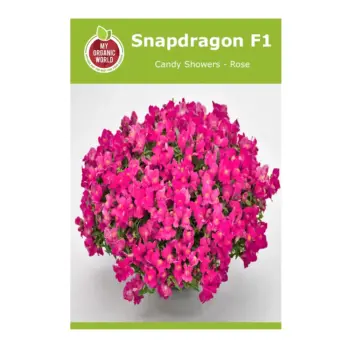
Candy Showers Rose snapdragon produces rose pink flowers on compact trailing plants about 15–25 cm tall. A colorful variety ideal for containers, hanging baskets, and garden borders.
Packet Size: Contains 25 seeds.
Repacked in Kuwait
متوفر في المخزون
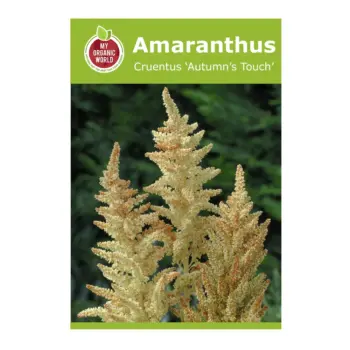
Amaranthus Cruentus Autumn’s Touch A tall 100 cm high, architectural annual producing large, feathery upright plumes that open in soft apple-green then deepen through pistachio, buff, and peach to rich bronze-copper tones as the season matures. Bold vertical accent for borders, outstanding as a fresh and dried cut flower, and edible from leaf to seed.
Repacked in Kuwait
Packet Size: Contains 250 seeds.
متوفر في المخزون
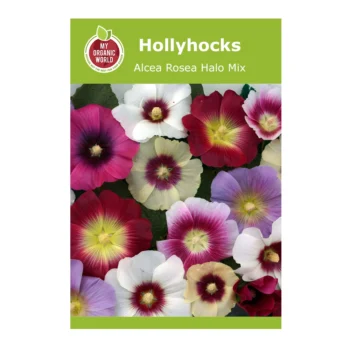
Alcea Rosea Halo Mix seeds. Tall Hollyhock with extra-large, two-tone blooms in a glorious color mix.
Blooms first year, hardy, attracts butterflies. Great for cut flowers.
Direct sow now in full sun, moist soil.
Repacked in Kuwait
Packet 10 Seeds
فقط 2 متبقي في المخزون
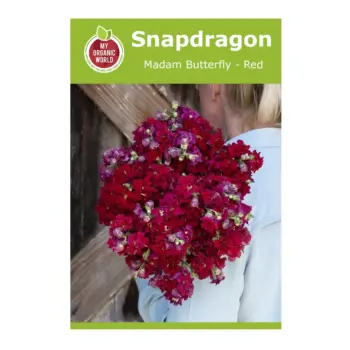
Snapdragon Madam Butterfly Red produces rich red double azalea-like flowers on tall plants about 60–75 cm. A striking variety ideal for cutting gardens and ornamental borders.
Packet Size: Contains 25 seeds.
Repacked in Kuwait
متوفر في المخزون
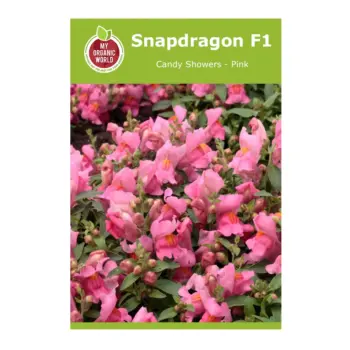
Candy Showers Pink snapdragon produces soft pink flowers on compact trailing plants about 15–25 cm tall. A colorful variety ideal for containers, hanging baskets, and garden borders.
Packet Size: Contains 25 seeds.
Repacked in Kuwait
متوفر في المخزون
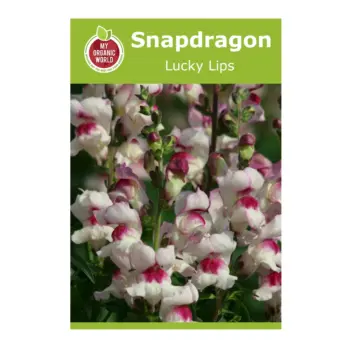
Lucky Lips snapdragon produces unique white flowers with rose red markings on compact plants about 45–60 cm tall. A striking variety suitable for containers, borders, and colorful garden displays.
Packet Size: Contains 100 Seeds.
Repacked in Kuwait
متوفر في المخزون
التقييمات
لا توجد تقييمات حتى الآن.