 العربية
 English
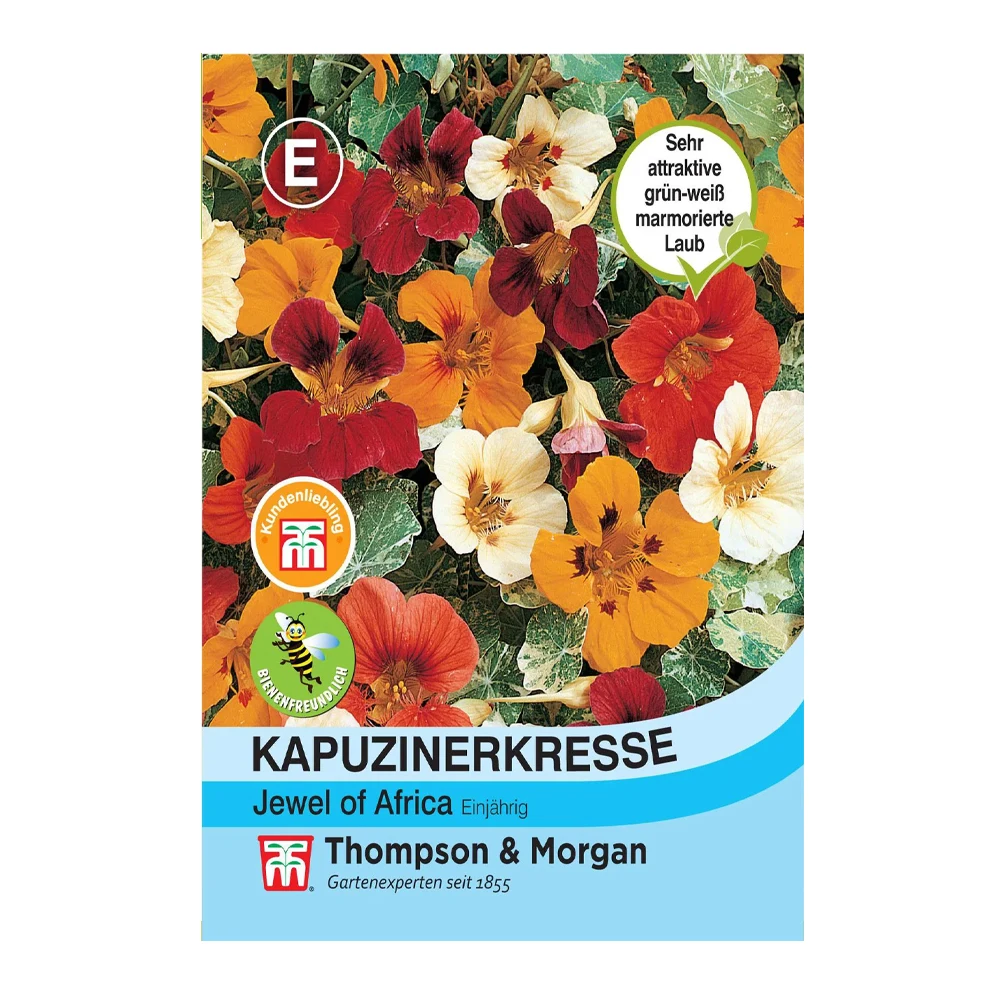
Nasturtium Jewel of Africa seeds
1,750 د.ك
Nasturtium Jewel, of Africa is the original variegated climbing nasturtium, bred by Thompson & Morgan, producing a vivid mixture of yellow, red, cream, and peach-pink single flowers above boldly cream-marbled and striped foliage. A vigorous, fast-growing annual that climbs, trails, and cascades with equal ease — and every part of the plant is edible.
نفدت الكمية
Nasturtium Jewel of Africa seeds
Tropaeolum majus ‘Jewel of Africa’ (Climbing Variegated Nasturtium Mix)
Jewel of Africa is a landmark variety in the world of nasturtiums — the original climbing nasturtium with white-striped and marbled variegated foliage, producing an abundance of edible flowers in a full range of colors including unusual strawberry-red and bronze shades. It is a Thompson & Morgan own-breeding variety — a balanced mixture of yellows, reds, creams, and peach-pinks with foliage attractively marbled and striped with cream against a light green background.
What sets Jewel of Africa apart from all other nasturtiums is the foliage. The large, rounded leaves carry the distinctive lily-pad shape characteristic of the species but are overlaid with irregular cream marbling and striping that makes each leaf unique. No two leaves will be just alike, and the flowers are almost as unpredictable — cream, yellow, peachy pink, and scarlet all on a single plant, many with blotches or markings near the base of the petals. The effect is of a living tapestry that provides ornamental interest even before the first flower appears.
Occasionally some plants may produce pure green foliage; many but not all will develop variegation at a later stage. This is a natural characteristic of the variety and not a defect — the variegation is genetically unstable in a small percentage of seedlings, which adds to the naturalistic, slightly unpredictable charm of the plant.
Jewel of Africa is fully edible from root to tip. The peppery flavor of the leaves and colorful flowers will enrich salads, and the unripe seeds can be used like capers — delicious combined with cream cheese or butter in canapés. This dual ornamental and culinary value make it one of the most versatile plants available for the Gulf kitchen garden.
As a climber, the plant is vigorous and fast-growing. It can reach up to 240 cm in height with a spread of up to 150 cm. It is equally effective as a trailer in hanging baskets and large containers, as ground cover, or trained up trellises and fences.
Variety Details
- Botanical Name: Tropaeolum majus
- Variety: ‘Jewel of Africa’
- Breeder: Thompson & Morgan (UK)
- Flower Type: Single, open-faced
- Seed Type: Open pollinated mix
- Plant Type: Hardy annual
- Habit: Climbing / trailing / ground cover
Key Features
- Thompson & Morgan original breeding — the first and most celebrated variegated climbing nasturtium
- Unique cream-marbled and striped variegated foliage, no two leaves alike
- Rich multicolor flower mix: yellow, red, cream, peach-pink, strawberry-red, and bronze shades
- Fully edible — flowers, leaves, and unripe seeds all culinary-grade
- Vigorous climber reaching up to 240 cm, equally effective as trailer or ground cover
- Fast germination: 7–14 days
- Tolerates poor soil — rich soil reduces flower production
- Strong pollinator value attracts bees, butterflies, and beneficial insects
- Naturally repels aphids and whitefly when planted near vegetables
Plant Information
- Height: Up to 240 cm (climbing with support)
- Spread: Up to 150 cm
- Plant Type: Hardy annual
- Habit: Climbing, trailing, or ground cover
- Flower Size: Approximately 5 cm across
- Foliage: Variegated — cream-marbled and striped on light green
Germination Instructions
- Nasturtiums resent root disturbance and are best sown directly into their final position wherever possible.
- Sow seeds 13–20 mm deep in moist, well-drained soil.
- Germination usually takes 7–12 days depending on temperature.
- Seeds must be covered — they do not require light to germinate.
- For earlier flowering, sow 1 cm deep with 3 seeds per 7.5 cm pot in free-draining, damp seed compost and place at 20–29°C until after germination.
- Thin or transplant very carefully once seedlings reach 5–8 cm, disturbing roots as little as possible.
- Final spacing: 30–45 cm between plants.
Growing Tips
- Avoid rich soil — it encourages excessive foliage growth at the expense of flowers.
- Nasturtiums perform best and flower most freely in poor to moderately fertile, well-drained soil. Water regularly during establishment but reduce once plants are growing well — they are drought-tolerant once established and overwatering promotes lush green growth over blooming.
- Provide a trellis, fence, or wire support for climbing plants and guide young shoots in the desired direction early.
- For trailing use in containers, ensure the pot has excellent drainage.
- Deadhead spent flowers regularly to maintain continuous blooming. In Kuwait’s warmest months, partial afternoon shade will help extend the season.
Gulf Planting Season
- Direct sow outdoors: October to November
- Indoor sowing (pots): September to October, transplant carefully at 5–8 cm height
- Peak flowering season: November to March
- Note: Direct sowing is strongly preferred as nasturtiums dislike root disturbance. Sow directly into the final growing position in October for the best results.
- Avoid sowing during Kuwait’s summer heat — seeds will fail to germinate above 30°C. In mild winters, plants may continue flowering well into April.
Garden & Culinary Uses
- Jewel of Africa is one of the most versatile ornamental plants available for the Gulf cool-season garden.
- It makes a fantastic, dramatic container and basket plant and is equally effective as ground cover. It also looks good trailing and climbing over hedges and short walls.
- The variegated foliage provides continuous ornamental interest throughout the season regardless of flowering stage, making it valuable as a pure foliage plant in mixed border schemes.
- In the edible garden, it serves as a natural companion plant — its peppery scent deters aphids and whitefly from neighboring vegetables.
- The peppery flavor of the leaves and colorful flowers enriches salads, and the unripe seeds can be used like capers in culinary preparations.
- Few plants offer this combination of visual drama, vertical reach, pollinator value, pest-deterrent properties, and culinary use simultaneously.
فقط العملاء الذين قاموا بتسجيل الدخول للموقه وقاموا بشراء هذا المنتج يمكنهم اضافه تقييم.
منتجات ذات صلة
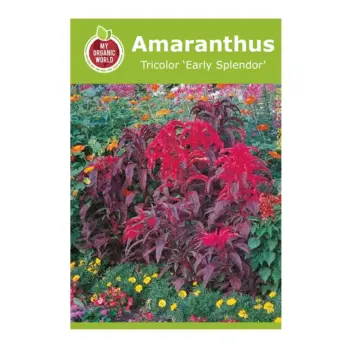
Amaranthus tricolor Early Splendor produces striking foliage in shades of deep red, burgundy, and green on upright plants about 60–90 cm tall. A colorful ornamental plant ideal for borders and landscape planting.
Repacked in Kuwait
Packet Size: Contains 100 seeds.
متوفر في المخزون
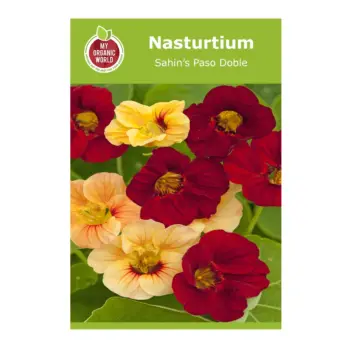
Nasturtium Sahin’s Paso Doble is a unique formula mix offering a great color combination of top-flowering dark red and cream varieties — the only nasturtium that delivers a deliberate bicolor design using two separate complementary varieties combined in a single packet. Tropaeolum minus, Sahin’s series, Paso Doble, 30 cm height, formula mix, suitable as a bedding plant, pot plant, edible flower, attractive to beneficial insects and hummingbirds, and suitable for microgreen, baby leaf or sprouting.
Repacked in Kuwait
Packet Size: Contains 25 seeds.
فقط 2 متبقي في المخزون
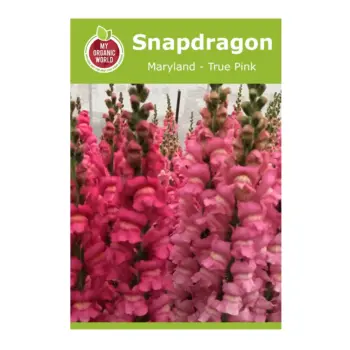
Snapdragon Maryland True Pink produces clear true pink flower spikes on strong plants about 100 cm tall. A reliable variety for cutting gardens and bright border displays.
Packet Size: Contains 25 seeds.
Repacked in Kuwait
متوفر في المخزون
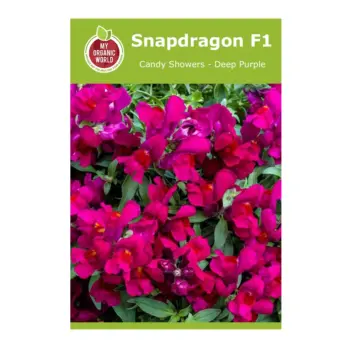
Candy Showers Deep Purple snapdragon produces trailing stems covered with deep purple flowers on compact spreading plants about 15–25 cm tall. A colorful variety suitable for containers, hanging baskets, and garden borders.
Packet Size: Contains 25 seeds.
Repacked in Kuwait
متوفر في المخزون
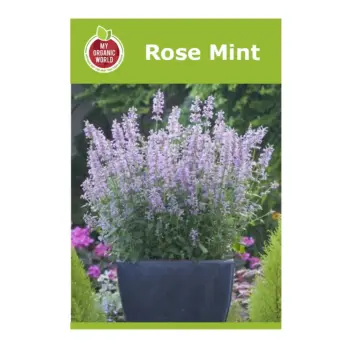
Rose Mint seeds produce aromatic lavender-rose flower spikes on compact plants about 45–60 cm tall. A fragrant herb suitable for pollinator gardens, herb beds, borders, and containers.
Repacked in Kuwait
Packet Size: Contains 50 seeds.
متوفر في المخزون
التقييمات
لا توجد تقييمات حتى الآن.