 العربية
 English
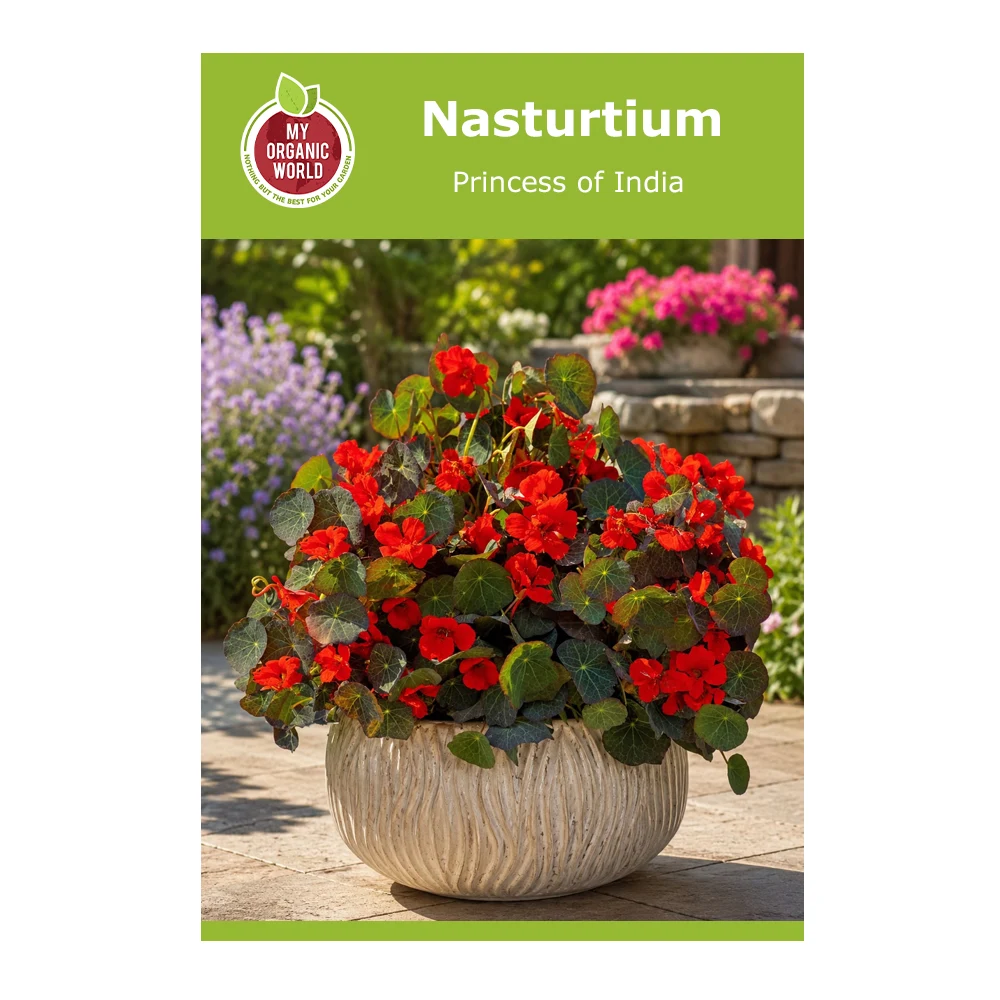
Nasturtium Princess Of India
1,500 د.ك
Nasturtium Princess Of India is a superb dwarf selection of the Victorian heirloom ‘Empress of India’ — one of the most celebrated nasturtiums in horticultural history, first listed in Eastern North American seed catalogs in the 1880s and described in the 1884 Burpee’s catalogue as “the most important annual in recent introduction.” Princess of India refines the Empress lineage further: the same brilliant scarlet flowers over the same distinctive dark blue-green foliage, but on a more uniform, more compact plant of 20–25 cm. The deep red blooms are held well above the dark foliage — creating one of the most visually dramatic flower-to-foliage contrasts in the entire nasturtium genus. Fully edible flowers and leaves, outstanding companion plant value, and a depth of horticultural heritage that no other variety in this catalogue can claim.
Repacked in Kuwait
Packet Size: Contains 30 seeds.
متوفر في المخزون
Nasturtium Princess Of India
(Tropaeolum majus nanum — Dwarf Heirloom Selection — Open-Pollinated)
Nasturtium Princess Of India is a Tropaeolum majus nanum — the dwarf form of the Common Nasturtium — an open-pollinated compact annual of 20–25 cm that represents the most refined expression of one of Victorian horticulture’s most celebrated varieties. It is classified as a dwarf selection of Empress of India, sharing the parent variety’s defining characteristics — brilliant scarlet flowers over distinctive dark blue-green foliage .
The horticultural lineage of Princess of India traces through Empress of India to the earliest years of ornamental nasturtium culture in Europe. Tropaeolum majus was introduced into English gardens from South America in the 16th century, cultivated initially for its edible seeds and peppery foliage before its ornamental potential was recognized.
Empress of India emerged as a named variety by the 1880s, distinguished from the general nasturtium population by two characteristics that made it exceptional: the dark blue-green foliage color, which is atypical in the genus and provides an unusually deep, saturated backdrop against which flowers register with maximum intensity, and the brilliant scarlet flower color, which combined with the dark foliage to produce a contrast that no other common garden annual of the Victorian era could match. Princess of India concentrates these defining characteristics into a smaller, more manageable plant form.
The flower-to-foliage contrast of Princess of India is the defining visual characteristic of the variety and the primary reason for its continued cultivation across more than a century.
Where the standard nasturtium presents scarlet or red flowers against plain mid-green foliage, Princess of India presents the same scarlet intensity against dark blue-green leaves — a contrast that operates on two axes simultaneously: hue contrast between red and blue-green, and value contrast between the bright flower and the dark leaf. The result is a visual relationship between flower and foliage of exceptional strength, where each element intensifies the other — the flowers appearing more brilliant against the dark leaves, and the dark leaves appearing richer against the scarlet flowers.
The blooms are held clearly above the foliage canopy — a top-flowering characteristic that ensures the scarlet colour registers immediately and unobstructed against the dark green background. In the dwarf compact habit of Princess of India, this upward bloom presentation means the full flower-to-foliage contrast is visible from above, making the variety particularly effective in container plantings viewed from a standing position.
Variety Details
- Botanical Name: Tropaeolum majus nanum
- Variety: Princess of India
- Lineage: Dwarf selection of Empress of India — Victorian heirloom first listed 1880s
- Seed Type: Open-pollinated
- Plant Type: Hardy annual
- Family: Tropaeolaceae
- Habit: Compact dwarf mounding — non-trailing, non-climbing, top-flowering
- Flower Form: Single, open-faced, funnel-shaped — held clearly above foliage
- Flower Color: Brilliant scarlet to deep red
- Foliage: Rounded, parasol-like — distinctive dark blue green; darker than standard nasturtium
- Edible: Flowers, leaves, and unripe seed pods
- Uses: Bedding, border edging, containers, edible flower, companion planting, seed saving
- Germination: 7–14 days at 13–18°C
Key Features
- Victorian heirloom lineage — direct descendant of Empress of India, first catalogued 1880s
- Dwarf selection — more uniform and compact habit than Empress of India parent
- Brilliant scarlet flowers held clearly above dark blue-green foliage — the defining flower-to-foliage contrast of the Empress lineage in its most concentrated form
- Dual-axis color contrast — hue contrast (red vs blue green) and value contrast (bright flower vs dark leaf) operating simultaneously
- Compact dwarf mounding habit 20–25 cm — the most compact nasturtium in this catalogue
- Unusually uniform plant habit for an open-pollinated nasturtium
- Dark blue-green foliage — atypical in the genus; deeper and more saturated than standard nasturtium leaf color
- Fully edible — flowers, leaves, and unripe seeds with characteristic peppery nasturtium flavor
- Direct sowing strongly preferred — resents root disturbance
- Poor soil preferred — fertilizing reduces flowering
- Outstanding pollinator and companion plant value
- Darkness required for germination — seeds must be fully covered
- Fast germination: 7–14 days at 13–18°C
Plant Information
- Height: 20–25 cm
- Spread: 20–25 cm
- Plant Type: Hardy annual
- Habit: Compact dwarf mounding — non-trailing, non-climbing, top-flowering, unusually uniform for an open-pollinated variety
- Flower Form: Single, open-faced, funnel-shaped — held clearly above foliage canopy
- Flower Color: Brilliant scarlet to deep red
- Foliage: Rounded, parasol-like — distinctive dark blue green, no variegation; darker than standard nasturtium
- Edible: Flowers, leaves, and unripe seeds
Germination Instructions
- Direct sowing is strongly preferred — nasturtiums resent root disturbance and perform best when sown in their final position.
- Sow seeds 1–1.5 cm deep directly into moist, well-drained soil.
- Seeds require darkness for germination — ensure full soil coverage with no exposure.
- Nick the seed coat lightly and soak in warm water for 12–24 hours before sowing to soften the tough outer coat and improve germination speed.
- Keep soil evenly moist but not waterlogged during the germination period.
- Germination occurs within 7–14 days at a soil temperature of 13–18°C. As seedlings develop, thin to 23–25 cm spacings.
- If starting indoors, use individual biodegradable peat or coir pots — one seed per pot — to avoid any root disturbance at transplanting.
- Do not use standard seed trays.
Growing Tips
- Princess of India thrives in full sun to partial shade in poor to average, well-drained soil.
- Do not fertilize under any circumstances — the dark foliage characteristic of the Empress lineage is particularly sensitive to excess nitrogen, which produces abundant lush growth that dilutes the compact habit and reduces the flower-to-foliage contrast ratio that defines the variety.
- In Kuwait’s amended raised bed soils, plant Princess of India at the border edge where soil nutrition is lower, not in the central bed where composted and fertilized soil is richest.
- Water consistently but avoid waterlogging — once established, the variety is drought-tolerant and performs reliably with less frequent watering. Deadhead spent flowers regularly to maintain the prolific flowering display and extend the season.
- The dark foliage makes spent blooms highly visible against the leaf canopy — regular deadheading is more apparent and more important in Princess of India than in lighter-foliaged varieties.
- Leave some seed pods to mature at the end of the season for self-seeding and seed saving.
- Unripe green seed pods can be pickled as a caper substitute.
Gulf Planting Season
- Direct sowing outdoors: October to November
- Peak flowering season: December to March
- Note: Princess of India is the most historically rooted variety in this nasturtium collection and the only one that brings documented Victorian heirloom credentials to the catalogue.
- Its defining characteristic — brilliant scarlet over dark blue-green foliage — is also the most visually intense flower-to-foliage contrast available in the collection.
Companion Planting
- Princess of India carries the full companion planting value of the Tropaeolum genus.
- It acts as a trap crop for aphids, drawing insects preferentially to nasturtium foliage and protecting neighboring vegetables.
- It deters whitefly and attracts beneficial predatory insects that contribute to natural pest management.
- The compact dwarf habit of Princess of India — the most compact in this catalogue at 20–25 cm — makes it the most suitable variety for close border planting directly alongside vegetable rows, where its contained footprint provides maximum companion plant benefit with minimum competition for space.
- Ideal companions include tomatoes, cucumbers, brassicas, melons, and radishes.
Garden & Culinary Uses
- Princess of India is suited to bedding, border edging, container planting, edible flower use, and companion planting in the kitchen garden.
- It is the most historically significant variety in this nasturtium collection — the direct refinement of Empress of India, one of the defining ornamental annuals of Victorian horticulture.
- In the garden, Princess of India provides the most visually dramatic flower-to-foliage contrast of any variety in this catalogue — the brilliant scarlet reading against the dark blue-green foliage with an intensity that the mid-green foliage of standard nasturtiums cannot approach.
- Planted alongside Bloody Mary, the solid scarlet precision of Princess of India anchors the composition while Bloody Mary’s crimson-to-cream variation introduces color complexity within the same warm register.
- Planted alongside Jewel Cherry Rose, the dark foliage and deep scarlet of Princess of India intensify the warm pink of Cherry Rose by contrast — a pairing of exceptional visual sophistication from two simple, directly sown dwarf annuals.
- As an edible flower, the brilliant scarlet petals of Princess of India are among the most visually impactful of any nasturtium for plate garnishing — the saturated red reading with exceptional force against white plates, pale cream sauces, and green salad backgrounds.
- The dark blue-green leaves are equally edible and are among the most visually elegant nasturtium leaves for plate presentation — their deep color and parasol form providing a natural doily-like base under cheeses, small dishes, and individual serving elements.
- Both flowers and leaves carry the characteristic peppery nasturtium flavor. Unripe green seed pods can be pickled as a caper substitute
فقط العملاء الذين قاموا بتسجيل الدخول للموقه وقاموا بشراء هذا المنتج يمكنهم اضافه تقييم.
منتجات ذات صلة
Candy Showers Orange snapdragon produces bright orange flowers on compact trailing plants about 15–25 cm tall. A colorful variety ideal for containers, hanging baskets, and garden borders.
Packet SizeL Contains 25 seeds.
Repacked in Kuwait
متوفر في المخزون
Ammobium alatum Grandiflorum produces bright white papery flowers with yellow centers on upright plants about 60–80 cm tall. A classic flower for cutting gardens and dried flower arrangements.
Repacked in Kuwait
Packet Size: Contains 100 seeds.
متوفر في المخزون
Snapdragon Maryland Appleblossom produces soft blush pink flowers with creamy tones on medium-tall plants about 100 cm. A refined variety ideal for cutting gardens and borders.
Packet Size: Contains 25 seeds.
Repacked in Kuwait
متوفر في المخزون
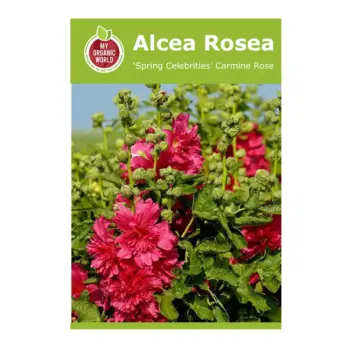
Spring Celebrities Carmine Rose hollyhock seeds, a striking dwarf hollyhock producing large, ruffled double blooms in brilliant carmine-rose shades from its first year. Compact habit makes it ideal for containers, small gardens, and raised bed plantings throughout the Gulf cool season.
Repacked in Kuwait
Packet Size: Contains 10 seeds.
متوفر في المخزون
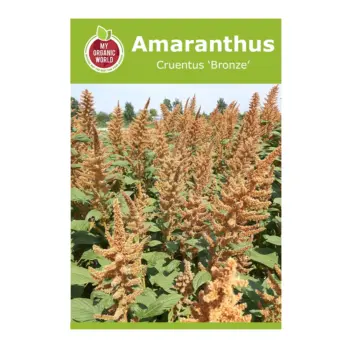
Amaranthus Cruentus Bronze a tall, architectural upright amaranth producing dense, richly colored plumes ranging from intense bronze to deep chestnut-brown over bold dark green foliage. Pure in color without green or pistachio undertones, making it the most dramatic single-tone amaranth for cut flower work, dried arrangements, and back-of-border impact.
Repacked in Kuwait
Packet Size: Contains 250 seeds.
متوفر في المخزون
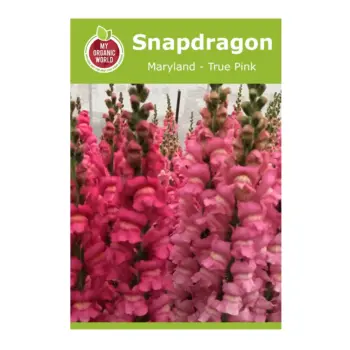
Snapdragon Maryland True Pink produces clear true pink flower spikes on strong plants about 100 cm tall. A reliable variety for cutting gardens and bright border displays.
Packet Size: Contains 25 seeds.
Repacked in Kuwait
متوفر في المخزون
التقييمات
لا توجد تقييمات حتى الآن.