 العربية
 English
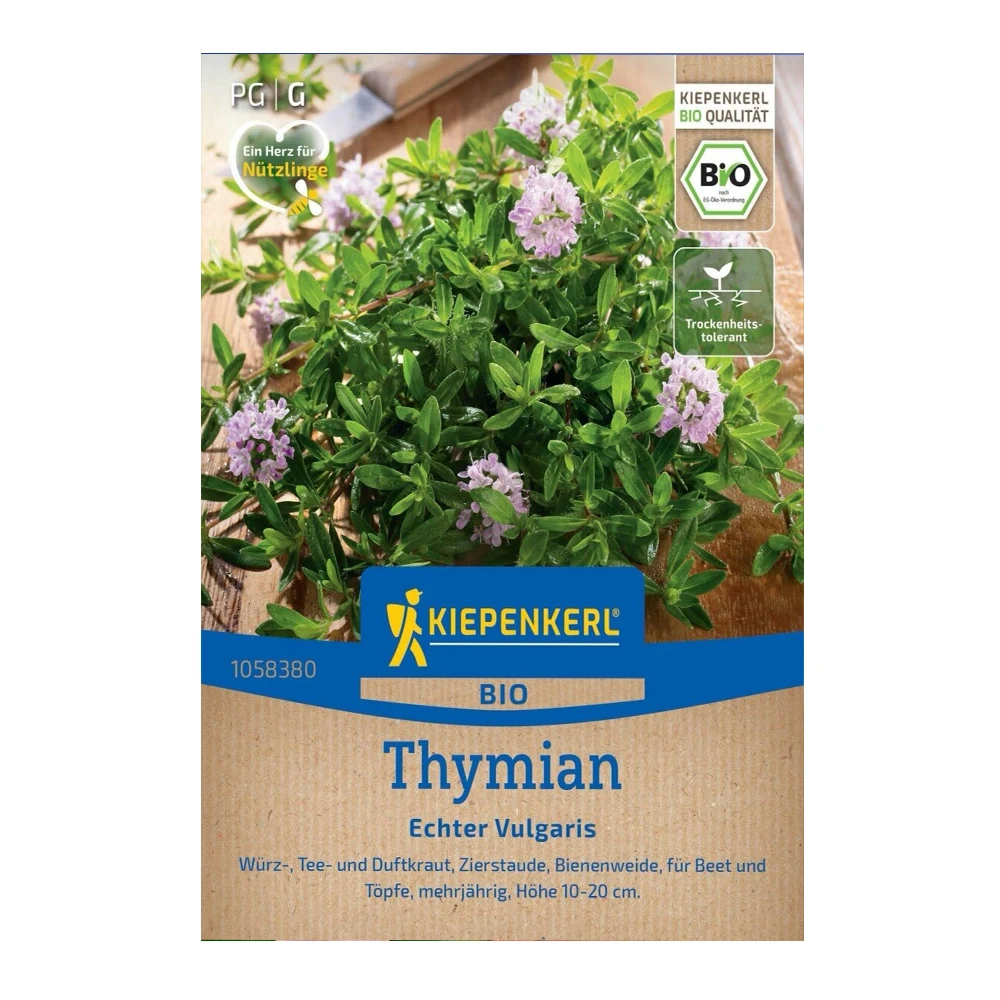
Organic English Thyme
1,750 د.ك
Organic English Thyme Kiepenkerl certified organic thyme — Thymus vulgaris — is the classic culinary thyme of European and Mediterranean kitchen tradition, produced under EU organic certification to the Kiepenkerl organic quality standard. The packet confirms: aromatic herb, tea herb, fragrant perennial, bee pasture, suitable for beds and containers, perennial, height 10–20 cm. Drought tolerant and certified as a beneficial insect habitat under the Kiepenkerl beneficial insect programme. A wonderful ground cover plant for hot dry areas, thriving on poor soils in full sun with very little water. In late spring it produces a multitude of pink flowers covering the whole plant. The most historically significant culinary herb in this catalogue — used continuously in kitchens, temples, and medicine for more than two thousand years.
نفدت الكمية
Organic English Thyme Seeds
(Thymus vulgaris — Kiepenkerl Bio — EU Certified Organic)
Organic English Thyme is Thymus vulgaris — the primary culinary thyme species of European and Mediterranean kitchen tradition, produced as a certified organic variety under EU organic regulation and verified to the Kiepenkerl Bio standard.
Thymus vulgaris was used by ancient Greeks in their baths and burned as incense in their temples and used by Romans to purify their rooms and flavor their cheese. The documented history of thyme in human culture reaches further and deeper than almost any other herb in the culinary repertoire. Recent research confirms that thyme contains a very powerful antiseptic that may have medical benefits.
The culinary character of Thymus vulgaris is defined by thymol — the principal essential oil compound that gives common thyme its characteristic warm, earthy, slightly peppery aroma. The leaves have a marked but agreeable aroma and intense flavor, noted for attracting bees. Thyme has diverse uses thanks to its sweetly fragrant, lemony scent and its medicinal properties. Thyme is used fresh or dried, often for seasoning soups, stews, and meats. The Echter Vulgaris variety — true common thyme — produces the highest thymol concentration of any culinary thyme type, making it the most intensely flavored and medicinally potent form of the species.
Thyme is a wonderful ground cover plant for hot dry areas where little else is growing. It needs full sun to thrive and must have well-drained soil. It thrives on poor soils and does poorly on rich ones. It needs little water and is very drought tolerant. It needs very little care once established but does benefit from a yearly pruning to keep the plants fresh and strong. Deer and rabbits don’t eat it. The Kiepenkerl packet confirms drought tolerance with a dedicated certification icon -tolerant — making this one of the most heat and drought adapted herbs available for Kuwait’s climate conditions.
Variety Details
- Botanical Name: Thymus vulgaris
- Variety: True Common Thyme
- Producer: Kiepenkerl — Bio line
- Organic Certification: EU certified organic
- Pollinator Certification: certified beneficial insect habitat
- Drought Certification: drought tolerance confirmed on packet
- Seed Type: Certified organic open-pollinated
- Plant Type: Hardy perennial evergreen subshrub
- Family: Lamiaceae
- Native: Southern Europe and Mediterranean region
- Habit: Low, compact, bushy, woody-based subshrub
- Height: 10–20 cm (confirmed on Kiepenkerl packet)
- Spread: 20–30 cm
- Flower Form: Tiny, two-lipped — borne in whorls along stem tips
- Flower Color: Pale pink to lilac
- Foliage: Tiny, oval, grey green — strongly aromatic — the culinary harvest element
- Aroma: Warm, earthy, slightly peppery, medicinal — thymol-dominant essential oil profile
- Uses: Culinary herb, tea herb, medicinal herb, ornamental perennial, bee pasture, ground cover, container herb
- Germination: 10–28 days at 18–21°C
Key Features
- Kiepenkerl Bio — EU certified organic
- True common thyme species — highest thymol concentration of any culinary thyme type
- EU organic certification — seeds produced without synthetic pesticides or fertilisers
- Certified beneficial insect and pollinator habitat
- Drought tolerant — certified on packet — one of the most drought-adapted herbs available
- Hardy evergreen perennial — year-round harvest from established plants
- Compact subshrub habit 10–20 cm — suitable for beds, borders, containers, and window boxes
- Pale pink to lilac flowers in late spring — ornamental value in addition to culinary utility
- Outstanding bee and pollinator value — thyme honey is among the most prized in the world
- Culinary herb — fresh and dried use across all major cuisine traditions
- Tea herb — confirmed on Kiepenkerl packet — thyme tea with documented medicinal properties
- Fragrant perennial — confirmed on Kiepenkerl packet — ornamental garden value
- Thrives on poor to moderately fertile soil — does poorly in rich soil
- Surface sow or very shallow cover — seeds require light for germination
- Slow germination — 10–28 days — patience required; maintain consistent moisture throughout
- Annual pruning recommended — keeps plants compact and productive
Plant Information
- Height: 10–20 cm (confirmed Kiepenkerl packet)
- Spread: 20–30 cm
- Plant Type: Hardy evergreen perennial subshrub
- Habit: Low, compact, bushy — woody-based with soft aromatic foliage above
- Flower Form: Tiny two-lipped flowers in whorls — borne along stem tips in abundance
- Flower Color: Pale pink to lilac
- Foliage: Tiny, oval, grey green — softly hairy — strongly aromatic — the primary harvest element
- Aroma: Warm, earthy, slightly peppery, medicinal — thymol-dominant
- Harvest: Leaves and stem tips — fresh or dried — year-round from established plants
- Edible: Leaves, flowers, and stem tips — all parts aromatic and culinary
- Medicinal: Confirmed antiseptic and expectorant properties — tea use documented
Germination Instructions
- Thyme seeds are very fine and require light to germinate — they must not be buried deeply.
- Press seeds into the surface of the soil as they need light to germinate.
- Do not cover.
- Keep soil moist and warm at 65–70°F (18–21°C).
- Germination can be slow, taking 14–28 days.
- Surface sow by pressing seeds gently but firmly onto the surface of moist, fine, well-drained seed compost.
- A very light covering of fine vermiculite — not more than 1–2 mm — is acceptable but deep coverage will prevent germination. Place in a bright position at a consistent temperature of 18–21°C.
- Maintain even moisture throughout the germination period — the fine seeds dry out rapidly and any interruption of moisture will halt germination.
- Start indoors 6–8 weeks before the last frost, providing 65–75°F soil temperature.
- Transplant 25–30 cm apart. Once seedlings reach approximately 5–7 cm in height, transplant carefully into individual small pots and grow on in full sun before hardening off and moving to the final outdoor position.
- In Kuwait, sow indoors in September for transplanting to outdoor containers or herb bed positions from mid-October onward.
- Germination rate for thyme from seed is lower than most herbs — sow more densely than expected and thin to final spacing once established.
Growing Tips
- Thyme needs full sun to thrive and must have well-drained soil. It thrives on poor soils and does poorly on rich ones.
- It needs little water and is very drought tolerant.
- It needs very little care once established but does benefit from a yearly pruning to keep the plants fresh and strong.
- The organic certification of Kiepenkerl Bio means no synthetic inputs were used in seed production — continue this approach in cultivation by avoiding synthetic fertilizers and pesticides in the herb garden, allowing thyme to thrive in the organic kitchen garden system it was produced for.
- In Kuwait’s climate, established thyme plants are among the most heat and drought tolerant herbs available — the Mediterranean origin of Thymus vulgaris means it is naturally adapted to long dry summers with intense sun, conditions closely approximating Kuwait’s summer climate.
- However, extreme summer heat above 45°C will stress even established plants — provide afternoon shade during peak summer months if plants are to be maintained year-round.
- In Kuwait’s cool season, thyme performs at its aromatic peak — cooler temperatures slow the volatilization of essential oils, concentrating flavor in the leaves at harvest.
- After flowering, trim the plant back by one-third to encourage fresh compact growth and prevent the woody base from extending too rapidly. Do not cut back into old wood — thyme does not regenerate from hard pruning into bare woody stems.
Gulf Planting Season
- Sow indoors: September to early October
- Transplant to final outdoor positions: Mid-October to November
- Harvest begins: 80–90 days from sowing — December onward for September-sown plants
- Year-round harvest from established plants
- Note: Organic English Thyme is the only certified organic seed product in this catalogue and the herb most likely to become a permanent fixture in the Kuwait kitchen garden — established thyme plants, once through the first cool season, have strong potential to persist year-round in Kuwait’s climate with appropriate summer management.
- The drought tolerance confirmed on the Kiepenkerl packet -tolerant — is the defining characteristic for Kuwait summer survival: established plants that are not overwatered during the hot months and are given afternoon shade in the peak summer period of June to August can persist as productive perennials across multiple seasons.
- The organic certification of the seed is consistent with the organic growing philosophy supported by Neptune’s Harvest, Xtreme Gardening, and Old Truck Gardening products — Kiepenkerl Bio is the natural herb garden companion to an organic soil and fertilizer system, producing a culinary herb of the highest quality from seed produced without synthetic inputs and grown in a living soil system that supports the full aromatic potential of Thymus vulgaris.
Companion Planting
- Organic thyme is one of the most valuable companion plants in the kitchen garden.
- A terrific companion plant, thyme will lure pollinators to your vegetable garden while banishing pests.
- The tiny flowers of Thymus vulgaris in bloom are exceptional sources of nectar for small beneficial insects — parasitic wasps, hoverflies, and small bee species that are among the most effective natural predators of aphids, whitefly, and caterpillars.
- The intense aromatic essential oils of thyme foliage have documented pest-deterrent properties — the thymol-rich volatile compounds mask the host-plant scent cues that many pest insects use to locate their preferred host plants, reducing pest pressure on neighboring crops.
- In the Kuwait cool-season kitchen garden, thyme planted alongside brassicas, tomatoes, and root vegetables provides active pest deterrence and pollinator attraction simultaneously.
- The low compact habit of 10–20 cm makes it ideal for front-of-bed edging positions where it creates a fragrant aromatic border that benefits the entire planting behind it.
Garden & Culinary Uses
- Organic English Thyme is suited to herb garden beds, kitchen garden borders, container and windowsill herb planting, rock gardens, and ornamental border edging.
- It is the only certified organic herb seed in this catalogue and the only variety carrying EU organic certification — a meaningful distinction for gardeners who priorities chemical-free cultivation and are building an organic kitchen garden system.
- In the kitchen, Thymus vulgaris is one of the three or four herbs without which classical European cuisine cannot function — alongside rosemary, bay, and parsley, thyme is a component of bouquet garni, a fundamental element of stocks, braises, and slow-cooked dishes, and an essential herb in Mediterranean, French, Italian, Lebanese, and Gulf Arab culinary traditions.
- The leaves are used fresh or dried — dried thyme concentrates the essential oil and intensifies the flavor, making it more suitable for long-cooked dishes; fresh thyme is preferred in salads, marinades, and applications where a lighter aromatic note is appropriate.
- Thyme flowers are also fully edible — the tiny pale pink blooms carry a mild version of the leaf flavor and are used as a delicate garnish.
- Thyme is also a medicinal herb used in teas to assist with colds and sore throats.
- Thyme honey — produced by bees foraging primarily on thyme flowers — is among the most prized specialty honeys in the world, particularly the Greek Hymettus thyme honey that has been documented since antiquity.
فقط العملاء الذين قاموا بتسجيل الدخول للموقه وقاموا بشراء هذا المنتج يمكنهم اضافه تقييم.
منتجات ذات صلة
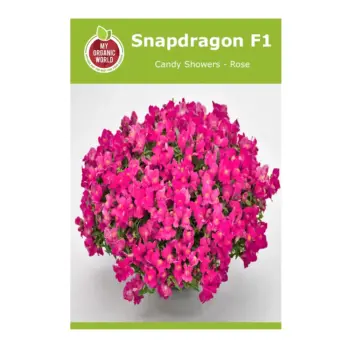
Candy Showers Rose snapdragon produces rose pink flowers on compact trailing plants about 15–25 cm tall. A colorful variety ideal for containers, hanging baskets, and garden borders.
Packet Size: Contains 25 seeds.
Repacked in Kuwait
متوفر في المخزون
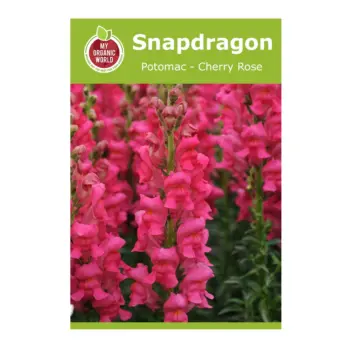
Snapdragon Potomac Cherry Rose produces strong upright spikes of cherry rose flowers on tall plants about 100–120 cm. A professional cut flower variety ideal for borders and cutting gardens.
Packet Size: Contains 25 seeds.
Repacked in Kuwait
متوفر في المخزون
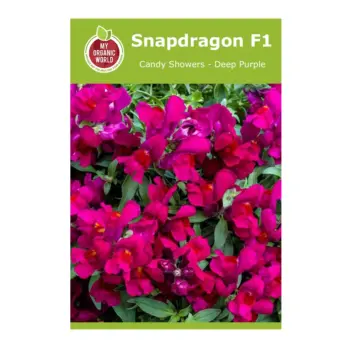
Candy Showers Deep Purple snapdragon produces trailing stems covered with deep purple flowers on compact spreading plants about 15–25 cm tall. A colorful variety suitable for containers, hanging baskets, and garden borders.
Packet Size: Contains 25 seeds.
Repacked in Kuwait
متوفر في المخزون
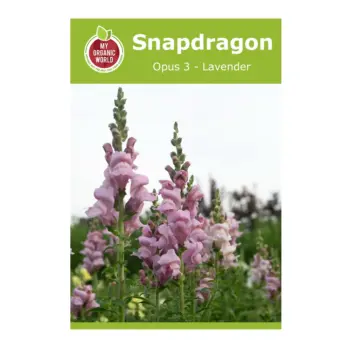
Snapdragon Opus 3 Lavender produces soft lavender flower spikes on compact to medium plants about 65 cm tall. An early flowering variety ideal for containers, borders, and uniform bedding displays.
Packet Size: Contains 25 seeds.
Repacked in Kuwait
متوفر في المخزون
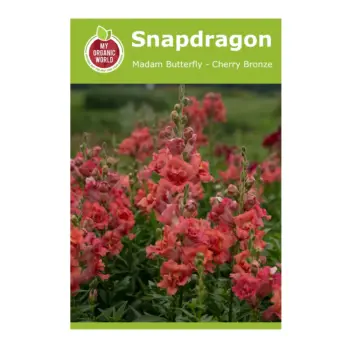
Madam Butterfly Cherry Bronze snapdragon produces elegant double azalea-like flowers in warm cherry bronze tones on tall plants about 60–75 cm. A premium variety for cutting gardens and ornamental borders.
Packet Size: Contains 25 seeds.
Repacked in Kuwait
متوفر في المخزون
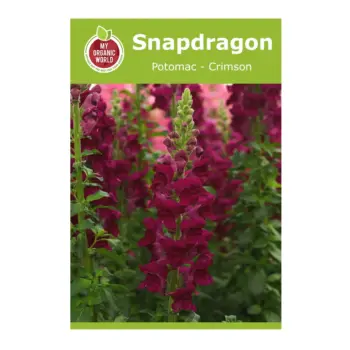
Snapdragon Potomac Crimson produces deep crimson flower spikes on tall plants about 100–120 cm. A professional cut flower variety ideal for borders and cutting gardens.
Packet Size: Contains 25 seeds.
Repacked in Kuwait
متوفر في المخزون
التقييمات
لا توجد تقييمات حتى الآن.