 العربية
 English
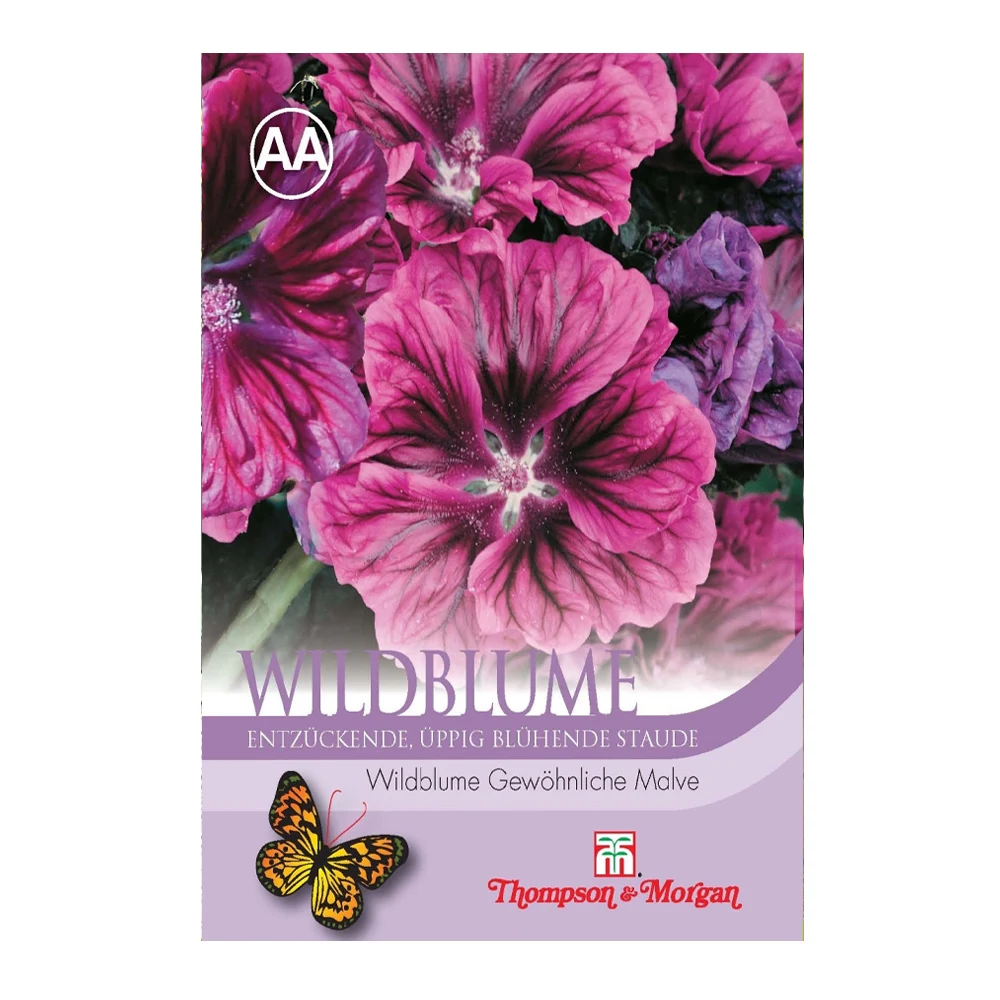
Malva sylvestris
1,950 د.ك
Malva sylvestris is the ornamental variety of the common mallow — larger, more floriferous, and more richly colored than the wild type, producing an abundance of large open funnel-shaped flowers in deep rose-purple with dramatic dark veining throughout the summer season. This cottage-garden perennial flowers freely all summer, producing saucer-shaped, rich-purple flowers with dark veining. Though short-lived, it will freely self-seed once established. The upright stems are clad in mid-green leaves. Thompson & Morgan presents this variety under the German name Wildblume — Wildflower — and describes it as a charming, abundantly flowering perennial: an accurate characterization of a plant that has been cultivated in European gardens since the medieval period for its ornamental value, its fully edible flowers and leaves, and its long-documented soothing medicinal properties.
نفدت الكمية
Malva sylvestris Seeds — Common Mallow
(Malva sylvestris var. mauritiana — Hardy Perennial — Thompson & Morgan)
Malva sylvestris — the Common Mallow, High Mallow, or Tree Mallow — is a hardy perennial or biennial of the Malvaceae family, native to Europe, North Africa, and Southwest Asia, and one of the most historically significant plants in the Western herbal and culinary tradition. Common mallow is a herbaceous perennial with an erect or branched stem up to 1.5 meters tall, producing mauve-purple flowers with dark veins, growing freely in meadows, hedgerows, and fallow fields. The var. mauritiana — the Mauritanian Mallow — is a taller, more ornamental subspecies with significantly larger flowers of deeper color than the standard wild type. Mauritiana is larger than the type with much more ornamental flowers. The flavor of the leaves and flowers is considered by many to be superior to the type species.
The flowers of var. mauritiana are among the most visually striking in the Malvaceae family — large open funnel-shaped blooms of deep rose-purple to magenta-crimson, heavily veined with darker lines radiating from a pale central zone toward the petal margins. The veining pattern, characteristic of the species and particularly pronounced in the mauritiana variety, creates a visual complexity within each individual flower that most single-color annuals cannot approach — the flower reads differently at close range, where the vein detail is visible, then at a distance, where the overall deep purple-rose tone dominates.
Malva sylvestris has one of the longest documented histories of human use of any European wild plant. It is a very easily grown plant, succeeding in ordinary garden soil and in poor soils, preferring reasonably well-drained and moderately fertile soil in a sunny position. Its use as a food plant predates written records — the Roman author Cicero mentions eating mallow leaves, and Pliny the Elder describes the plant’s culinary and medicinal applications in his Natural History. In medieval Europe, mallow was cultivated in monastery physic gardens as one of the most valued soothing herbs, valued for the high mucilage content of its leaves, flowers, and seeds. The fully edible flowers and leaves retain this dual ornamental and culinary utility in the contemporary garden.
Malva sylvestris thrives in light, moderately fertile, well-drained soil in full sun. Plants can be short-lived, so annual propagation is recommended. Early sowings may flower in the first year. May self-seed in place, though seedlings may vary. The self-seeding character of the species is its most significant practical advantage in the garden context — once established in a suitable position, Malva sylvestris var. mauritiana perpetuates itself through self-sown seedlings that naturalize progressively into the garden’s permanent structure, providing successive seasons of flowering without annual replanting.
Variety Details
- Botanical Name: Malva sylvestris var. mauritiana
- Common Names: Common Mallow — High Mallow — Tree Mallow — Mauritanian Mallow
- Supplier: Thompson & Morgan — AA quality classification
- Seed Type: Open-pollinated
- Plant Type: Short-lived hardy perennial — biennial in some climates — flowers first year from early sowing
- Family: Malvaceae
- Native: Europe — North Africa — Southwest Asia — widely naturalized globally
- Habit: Upright, branching, vigorous — multiple flowering stems from established crown
- Height: 60–120 cm
- Spread: 40–60 cm
- Flower Form: Open funnel-shaped — saucer-like — 5 petals — 4–5 cm diameter
- Flower Color: Deep rose-purple to magenta-crimson with prominent dark veining radiating from pale center
- Foliage: Rounded, palmately lobed — mid-green — soft-textured
- Self-seeding: Yes — freely self-seeds once established
- Edible: Flowers and young leaves — fully edible
- Medicinal: Traditional use — high mucilage content — soothing properties
- Uses: Cottage gardens, wildflower borders, pollinator planting, informal cut flower, herbal gardens, edible gardens
- Germination: 15–21 days at 21°C
Key Features
- Thompson & Morgan AA quality
- Malva sylvestris var. mauritiana — ornamental subspecies with larger, more richly colored flowers than wild type
- Deep rose-purple to magenta-crimson flowers with dramatic dark veining — visually complex individual flower of exceptional ornamental impact
- Open funnel-shaped flowers 4–5 cm diameter — fully accessible to pollinators
- Short-lived hardy perennial — flowers first year from early sowing; annual sowing recommended for continuous colony
- Freely self-seeding — naturalizes progressively without replanting once established
- Upright branching habit 60–120 cm — suitable for mid-border to back-of-border use
- Outstanding pollinator value — bees, butterflies, and hoverflies
- Fully edible flowers and young leaves — culinary and herbal utility confirmed across centuries of documented use
- Medicinal tradition — one of the most historically significant soothing herbs in Western medicine
- Drought tolerant once established — thrives in ordinary to poor well-drained soil
- Rabbit and deer resistant
- Poor to moderately fertile soil preferred — rich soil produces excessive foliage and may require staking
- Direct sowing and indoor sowing both viable
Plant Information
- Height: 60–120 cm
- Spread: 40–60 cm
- Plant Type: Short-lived hardy perennial — biennial in some climates
- Habit: Upright, branching, vigorous — multiple stems bearing flowers in leaf axils along full stem length
- Flower Form: Open funnel-shaped — saucer-like — 5 broad overlapping petals — 4–5 cm diameter
- Flower Color: Deep rose-purple to magenta-crimson — prominent dark veining from pale center
- Foliage: Rounded, palmately lobed — mid-green — softly hairy texture
- Self-seeding: Freely once established
- Edible: Flowers and young leaves
- Medicinal: Traditional soothing use — confirmed high mucilage content in leaves, flowers, and seeds
Germination Instructions
- Sow from late winter to early spring 1.5 mm deep in a good seed compost.
- Make sure the compost is moist but not wet and seal in a polythene bag until after germination which usually takes 15–21 days at 21°C.
- Transplant when large enough to handle into 7.5 cm pots. Grow cool and later plant out 40 cm apart into an ordinary but not rich soil in sun and some shelter.
- Light aids germination — sow at a minimal depth of 1.5 mm and ensure the seed is not buried deeply.
- For Kuwait’s cool-season schedule, sow indoors in July to early August at 21°C on a bright windowsill. Seeds that fail to germinate within 3–4 weeks can be given a cold stratification period — place moist sown pots in a sealed bag in the refrigerator for 2–4 weeks, then return to room temperature.
- This cold treatment mimics the natural winter dormancy break and can significantly improve germination rate in seeds that are slow to respond to warmth alone.
- Transplant established seedlings to final outdoor positions from late September to October.
- Space plants 40 cm apart.
- Direct sowing into the final outdoor position is viable from mid-October in Kuwait once cool temperatures are established.
Growing Tips
- Malva sylvestris succeeds in ordinary garden soil and in poor soils, preferring reasonably well-drained and moderately fertile soil in a sunny position.
- Unlike hollyhocks and wallflowers in this catalogue that benefit from enriched soil, Malva sylvestris performs best without heavy feeding — in richer soils it may need support.
- In Kuwait’s amended raised bed soils, plant at the border edge where soil nutrition is lower, or in a separate container with standard unfertilized potting mix.
- Full sun is strongly preferred — partial shade is tolerated but reduces flower production and color intensity significantly.
- Water consistently during establishment; once the root system is anchored, the plant is drought-tolerant and performs reliably with reduced watering frequency.
- Deadhead spent flowers regularly to extend the flowering season and encourage continued stem production.
- At the end of the season, allow some stems to set and ripen seed before cutting back — this ensures self-sown seedlings for the following season.
- Cut back old stems in spring to encourage vigorous new growth from the perennial crown.
- Stake plants in exposed positions or in any soil richer than ordinary — the tall stems of 60–120 cm can lodge without support in wind or where nitrogen has promoted excess soft growth.
Gulf Planting Season
- Sow indoors: July to early August
Transplant to final outdoor positions: Late September to October
Peak flowering season: November to March
Note: Malva sylvestris var. mauritiana in Kuwait’s cool season performs as a fast-establishing perennial annual — sown in July to August indoors, transplanted in October, and flowering from November through March before heat terminates the season. - The self-seeding character of the species is particularly valuable in Kuwait’s sheltered microenvironments — courtyard gardens, protected south-facing bed positions, and shaded border edges where soil temperatures do not reach extremes in summer — where self-sown seedlings can germinate and establish in early autumn without requiring annual indoor sowing.
- Malva sylvestris is the most historically rooted plant in this catalogue and, alongside the Hollyhock Happy Lights Mix and Wallflower Goldlack Mix, completes a trio of cottage garden perennial and biennial heritage varieties that together provide the structural backbone of a cool-season border of genuine historical depth and naturalistic character.
Companion Planting
- Malva sylvestris is an outstanding companion plant and wildlife garden component.
- The open funnel-shaped flowers provide one of the most accessible pollen and nectar sources of any plant in this catalogue — the broad open form with no petal barrier allows bees, hoverflies, and butterflies to access the central reproductive structures immediately and completely.
- Bumblebees are particularly attracted to the deep purple-rose flower color and visit the plant with exceptional frequency during peak flowering.
- The tall upright stems of established plants provide physical structure in the border that shelters lower-growing companion plants from wind and moderate temperature fluctuation.
- In the cottage garden, Malva sylvestris var. mauritiana partners naturally with lupins, hardy geraniums, and foxgloves — plants that share its informal character and similar cultural preferences for ordinary, well-drained soil in full sun.
- In the Kuwait cool-season garden, it partners well with Hollyhock Happy Lights Mix and Wallflower Goldlack Mix, all three sharing a historical European cottage garden lineage and complementary cultural requirements.
Garden & Culinary Uses
Malva sylvestris var. mauritiana is suited to cottage garden borders, wildflower and naturalistic plantings, pollinator gardens, herbal gardens, and edible gardens. It is the most historically significant plant in this catalogue — carrying a documented record of continuous human cultivation for food, medicine, and ornament reaching back more than two thousand years — and the only variety in this catalogue with a substantive medicinal heritage alongside its ornamental and edible qualities.
In the garden, the deep rose-purple veined flowers of var. mauritiana provide one of the richest, most complex flower colours available in the cool-season garden — a depth of saturation and visual texture that annual bedding plants uniformly cannot match. The informal branching habit and self-seeding character create a naturalistic planting of the kind that structured annual bedding produces only with considerable effort and replanting. Once established, Malva sylvestris colonizes its position in the garden progressively, providing increasingly rich flowering displays in subsequent seasons as the self-sown population grows.
As an edible plant, the flowers and young leaves are both fully edible with a mild, pleasant flavor and slight mucilaginous texture characteristic of the Malvaceae family. Flowers are used as plate garnishes, in salads, and as edible decorations — the deep purple-rose petals with dark veining providing one of the most visually dramatic edible flower elements available in the cool-season garden. Young leaves are eaten raw in salads or cooked as a pot herb. The high mucilage content of the leaves and flowers has been used in traditional medicine across Mediterranean cultures for centuries as a soothing treatment for the digestive and respiratory systems.
فقط العملاء الذين قاموا بتسجيل الدخول للموقه وقاموا بشراء هذا المنتج يمكنهم اضافه تقييم.
منتجات ذات صلة
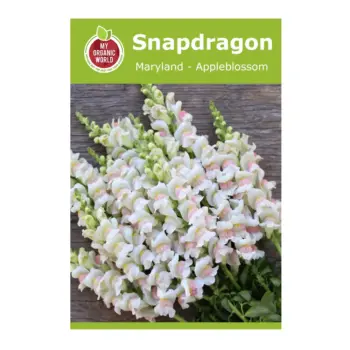
Snapdragon Maryland Appleblossom produces soft blush pink flowers with creamy tones on medium-tall plants about 100 cm. A refined variety ideal for cutting gardens and borders.
Packet Size: Contains 25 seeds.
Repacked in Kuwait
متوفر في المخزون
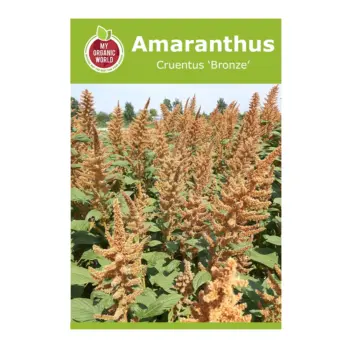
Amaranthus Cruentus Bronze a tall, architectural upright amaranth producing dense, richly colored plumes ranging from intense bronze to deep chestnut-brown over bold dark green foliage. Pure in color without green or pistachio undertones, making it the most dramatic single-tone amaranth for cut flower work, dried arrangements, and back-of-border impact.
Repacked in Kuwait
Packet Size: Contains 250 seeds.
متوفر في المخزون
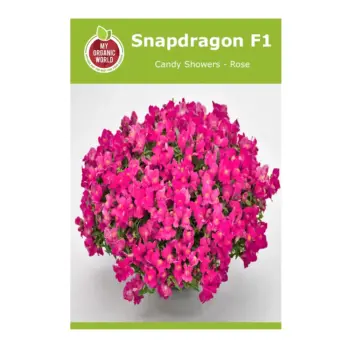
Candy Showers Rose snapdragon produces rose pink flowers on compact trailing plants about 15–25 cm tall. A colorful variety ideal for containers, hanging baskets, and garden borders.
Packet Size: Contains 25 seeds.
Repacked in Kuwait
متوفر في المخزون
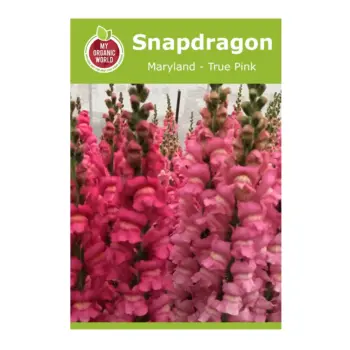
Snapdragon Maryland True Pink produces clear true pink flower spikes on strong plants about 100 cm tall. A reliable variety for cutting gardens and bright border displays.
Packet Size: Contains 25 seeds.
Repacked in Kuwait
متوفر في المخزون
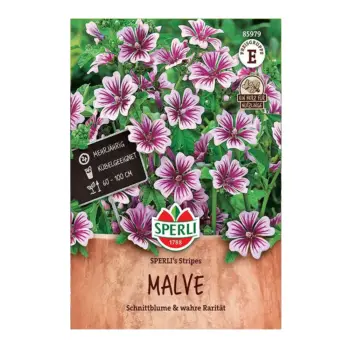
Malva sylvestris Zebrina is a beloved heritage cottage garden perennial — a shorter, freely branching relative of the Hollyhock that produces an extraordinary abundance of 5 cm cup-shaped flowers in pale mauve-pink to lavender, each petal dramatically veined with deep raspberry-purple stripes that radiate from a dark central eye, creating a distinctive pinwheel or zebra pattern. Plants grow robustly to 60 to 120 cm on strong, branching stems and bloom prolifically over a long season. Heat and drought tolerant once established, fully edible, freely self-seeding, and a magnet for bees and butterflies. In Kuwait, grown as a cool-to-warm season annual for a full flowering display from November through May.
فقط 2 متبقي في المخزون
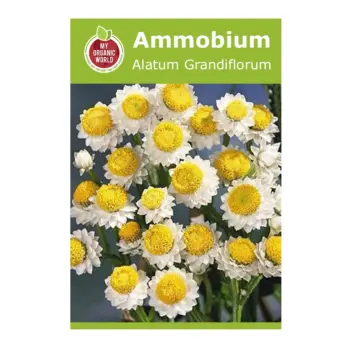
Ammobium alatum Grandiflorum produces bright white papery flowers with yellow centers on upright plants about 60–80 cm tall. A classic flower for cutting gardens and dried flower arrangements.
Repacked in Kuwait
Packet Size: Contains 100 seeds.
متوفر في المخزون
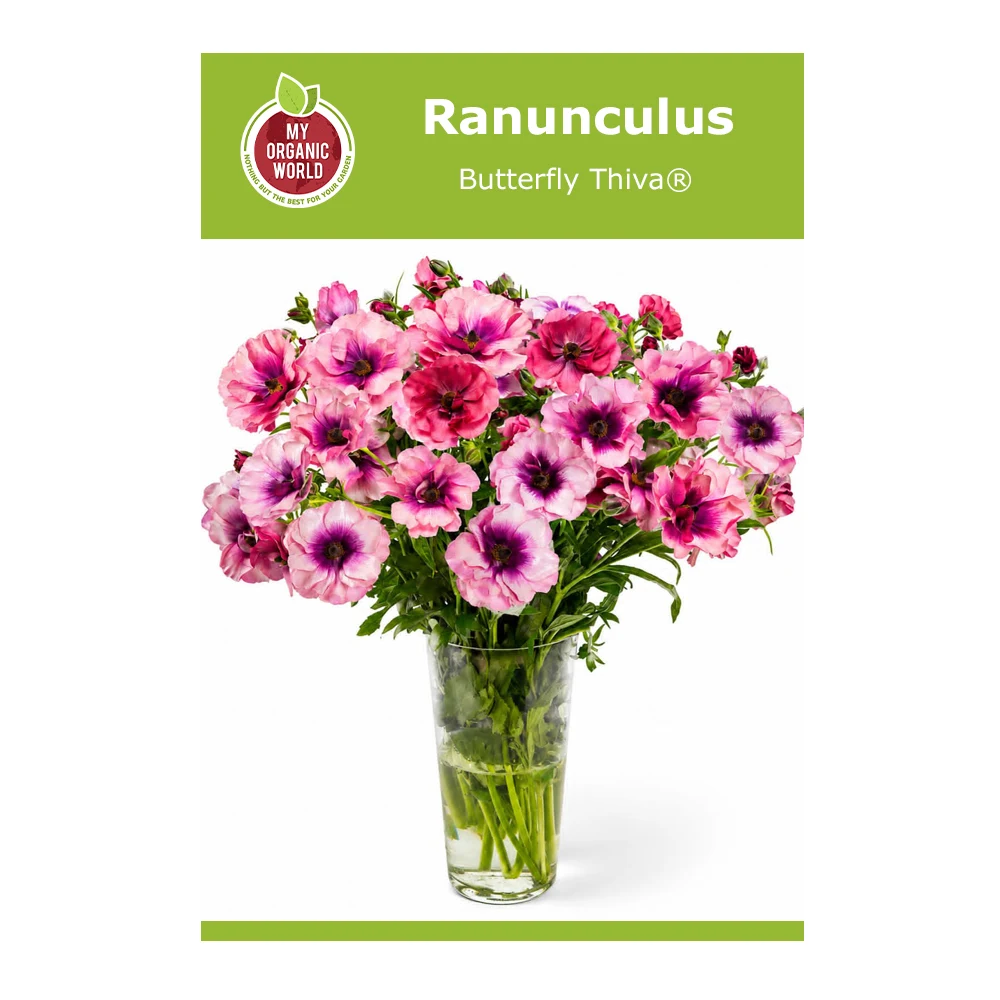
التقييمات
لا توجد تقييمات حتى الآن.