 English
 العربية
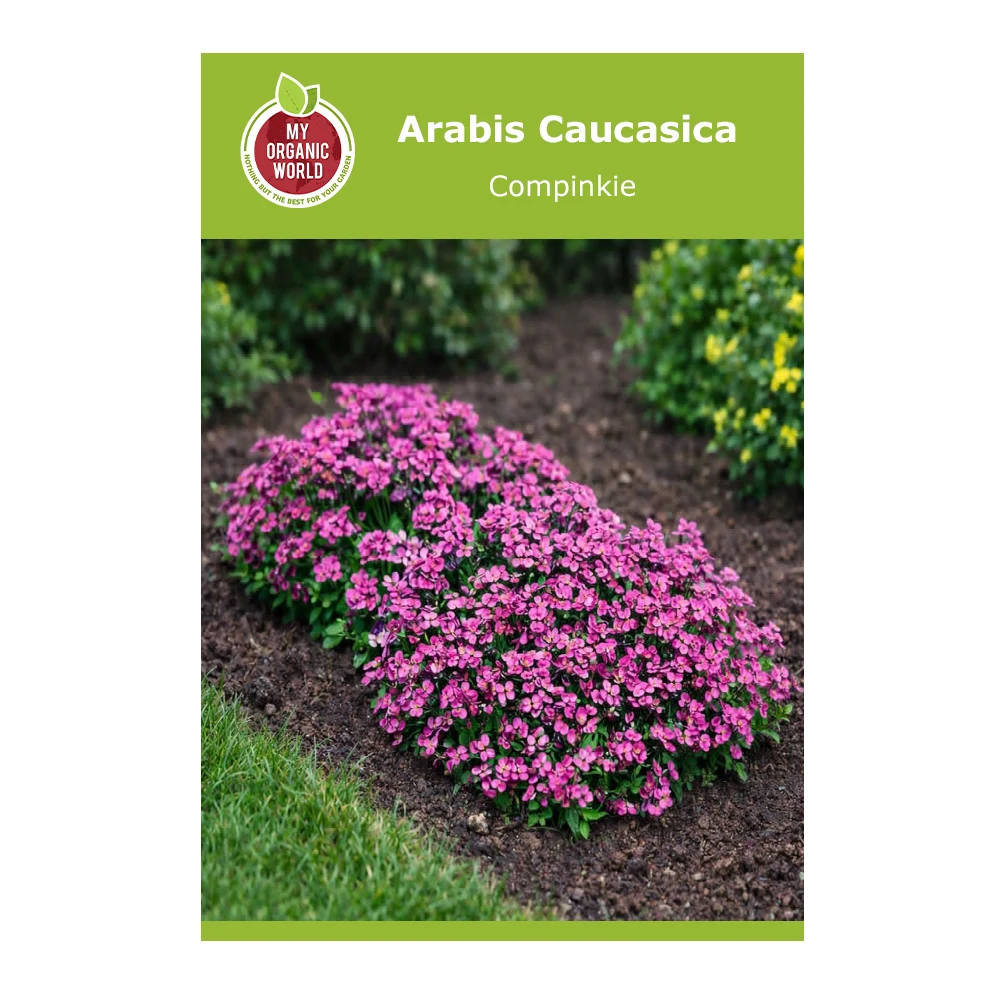
Arabis Caucasica Compinkie
1,750 KWD
Arabis caucasica Compinkie is a sweetly fragrant, low-growing evergreen perennial ground cover producing masses of dainty rose-pink flowers that virtually conceal the foliage in a carpet of color during spring. Plants form compact, flat cushions of grey-green evergreen leaves reaching just 10 to 15 cm in height and spreading 30 to 45 cm wide — ideal for rock gardens, border fronts, garden walls, slopes, and containers. Drought tolerant and deer resistant once established, Compinkie is valued for its early-season fragrance, long-lasting spring display, and low-maintenance naturalistic habit. In Kuwait it performs as a cool-season annual, best sown in September for winter growth and spring flowering.
Repacked in Kuwait
Packet Size: Contains 50 seeds.
In stock
Arabis Caucasica Compinkie Seeds
(Rock Cress / Caucasian Rockcress — Compinkie)
Important Growing Note for Gulf Climates
Arabis caucasica plants tend to suffer in summer heat south of USDA Zone 6.
In Kuwait and the Gulf region, Compinkie must be treated as a cool-season annual. It will not survive outdoor summer conditions. Plan for a single seasonal display from sowing in September through flowering in February to April, then remove plants as temperatures rise above 30 degrees Celsius in late spring.
Arabis caucasica Compinkie is one of the most charming and fragrant low-growing perennials available for cool-season garden use. This is a superb, cultivated strain forming compact, completely flat cushions which in early spring are absolutely smothered with countless thousands of dainty rosy-pink flowers virtually concealing the foliage.
Compinkie produces masses of lime-green leaves paired with sweetly fragrant, small rose-pink flowers that bloom continuously for several weeks. It grows 15 to 20 cm tall and spreads 30 to 45 cm wide.
Compinkie forms spreading mats of evergreen foliage. Dainty rose-pink flowers bloom from spring to summer. It is a reliable solution for hot, windy locations and charming when tucked into rock crevices or walls. Perfectly sized for rock gardens and border fronts and best planted in groups.
Arabis caucasica is native to Crimea, Turkey, Iran, the Caucasus, and the Mediterranean region. It grows naturally in crevices of limestone rocks, streams, and alpine meadows. This alpine origin gives Compinkie its natural affinity for well-drained, gritty soils and its tolerance of lean, rocky, or sandy substrates — conditions that translate directly into excellent performance in raised containers and well-drained Gulf Garden beds during the cool months.
Arabis caucasica is a mat-forming, evergreen perennial with loose rosettes of toothed, grey-green, oval leaves and masses of fragrant flowers held in loose racemes in spring. It is attractive to butterflies and effective for the front of the garden or rock walls. It tolerates hot dry conditions and infertile soils and is drought tolerant. It is deer and rabbit resistant.
Arabis caucasica is a delicate cool-season perennial widely planted in rock gardens that also performs well as a groundcover and in border plantings. With its early bloom, arabis is commonly marketed in early spring alongside pansies and other early-blooming cool-season plants.
Variety Details
- Arabis caucasica Compinkie produces intense pink flowers and is classified as a hardy perennial reaching 15 cm in height, blooming in March and April.
- It is hardy to USDA zones 3 to 7.
- Compinkie is also listed in some sources as Arabis × arendsii Compinkie, a hybrid of A. caucasica and A. alpina. Both names refer to the same commercially available pink rock cress selection.
Key Features
- Masses of sweetly fragrant rose-pink flowers virtually concealing the foliage at peak bloom.
- Compact flat cushion habit — 10 to 15 cm tall, spreading 30 to 45 cm.
- Evergreen grey-green toothed foliage with ornamental value year-round.
- Drought tolerant once established. Tolerates poor, sandy, rocky, and lean soils.
- Deer and rabbit resistant.
- Attracts butterflies, bees, and specialist pollinators.
- Edible leaves.
- Suitable for rock gardens, walls, slopes, border fronts, containers, and ground cover.
- Ideal for Gulf cool-season gardens from October through April.
Plant Information
- Family: Brassicaceae.
- Botanical name: Arabis caucasica (also listed as Arabis × arendsii).
- Common names: Rock Cress, Caucasian Rockcress, Mountain Rock Cress, Wall Cress.
- Cultivar: Compinkie.
- Type: Evergreen perennial — treated as cool-season annual in Gulf conditions.
- Height: 10 to 15 cm.
- Spread: 30 to 45 cm.
- Flower: Small, 4-petaled, rose-pink, sweetly fragrant, in loose racemes.
- Foliage: Grey green, toothed, oval, slightly woolly texture.
- Exposure: Full sun to partial shade.
- Water: Low to moderate — drought tolerant once established.
- Soil: Well-drained to gritty; tolerates poor, sandy, and rocky soils.
- pH preference: 6.0 to 7.5.
- Edible: Leaves edible.
- Toxicity: Non-toxic.
Seed Germination
- Germination temperature: 20 to 24 degrees Celsius.
- Cover seeds lightly with soil.
- Press seeds lightly into the surface of well-drained soil and keep moist until germination, which typically takes 21 to 28 days.
- For home gardeners: sow seeds in small pots or cell trays using a moist, well-drained seed-starting mix.
- Press seeds onto the surface and cover lightly with a thin layer of fine soil or vermiculite — seeds need covering but not deep burial.
- Place in a warm location at 20 to 24 degrees Celsius.
- Keep consistently moist but not waterlogged.
- Germination typically occurs within 14 to 28 days.
- Once seedlings develop 2 to 3 true leaves, transplant into individual pots and grow on in a cool, bright location before planting out.
Growing Tips
- Arabis grows best in well-drained soil.
- Remove spent flowers to maintain a tidy and compact habit.
- Drought tolerant when established.
- Light pruning should be done in spring as fall pruning does not leave enough time for plants to regenerate before the next flowering season.
- Plants should be cut back severely after flowering, or by midsummer branches will be bare except for the terminal leaves.
- In the Gulf context, since plants are grown as cool-season annuals, cutting back after flowering extends the display period and
- maintains plant tidiness before removal as summer approaches.
- Space plants 25 to 30 cm apart.
- Do not over-fertilize — Arabis caucasica performs best in lean, low-fertility conditions.
- Rich soil or excess nitrogen promotes excessive leaf growth at the expense of flowers.
- Water sparingly once established, allowing the soil to dry between waterings.
- Avoid overhead irrigation in humid conditions, which can promote downy mildew and root rot.
- Root rot, white rust, and downy mildew may occur in overly moist or poorly drained soils — excellent drainage is the single most important cultural requirement.
Gulf Planting Season
- Sow indoors in protected cool nursery conditions: September through October.
- Transplant to rock gardens, containers, borders, or slopes: October through November.
- Expected flowering: February through April, depending on sowing time and conditions.
- Summer cultivation is not suitable.
- Arabis caucasica suffers in sustained heat above 30 degrees Celsius.
- Remove plants or allow to decline naturally as Kuwait’s late spring temperatures rise.
- Treat as a strictly cool-season annual with a single productive window per year.
Garden and Floral Uses
- Compinkie is suited for rock gardens, border fronts, rock crevices, and garden walls, and is also a good selection for planting in outdoor pots and containers.
- Because of its spreading habit of growth, it is ideally suited for use as a spiller at the edges of containers where it can spill gracefully over the pot.
- Arabis caucasica is suitable for rock gardens, cutting gardens, stream banks, dry slopes, alpine and meadow plantings, and garden walls.
- The leaves are edible and the plant is an important nectar source for specialist bees of the genus Andrena as well as butterflies.
- In the Gulf garden, Compinkie is most effectively used as a low spreading front-of-border edging plant, as a cascading element in raised containers and patio pots, or tucked into the gaps between rocks in a dry-garden or gravel-garden setting.
- The rose-pink flowers combine beautifully with white Alyssum, blue Lobelia, purple Viola, and silver-foliage companions for classic cool-season pastel border combinations.
- The sweet fragrance — unusual in such a low-growing groundcover — makes it particularly rewarding planted near seating areas, pathways, and container displays where the scent can be appreciated at close range.
Only logged in customers who have purchased this product may leave a review.
Related Products
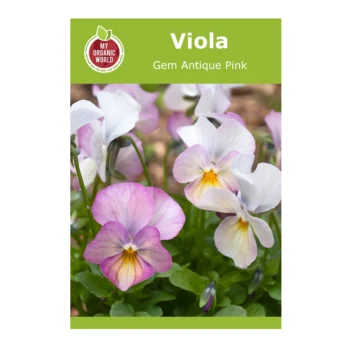
Viola Gem Antique Pink seeds. Violet-purple flowers fade to mauve with turquoise hints.
Great for tiny bouquets, pots, and mass plantings. Hardy annual.
Start indoors now. Transplant outdoors in late fall for winter/spring blooms.
Repacked in Kuwait
Packet 25 seeds
In stock
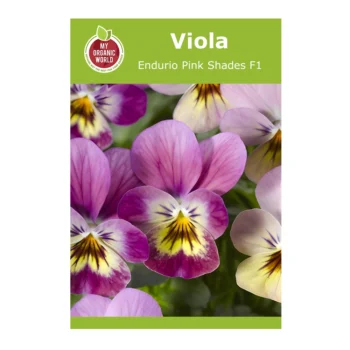
Viola Endurio Pink Shades F1 seeds. Gorgeous antique mix of creams, dusky pink, lilac.
Hardy, free-flowering from fall through winter. Compact plants.
Start indoors now for fall/winter planting. Prefers cool, moist soil, full/part sun.
Repacked in Kuwait
Packet 25 seeds
In stock
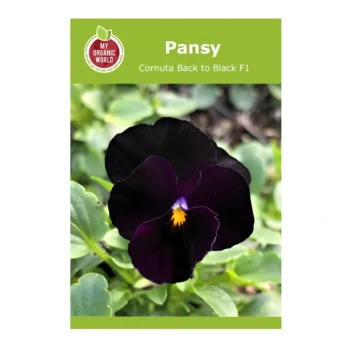
Viola Cornuta Back to Black F1 seeds. Petite pansy with very dark (appears black) flowers & golden centers.
Blooms first year, long-lasting. Compact, Hardy perennial.
Keep dark until germination.
Repacked in Kuwait
Packet 30 Seeds
Only 2 left in stock
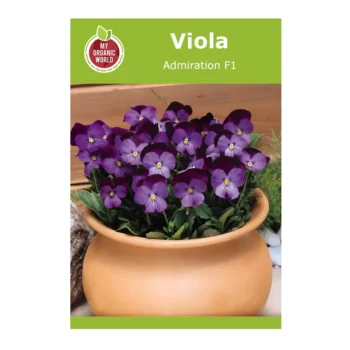
Viola Cornuta Admiration F1 seeds produce large, deep navy blue flowers with yellow eyes.
Great for cut flowers with long vase life. Attracts butterflies, bees, and birds.
Low maintenance and easy to grow in full sun to partial shade.
Ideal for beds, baskets, containers, and ground cover.
Repacked in Kuwait
Packet 50 seeds
In stock
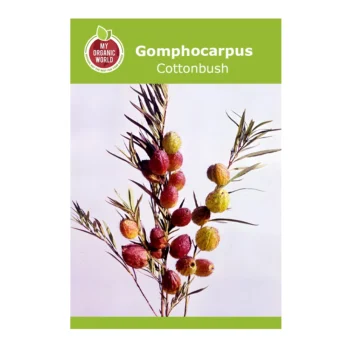
Grow Gomphocarpus fruticosus for unique green and maroon ornamental pods, excellent for cut flowers. Grows to 32 inches.
Packet 20 seeds.
Only 2 left in stock
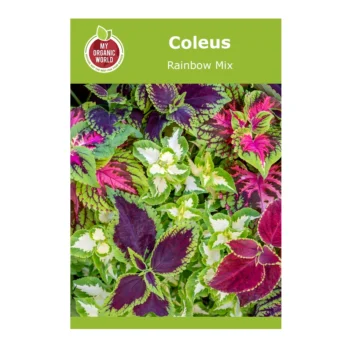
Coleus Rainbow Mix seeds produce vibrant red, pink, and yellow-green foliage, perfect for shady gardens and containers.
Easy to grow annual with Sow Easy seed coating for better handling. Deer-resistant, drought and shade tolerant.
Start indoors, surface sow. Pinch for bushier growth.
Repacked in Kuwait
Packet 50 seeds
In stock
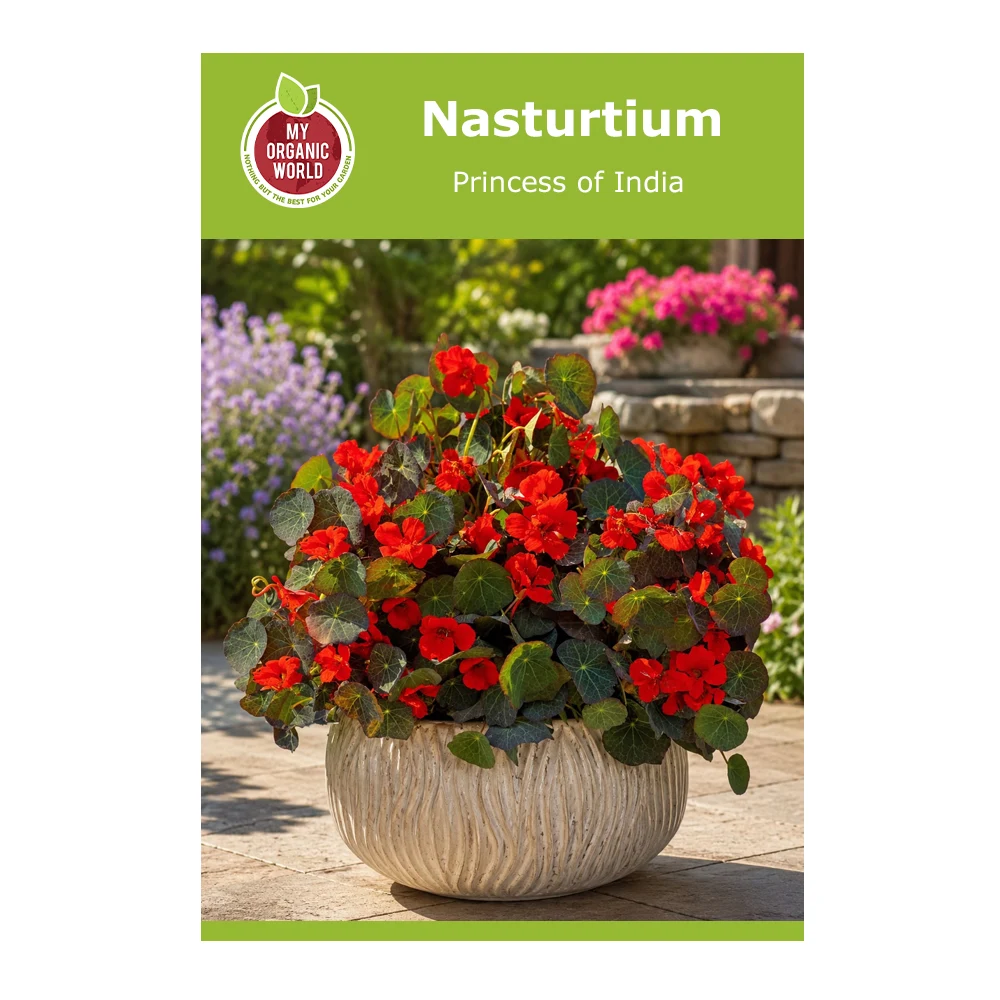
Reviews
There are no reviews yet.