 English
 العربية
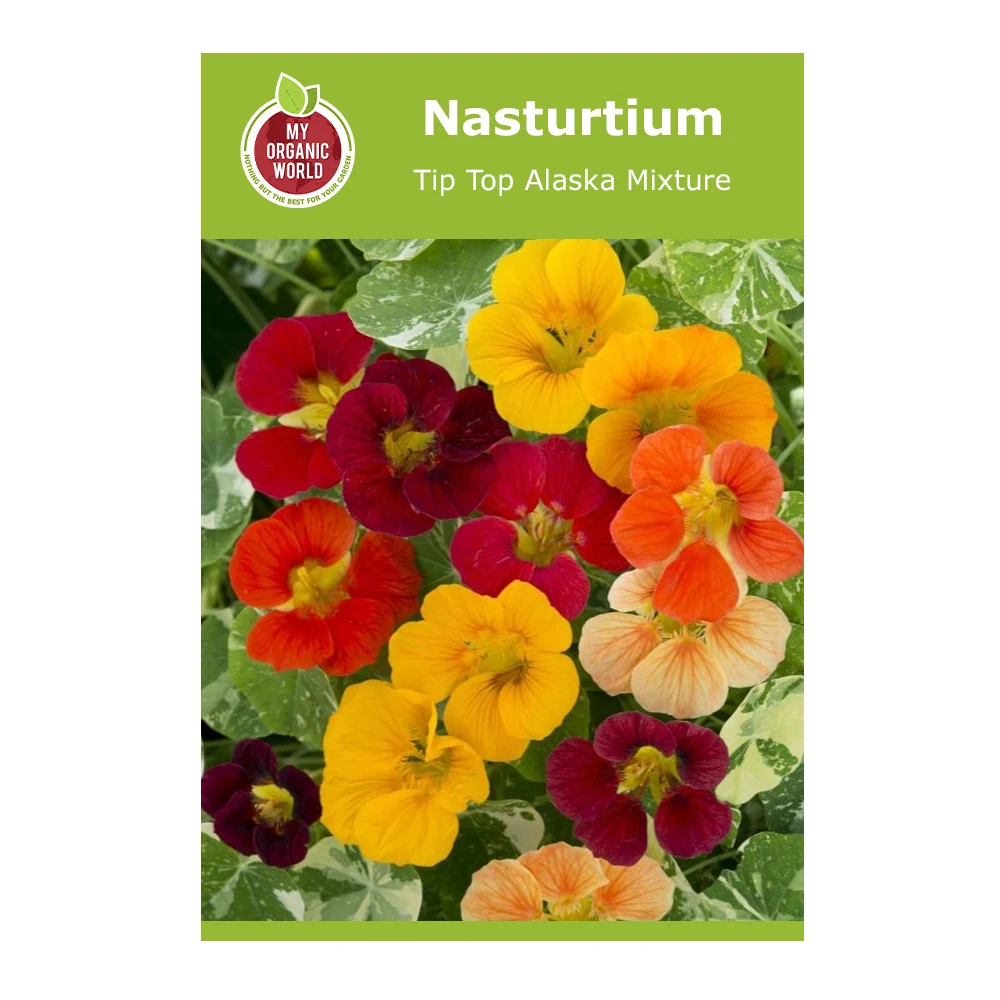
Nasturtium Tip Top Alaska Mixture
1,750 KWD
Nasturtium Tip Top Alaska Mixture Lovely full range of flowers yellow, orange, red, salmon, and cherry, on compact plants with white marbled leaves — a pollinator perfect plant. The attractive foliage of Nasturtium Alaska makes an eye-catching display even before the flowers emerge. Awarded an RHS Award of Garden Merit for its great garden performance. Happy in a bed, border, or even in pots due to its non-trailing habit. Easy, trouble-free annual with unique variegated foliage and beautiful blooms accentuated by prominent veining — an ideal plant for the front of sunny borders and patio tubs.
Repacked in Kuwait
Packet Size: Contains 25 seeds.
In stock
Nasturtium Tip Top Alaska Mixture Seeds
(Tropaeolum minus — Alaska Series — Variegated Foliage Nasturtium — RHS AGM)
The Alaska series of Tropaeolum minus occupies a unique position in the nasturtium world — it is the only compact dwarf nasturtium series that combines the mounding, non-trailing habit of the Tip Top group with the distinctive white-marbled variegated foliage that had previously been the exclusive territory of the large climbing Jewel of Africa. Alaska Hybrids are described as dwarf-bushy, up to 12 inches tall, with white-spotted leaves — the defining characteristic that sets the series apart from all other compact nasturtiums which carry plain green foliage.
Alaska Mix produces 2-inch edible flowers in yellow, crimson, orange, salmon, cherry, with variegated foliage — the complete nasturtium color palette expressed over the white-marbled Alaska foliage. Alaska Mixture delivers the full chromatic range of the species in a single planting, with every color combination — yellow over cream-marbled leaf, crimson over white-mottled leaf, orange over variegated green — providing its own distinct visual character. The variance between individual plants within the mix creates a naturalistic, spontaneous display where no two plants are exactly alike.
Tropaeolum minus ‘Tip Top Alaska mix’ is a compact, bushy annual forming a small mound of rounded, parasol-like, variegated leaves — blooming from winter through spring in mild winter areas with a profusion of long-stalked, funnel-shaped. The blossoms float above the foliage and make a fantastic contrast to the soft green foliage mottled with creamy white. Thrives in full sun in poor, well-drained soils. Rich, fertile soils are not recommended as they yield more foliage but reduce flowering. Drought-tolerant once established.
The ornamental value of the Alaska series is doubled compared to standard single-color nasturtiums: the variegated foliage provides visual interest before any flower appears, and the combination of cream-mottled green leaf and soft-toned flower creates a more complex, painterly display than the simpler contrast of plain green leaf and bold flower. The attractive foliage makes an eye-catching display even before the flowers emerge — the white marbling is most pronounced on young leaves and deepens in contrast under cool conditions.
Nasturtium is a good companion plant for beans, broccoli, cabbage, cucumber, kale, melon, pumpkin, and radish. It can also be used as a trap crop, trapping pests such as aphids and giving a more appealing and delicious meal than nearby vegetable crops. Nasturtiums rank among the most common edible flowers — the delicate blossoms have a sweet, peppery taste similar to watercress. Leaves and unripe seed pods add a citrusy and peppery flavor to salads.
Variety Details
- Botanical Name: Tropaeolum minus
- Series: Tip Top Alaska Mixture
- Awards: RHS Award of Garden Merit (Alaska Mixture)
- Defining characteristic: White-marbled variegated foliage — the only compact mounding nasturtium with variegated leaves
- Seed Type: Open pollinated heirloom
- Plant Type: Hardy annual
- Family: Tropaeolaceae
- Colors — Alaska Mixture: Yellow, orange, red, salmon, cherry, and cream
Key Features
- RHS Award of Garden Merit — independently verified exceptional garden performance
- The only compact mounding nasturtium with white-marbled variegated foliage — ornamental in leaves alone, before any flower appears
- Alaska Mixture: full nasturtium color range over variegated foliage — every color combination individually distinct
- Compact mounding habit 20–30 cm — non-trailing, non-climbing, self-contained
- Tropaeolum minus — smaller, more refined species than T. majus
- Fully edible — flowers, leaves, and unripe seeds with characteristic peppery flavor
- Variegated foliage ornamentally superior to plain-green nasturtiums in mixed container design
- Direct sowing strongly preferred — resents root disturbance
- Poor soil preferred — fertilizing reduces flowering
- Outstanding pollinator value — bees, butterflies, hummingbirds
- RHS-confirmed reliable performance and good garden performance year on year
Plant Information
- Height: 20–30 cm (8–12 inches depending on conditions)
- Spread: 20–30 cm
- Plant Type: Hardy annual
- Habit: Compact, bushy, mounding — non-trailing, non-climbing
- Flower Form: Funnel-shaped, single, open-faced — flowers held above foliage
- Foliage: Rounded parasol-like, green mottled and marbled with creamy-white — ornamental independent of flowering
- Edible: Flowers, leaves, and unripe seeds
- Alaska Mixture flower colors: Yellow, orange, red, salmon, cherry, cream
Germination Instructions
- Nick the seed coat and soak in warm water for 24 hours before planting to encourage germination.
- Direct sow after the last frost into the final growing position — nasturtiums resent root disturbance and perform significantly better when sown directly.
- If starting indoors, use individual peat pots that can be transplanted whole to avoid disturbing the roots.
- Sow 1.5–2 cm deep and firm gently. Keep consistently moist until germination which occurs in 7–14 days at 13–18°C.
- Final spacing: 20–25 cm between plants.
- Water consistently and do not fertilize — poor, well-drained soils produce the best flowering.
- For Kuwait: direct sow outdoors in October for cool-season flowering from November onward.
- Pre-soak seeds overnight before sowing.
Growing Tips
- Thrives in full sun in poor, well-drained soils. Some afternoon shade is appreciated in hot areas.
- Rich, fertile soils are not recommended as they yield more foliage but reduce flowering.
- Drought-tolerant once established. Nasturtium prefers full sun but can tolerate light shade with reduced flowering.
- Average well-drained soil produces the best growth — fertilize sparingly for more flowers.
- Keep plants well-watered as this helps moderate the spiciness of the leaves and flowers.
- Deadhead regularly to maintain continuous flowering.
- The variegated foliage of the Alaska series is at its most vivid and the cream marbling most pronounced under cool conditions and in good light — the pattern can fade in very high heat.
- Leave some seed pods to mature for self-seeding and for harvesting as caper substitutes.
- Nasturtium is a good companion plant for beans, broccoli, and cucumber, also useful as a trap crop attracting aphids away from vegetable crops.
Gulf Planting Season
- Direct sowing outdoors: October to November
- Peak flowering season: November to March
- Note: Tip Top Alaska Mixture is one of the simplest cool-season annuals to establish in Kuwait — it requires no indoor setup, no refrigeration, no special germination conditions, and no fertilizer.
- Direct sow in October after pre-soaking the large seeds overnight, and the plants will establish rapidly in Kuwait’s warm sandy soil and produce their first flowers within 7–10 weeks.
- The variegated Alaska foliage is at its most beautiful and the cream marbling most pronounced during Kuwait’s coolest months of December through February.
Garden & Culinary Uses
- Happy in a bed, border, or even in pots due to its non-trailing habit — the attractive foliage makes an eye-catching display even before the flowers emerge.
- The peppery flavor of the leaves and colorful flowers will enrich salads, and the unripened seeds can be used like capers — delicious combined with cream cheese or butter in canapés.
- An ideal plant for the front of sunny borders and patio tubs — a popular companion plant as the flowers attracts many beneficial insects.
- The prolific blooms are also wonderful used as an attractive edible garnish.
- The Alaska series occupies a distinct position in the Gulf cool-season edible flower garden.
- The variegated foliage adds a dimension of ornamental value that plain-green nasturtiums cannot provide — in mixed containers alongside white pansy, blue lobelia, or silver dusty miller, the cream-mottled Alaska leaves provide a mid-level visual texture that bridges the darker foliage of companion plants and the lighter flower colors above.
- Alaska Mixture provides the full nasturtium color experience over variegated foliage — appropriate where maximum color diversity from a single variety is the design intention.
Only logged in customers who have purchased this product may leave a review.
Related Products
Snapdragon Maryland True Pink produces clear true pink flower spikes on strong plants about 100 cm tall. A reliable variety for cutting gardens and bright border displays.
Packet Size: Contains 25 seeds.
Repacked in Kuwait
In stock
Amaranthus Cruentus Bronze a tall, architectural upright amaranth producing dense, richly colored plumes ranging from intense bronze to deep chestnut-brown over bold dark green foliage. Pure in color without green or pistachio undertones, making it the most dramatic single-tone amaranth for cut flower work, dried arrangements, and back-of-border impact.
Repacked in Kuwait
Packet Size: Contains 250 seeds.
In stock
Ammobium alatum Grandiflorum produces bright white papery flowers with yellow centers on upright plants about 60–80 cm tall. A classic flower for cutting gardens and dried flower arrangements.
Repacked in Kuwait
Packet Size: Contains 100 seeds.
In stock
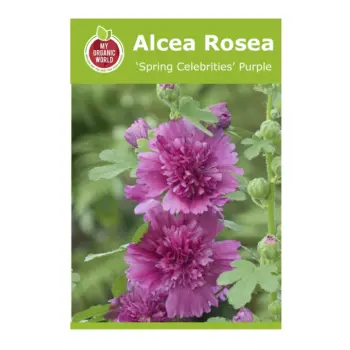
Alcea Rosea Spring Celebrities Purple (hollyhock) seeds a bold, compact hollyhock delivering large double to semi-double deep purple blooms with excellent basal branching from its first year. The richest colour tone in the Spring Celebrities series, outstanding for ornamental borders and container displays.
Repacked in Kuwait
Packet Size: Contains 10 seeds.
In stock
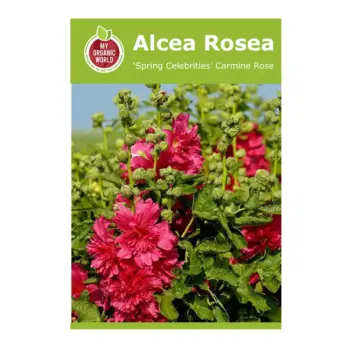
Spring Celebrities Carmine Rose hollyhock seeds, a striking dwarf hollyhock producing large, ruffled double blooms in brilliant carmine-rose shades from its first year. Compact habit makes it ideal for containers, small gardens, and raised bed plantings throughout the Gulf cool season.
Repacked in Kuwait
Packet Size: Contains 10 seeds.
In stock
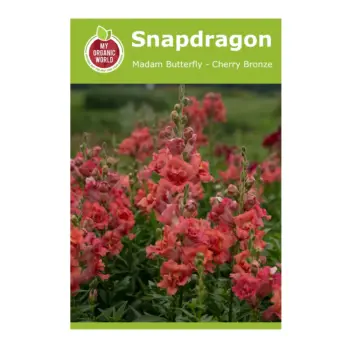
Madam Butterfly Cherry Bronze snapdragon produces elegant double azalea-like flowers in warm cherry bronze tones on tall plants about 60–75 cm. A premium variety for cutting gardens and ornamental borders.
Packet Size: Contains 25 seeds.
Repacked in Kuwait
In stock
Reviews
There are no reviews yet.