 English
 العربية
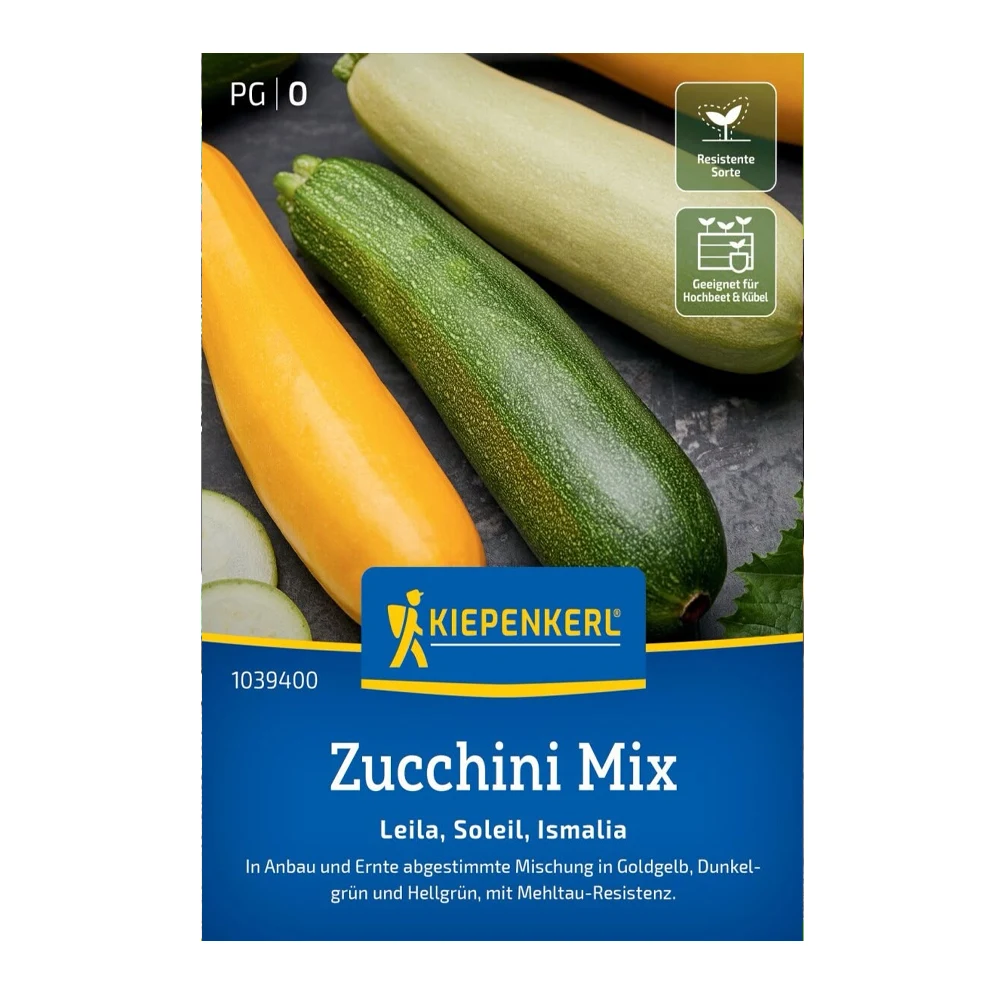
Zucchini Mix Leila, Soleil & Ismalia
1,950 KWD
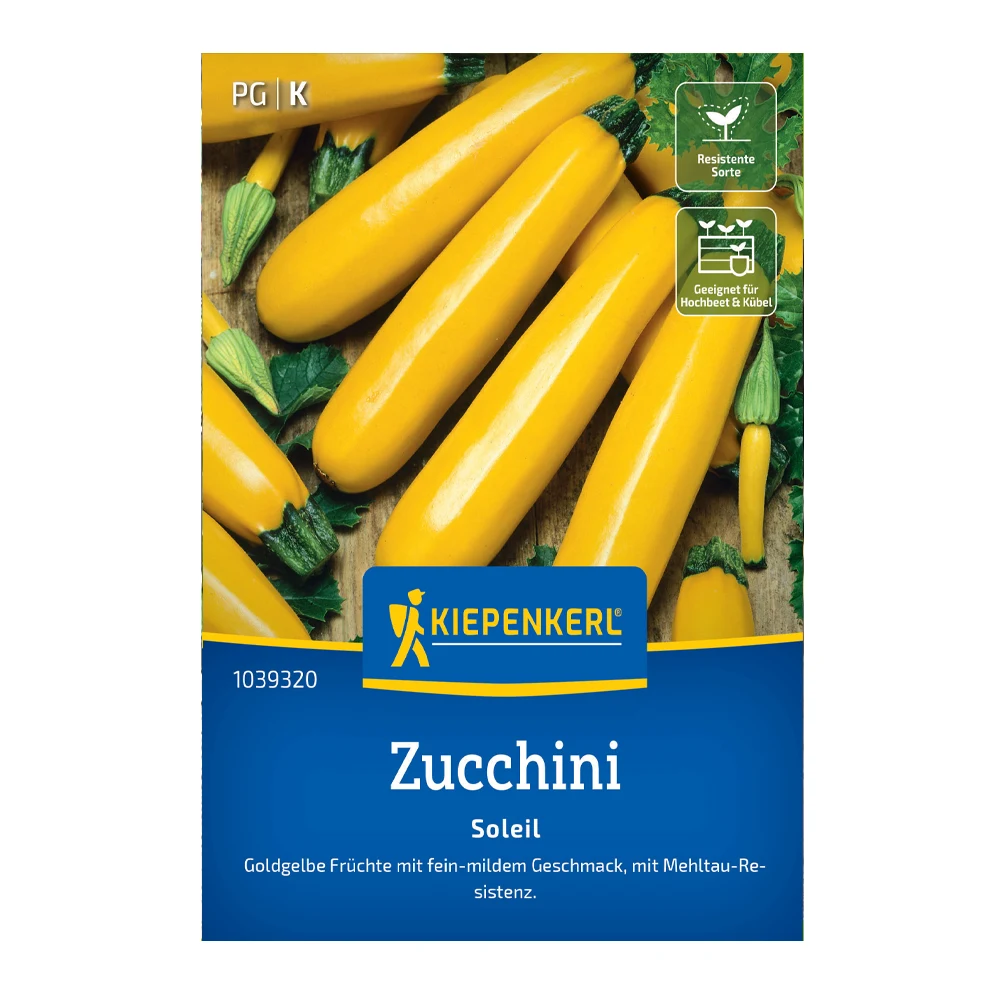
Zucchini Mix Leila, Soleil & Ismalia, the Kiepenkerl Zucchini Mix combines three coordinated F1 hybrid varieties in cultivation and harvest timing: golden-yellow ‘Soleil’ with a fine mild flavor, dark green ‘Leila’ with a mild spicy aroma, and firm-fleshed, fruity-sweet ‘Ismalia’. This zucchini blend offers varied flavors and is resistant to powdery mildew, suitable for outdoor areas, raised beds, and containers. The bushy plants are easy to harvest and add variety to the garden. In addition to the courgettes themselves, the flowers are also edible — providing decorative and tasty flowers alongside the fruit. All three varieties share identical growing requirements and harvest timing, allowing the gardener to produce three colors and three subtly different flavors from a single coordinated sowing operation.
Only 2 left in stock
Zucchini Mix Leila, Soleil & Ismalia Seeds
(Cucurbita pepo — Kiepenkerl )
Zucchini Mix – Leila, Soleil & Ismaliai a Cucurbita pepo F1 hybrid blend combining three named varieties bred specifically to share identical sowing, growing, and harvest timing — allowing the three colors and flavor profiles to be cultivated as a single coordinated planting rather than three separate sowing operations. The mixture consists of the golden-yellow ‘Soleil’ with fine-mild flavor, the dark green ‘Leila’ with mild-spicy aroma, and the firm-fleshed, fruity-sweet ‘Ismalia’. The bushy plants are easy to harvest and resistant to powdery mildew. Suitable for open ground, raised beds, and larger containers.
‘Ismalia‘ is known for its fast-ripening, pale green, white-speckled, firm-fleshed cylindrical fruit with a fine sweet flavor. It is excellent for grilling or raw use. The bushy plants are easy to harvest and offer a robust variety with a long harvest period, suitable for open ground, greenhouse, raised bed, and larger containers. This variety also reaches a growth height of 40–50 cm and shows resistance to powdery mildew and mosaic virus.
The bushy, compact growth habit shared by all three varieties — confirmed at 40–60 cm height — distinguishes this mix from trailing or vining squash types, making the planting significantly more manageable in raised beds and containers where space is at a premium. Regular harvesting of young fruits from 10 to 15 cm in length improves yield and quality. This harvest discipline — picking fruit while still young and tender rather than allowing it to mature fully — is the single most important management practice for the entire Cucurbita pepo genus, as continued young-fruit harvest signals the plant to continue flowering and fruit-setting rather than diverting energy into seed maturation in a few large overripe fruits.
The mildew resistance bred into all three component varieties is a significant practical advantage. Powdery mildew is the most common and yield-limiting disease of zucchini in warm climates with periods of humidity or temperature fluctuation between day and night — exactly the conditions that occur during Kuwait’s autumn and spring transition periods. Resistant varieties maintain productive leaf surface area and photosynthetic capacity considerably longer into the season than susceptible varieties, translating directly into a longer harvest window and higher total yield per plant.
Variety Details
- Botanical Name: Cucurbita pepo
- Mix Components: ‘Soleil’ (golden-yellow, fine mild flavors) — ‘Leila’ (dark green, mild spicy aroma) — ‘Ismalia’ (pale green, white-speckled, firm-fleshed fruity-sweet)
- Producer: Kiepenkerl
- Seed Type: F1 hybrid
- Plant Type: Warm-season annual
- Family: Cucurbitaceae
- Habit: Bushy, compact, non-trailing
- Height: 40–60 cm
- Plant Spacing: 60 cm
- Disease Resistance: Powdery mildew resistant (all three varieties) — mosaic virus resistant (‘Ismalia’)
- Fruit Colors: Golden-yellow — dark green — pale green with white speckling
- Fruit Form: Cylindrical
- Harvest Fruit Length: 10–15 cm for best yield and quality
- Flowering Period: Two productive windows — warm autumn (mid-September to November) and warm spring (February to May), with potential winter bridging in mild years (December–January)
- Harvest Period: Late October through November (autumn window); February through May (spring window); continuous in mild winters
- Position: Sunny to partial shade
- Edible: Fruit and flowers
- Uses: Open ground, raised beds, large containers, greenhouse
- Germination: 6–10 days at 21–25°C
Key Features
- Kiepenkerl— three coordinated F1 hybrid varieties in one packet
- Three distinct colors — golden-yellow, dark green, and pale green speckled fruit from a single sowing
- Three distinct flavor profiles — fine mild, mild spicy, and fruity sweet
- Powdery mildew resistant — all three component varieties
- Mosaic virus resistant — ‘Ismalia’ component
- Bushy compact non-trailing habit 40–60 cm — significantly more space-efficient than vining squash
- Suitable for open ground, raised beds, large containers, and greenhouse
- High yield with regular young-fruit harvest — confirmed best practice
- Edible flowers — decorative and culinary value beyond the fruit
- F1 hybrid vigor — strong, reliable, uniform plant performance
- Coordinated harvest timing across all three varieties simplifies garden management
- Sunny to partial shade tolerant
- Fast germination — 6–10 days at warm soil temperature
Plant Information
- Height: 40–60 cm
Plant Spacing: 60 cm
Plant Type: Warm-season annual
Habit: Bushy, compact, non-trailing
Fruit Form: Cylindrical
Fruit Colors: Golden-yellow (‘Soleil’) — dark green (‘Leila’) — pale green with white speckling (‘Ismalia’)
Flesh: Firm, fine-textured — mild to fruity-sweet flavor depending on variety
Disease Resistance: Powdery mildew (all three) — mosaic virus (‘Ismalia’)
Edible: Fruit and flowers
Germination Instructions
- For an early start, zucchini seeds can be pre-grown in pots from a suitable warm-season date.
- After germination, young plants need a bright position and slightly cooler temperatures.
- Transplant pre-grown plants to open ground or carry out direct sowing once the warm season is established.
- Sow seeds 2–3 cm deep, one to two seeds per pot or planting position.
- Maintain a soil temperature of 21–25°C for reliable germination.
- Germination occurs within 6–10 days. If sowing indoors for transplanting, start 3–4 weeks before the planned outdoor planting date — do not start indoor seedlings too early, as overgrown transplants establish poorly.
- After germination, grow seedlings in bright light at slightly reduced temperature to prevent legginess.
- Transplant to final outdoor position or sow directly once nighttime temperatures are consistently above 15°C and there is no risk of cold damage.
- Space plants 60 cm apart in all directions to accommodate the bushy mature spread.
- In Kuwait, this corresponds to sowing indoors in early September with outdoor transplanting from mid-September, or direct sowing outdoors from mid-September once daytime temperatures begin to moderate.
Growing Tips
- The vegetable seeds love sunny, semi-shaded locations.
- Zucchini is a heavy feeder relative to most plants in this catalogue — incorporate generous compost or well-rotted organic matter before planting and continue with regular feeding through the growing season, particularly once fruiting begins.
- Water consistently and deeply — zucchini has a large leaf surface area relative to its root system and is prone to wilting stress in inconsistent moisture conditions, though established plants recover quickly once watered.
- Mulch around the base to conserve soil moisture and suppress weeds.
Regular harvesting of young fruits from 10 to 15 cm in length improves yield and quality — this is the single most important management practice across both productive windows; allowing even one or two fruits to mature fully on the plant signals reduced flowering and fruit-set for the remainder of the season. - Harvest every 1–2 days during peak production as fruit can grow rapidly.
- In Kuwait, plants sown in early-to-mid September typically flower and fruit well through the autumn window.
- As the coldest weeks of winter approach in late December and through February, growth and flowering may slow or pause — in sheltered, south-facing, or otherwise favorable microclimates, plants may continue bearing through this period with reduced vigour, while in more exposed positions production may stop until temperatures rise again.
- Maintain the planting through the coldest weeks rather than removing it, as it can often resume active growth and flowering once the spring warm-up begins in February.
- A second sowing in late January to early February will reliably capture the spring productive window from February through May.
- The compact bushy habit at 40–60 cm means staking is generally unnecessary, but fruit should be kept off direct soil contact with a layer of mulch or a raised support to prevent rot.
Gulf Planting Season
- First window — Warm autumn planting:
- Sow indoors in biodegradable pots: late August through September.
- Transplant outdoors: September through October.
- Expected harvest: October through December.
- Second window — Spring planting:
- Sow indoors: late January through February.
- Transplant outdoors: February through March.
- Expected harvest: March through May.
- Note: Zucchini is a warm-season crop that requires careful timing in Kuwait’s climate — it cannot tolerate the genuine cold of Kuwait’s coldest winter weeks from late December through February, nor the extreme heat of summer from May through August.
- The most reliable production window is the early part of Kuwait’s outdoor growing season — sowing in early to mid-September allows the crop to establish and reach peak production during the warm moderate weather of late September through November, before the coldest weeks of winter slow growth and fruit set.
- A second sowing in February, once the coldest weeks have passed, can extend production into the warming weather of March and April before summer heat ends the season.
- The mildew resistance bred into all three component varieties is a meaningful advantage during Kuwait’s transitional periods in October–November and February–March, when fluctuating day and night temperatures create conditions that favor powdery mildew development in susceptible varieties.
- Regular harvest of young 10–15 cm fruit every 1–2 days throughout the production window is essential to sustain the long harvest period that makes this F1 hybrid mix a productive choice for the Kuwait warm-season vegetable garden.
Companion Planting
- Zucchini is an outstanding companion plant in the warm-season kitchen garden.
- The edible flowers in addition to the courgettes themselves provide decorative and tasty flowers for the garden, attracting pollinators in significant numbers.
- The large, bright orange-yellow zucchini flowers are among the most attractive pollinator resources for bees of any vegetable in the kitchen garden — heavy pollinator activity on zucchini flowers benefits the pollination of all flowering vegetables planted nearby.
- Zucchini pairs well with nasturtiums, which can be grown at the base of the bushy zucchini plants as a living mulch and companion that deters aphids while the zucchini’s broad leaf canopy provides light shade that benefits cooler-preferring companion plants.
- Beans and corn are traditional companions in the classic Three Sisters planting system, where zucchini’s broad leaves suppress weeds and retain soil moisture for the companion crops.
Garden & Culinary Uses
- The Zucchini Mix is suited to open ground vegetable beds, raised beds, large containers, and greenhouse production.
- The three-variety coordination makes it the most efficient zucchini product for gardeners wanting visual and flavor diversity without managing three separate sowing schedules. ‘Ismalia’ fruit are excellent for grilling or raw use; ‘Soleil’ offers a fine mild flavor; ‘Leila’ provides a mild spicy aroma.
- The three flesh and flavor profiles together provide a versatile culinary range from a single planting — mild varieties suited to raw preparations such as carpaccio and salads, and the more aromatic ‘Leila’ suited to grilled, roasted, and sautéed preparations where its spicier character is more pronounced.
- In Gulf Arab and Mediterranean cuisine, zucchini is a foundational vegetable — used in stuffed preparations (mahshi), stews, grilled and roasted dishes, fritters, and raw in salads when harvested young and tender.
- The mixed color presentation of golden-yellow, dark green, and pale speckled green fruit from a single planting provides an immediately distinctive visual element for any vegetable dish or market display.
- The edible flowers — best harvested in the early morning while fully open — can be stuffed, battered and fried, or used raw as a delicate garnish, a culinary application valued highly in Italian and broader Mediterranean cooking traditions.
Only logged in customers who have purchased this product may leave a review.
Related Products
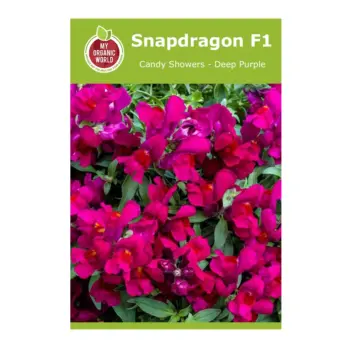
Candy Showers Deep Purple snapdragon produces trailing stems covered with deep purple flowers on compact spreading plants about 15–25 cm tall. A colorful variety suitable for containers, hanging baskets, and garden borders.
Packet Size: Contains 25 seeds.
Repacked in Kuwait
In stock
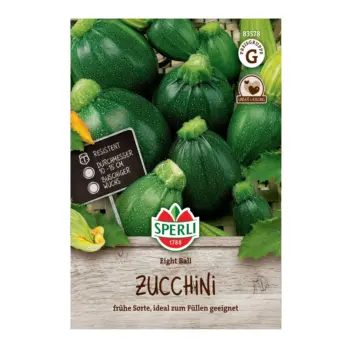
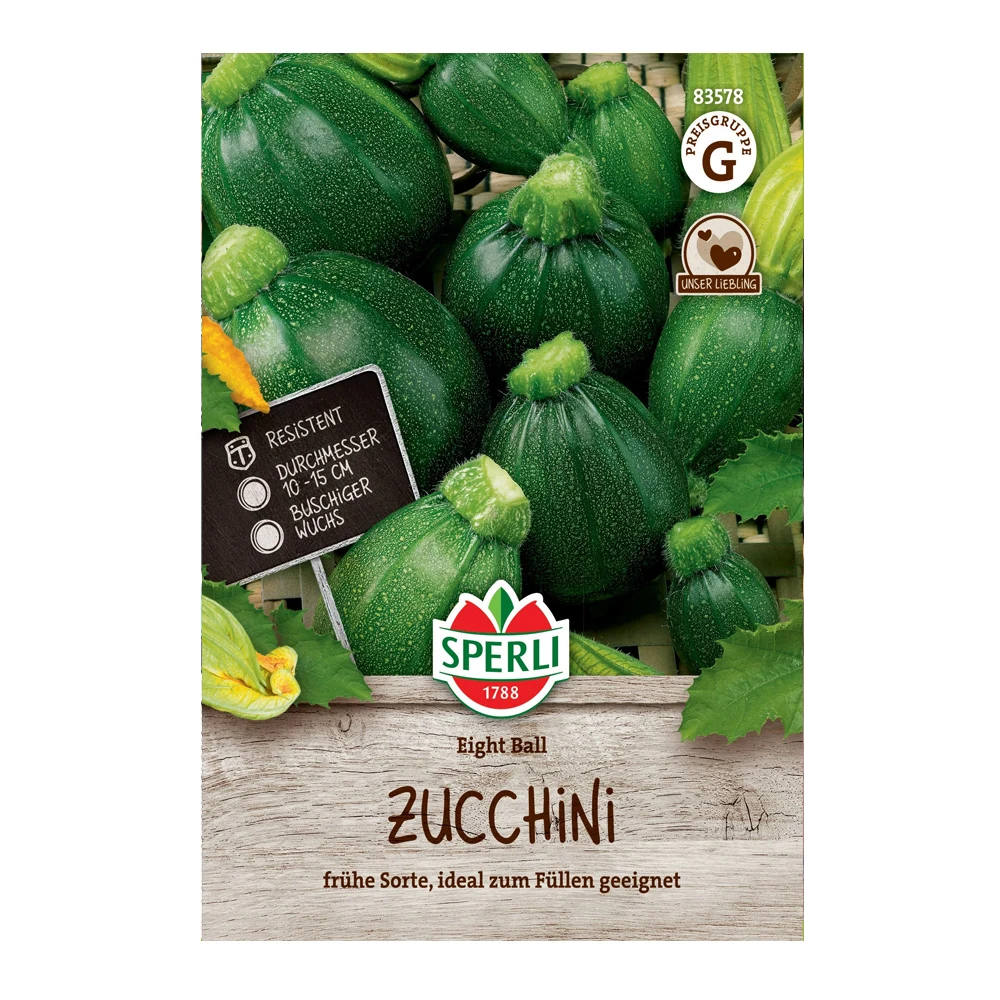
Zucchini Eight Ball is a dark-green, round-fruited F1 hybrid zucchini bread for the highest standards of garden performance. It produces round, dark-green fruit of 10–15 cm diameter on a bushy, early-ripening plant, ideal for beds, raised beds, and containers, and versatile in the kitchen. Eight Ball F1 is a unique hybrid zucchini known for its round, shiny, dark green fruit with subtle speckling. The vigorous, upright bush habit allows for easy harvesting and multiple pickings throughout the season, with excellent flavor and uniform shape. The distinctive spherical fruit shape sets this variety apart from standard cylindrical zucchini, making it especially well-suited to stuffed preparations where the round cavity holds fillings far more effectively than elongated fruit.
Only 2 left in stock
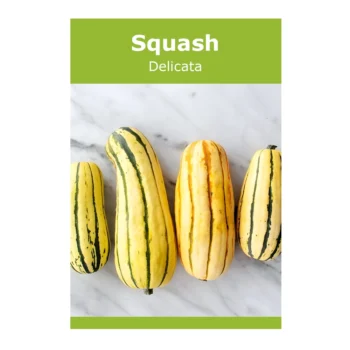
Buy Delicata Squash seeds.
High sugar, delicate sweet flavor.
Rust-white with green stripes.
1-3 lbs. 100 days to harvest.
Only 2 left in stock
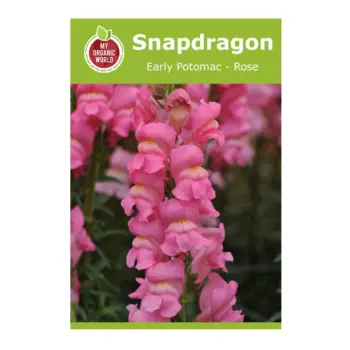
Early Potomac Rose snapdragon produces tall spikes of soft rose-pink flowers on strong stems about 100 cm tall. An excellent variety for cutting gardens, borders, and pollinator friendly plantings.
Packet Size: Contains 25 seeds.
Repacked in Kuwait
In stock
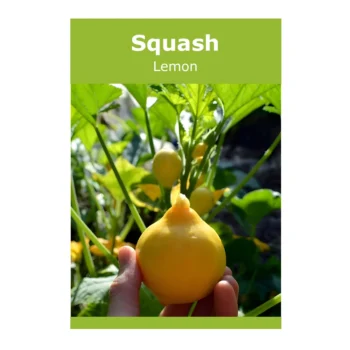
Buy Lemon Squash seeds.
Looks like a lemon. Huge yields, best insect resistance.
Very tasty. Popular market variety.
In stock
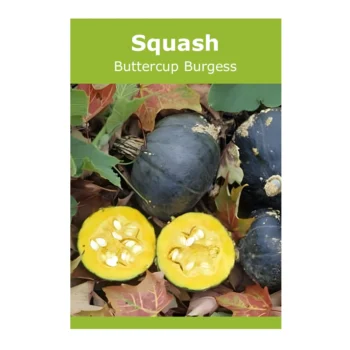
Buy Buttercup Burgess Squash seeds.
Sweet flesh, great storage.
Relatively early (95 days).
Compact, bushy plant. Full sun.
Only 1 left in stock
Reviews
There are no reviews yet.