 English
 العربية
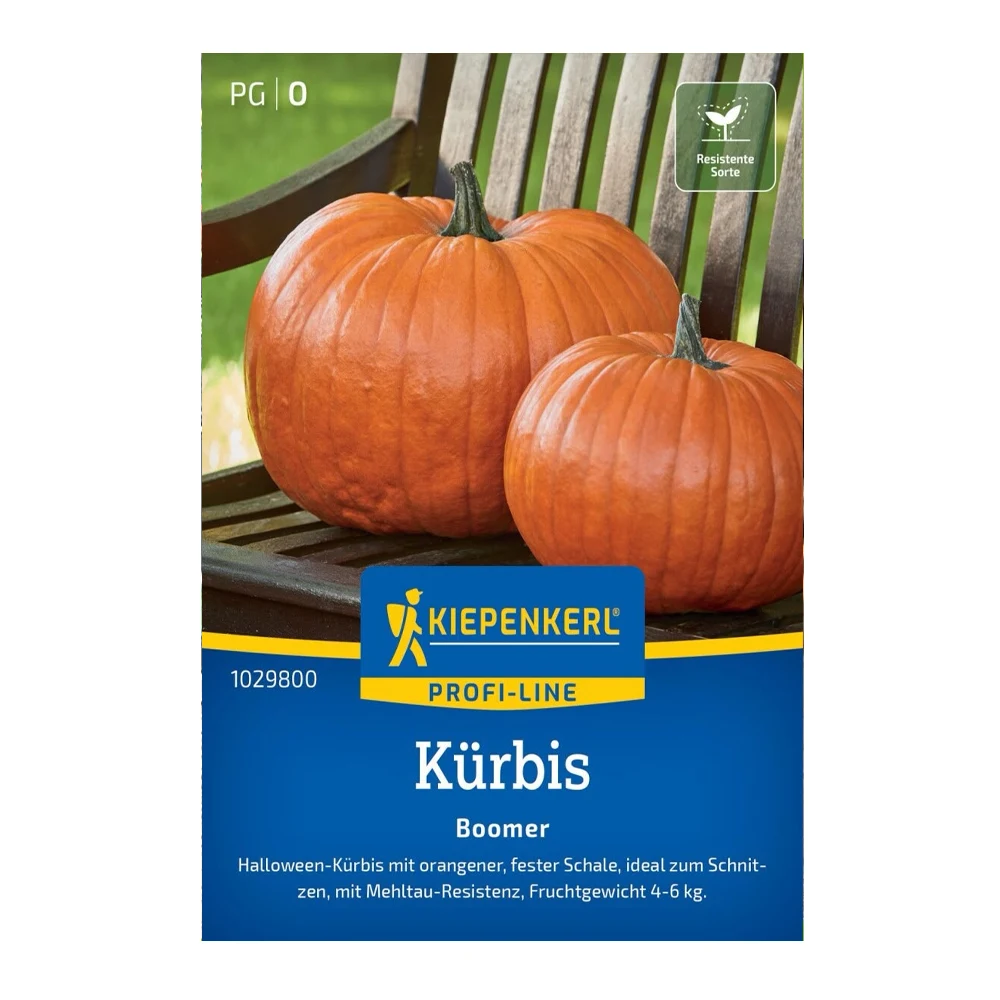
Pumpkin Boomer
1,950 KWD
Pumpkin Boomer a firm-skinned, deep orange pumpkin variety from Kiepenkerl’s, producing substantial fruit weighing 4–6 kg with confirmed resistance to powdery mildew — the most common and yield-limiting disease affecting pumpkins worldwide. The smooth, durable skin protects the flesh well in storage, and a single fruit provides a generous quantity of cooking pumpkin from one harvest, suitable for roasting, soups, purées, and a wide range of savory and baked preparations.
In stock
Pumpkin Boomer Seeds
(Cucurbita pepo — Kiepenkerl)
Pumpkin Boomer is a Cucurbita pepo variety producing firm, smooth–skinned, deep orange fruit weighing 4–6 kg per pumpkin, with confirmed resistance to powdery mildew — a disease that, when unmanaged, causes premature leaf death, reduces fruit size and color intensity, and compromises both yield and storage quality. Damage from powdery mildew can be diverse, not only reducing yields through decreased fruit size or number but causing premature senescence of infected leaves that exposes fruit to sunscald, often resulting in poor rind quality. The resistance bred into Boomer supports healthier foliage further into the growing season, allowing the plant to channel more energy into fruit development and resulting in firmer, better–colored, longer–storing pumpkins.
The substantial 4–6 kg fruit size makes Boomer a practical choice for the home kitchen garden where a single pumpkin can supply multiple meals across several weeks of storage. The dense, moderately fibrous flesh characteristic of Cucurbita pepo is well suited to a wide range of cooking methods — roasting brings out natural sweetness through caramelization, while the flesh purées smoothly for soups and baked goods once cooked down. The firm rind that develops on a healthy, disease-resistant plant such as Boomer is also a practical advantage for storage, allowing harvested fruit to be kept for weeks in a cool, dry location without significant deterioration.
Beyond the flesh, the seeds of Boomer — like all Cucurbita pepo pumpkins — are fully edible once cleaned and roasted, providing a nutritious by-product from the same fruit that requires minimal additional preparation.
Variety Details
- Botanical Name: Cucurbita pepo
- Variety: Boomer
- Producer: Kiepenkerl
- Seed Type: Open-pollinated
- Plant Type: Warm-season annual — trailing vine
- Family: Cucurbitaceae
- Habit: Sprawling vine — requires significant ground space
- Fruit Weight: 4–6 kg
- Fruit Form: Rounded with grooved ribs
- Fruit Skin: Smooth, firm, deep orange
- Flesh: Dense, moderately fibrous — suitable for roasting and purée
- Disease Resistance: Powdery mildew resistant — confirmed on packet
- Days to Maturity: Approximately 100–120 days
- Position: Full sun
- Edible: Flesh and seeds
- Uses: Roasting, soups, purées, baking, stews, roasted seeds
- Germination: 6–10 days at 21–25°C
Key Features
- Kiepenkerl — professional German seed house pumpkin variety
- Powdery mildew resistant — confirmed on packet, supporting healthier yield and storage quality
- Substantial fruit weight 4–6 kg — provides multiple meals from a single pumpkin
- Dense, moderately fibrous flesh — versatile for roasting, soups, purées, and baking
- Firm, smooth, durable skin — supports good storage life after harvest
- Open-pollinated — suitable for seed saving
- Sustained healthy foliage later into season due to mildew resistance
- Edible seeds in addition to flesh — roast for a nutritious snack
- Good keeper — stores for weeks in cool, dry conditions
- Suitable for open ground with ample space for trailing vines
Plant Information
- Plant Type: Warm-season annual
- Habit: Sprawling, trailing vine — requires 2–3 m² or more per plant
- Fruit Weight: 4–6 kg
- Fruit Form: Round, ribbed
- Fruit Skin: Smooth, firm, deep orange
- Flesh: Dense, moderately fibrous — orange-colored cooking flesh
- Disease Resistance: Powdery mildew resistant
- Edible: Flesh and seeds
Germination Instructions
- Sow seeds 2–3 cm deep, one to two seeds per planting position, in nutrient-rich, well-drained soil at a soil temperature of 21–25°C.
- Germination occurs within 6–10 days. For indoor pre-growing, start seeds in individual pots 3–4 weeks before the planned transplant date.
- After germination, grow seedlings in bright light at a slightly cooler temperature to prevent legginess.
- Transplant or direct sow outdoors once temperatures are consistently warm with no risk of cold damage.
- Space plants generously — pumpkin vines require considerably more room than zucchini, typically 1.5–2 m between plants in all directions to accommodate the sprawling mature growth.
- In Kuwait, sow in early-to-mid September for the autumn growing window, allowing the full 100–120-day cycle to reach maturity before the coldest weeks of winter
Growing Tips
- Pumpkins are heavy feeders requiring fertile, well-drained soil rich in organic matter — incorporate generous compost before planting and continue regular feeding through the growing season, particularly once fruit begins to develop, as a 4–6 kg fruit requires substantial sustained nutrient input to develop full size and dense flesh quality.
- Water deeply and consistently, especially during fruit development, as inconsistent moisture can affect both fruit size and the eventual texture of the cooked flesh.
- Good air circulation between plants and avoiding overhead watering that wets foliage further supports the variety’s natural disease resistance.
- As fruit develops, place a layer of straw, cardboard, or mulch beneath each pumpkin to prevent direct soil contact, which can cause rot and reduce both storage life and edible quality.
- Allow the fruit to mature fully on the vine before harvest, as fully ripened pumpkins develop denser, sweeter flesh and store considerably longer than fruit picked before full maturity.
- After harvest, cure the pumpkin in a warm, dry, well-ventilated spot for 1–2 weeks to harden the skin further before moving to cool storage, which significantly extends usable storage life.
Gulf Planting Season
- Sow indoors or direct sow outdoors: Early to mid-September
- Transplant (if started indoors): Mid-to-late September
- Harvest: Late December to January (100–120 days from sowing)
- Storage: Cure for 1–2 weeks in a warm, dry, ventilated spot, then store cool and dry for several weeks to a few months
- Note: Boomer requires Kuwait’s longest available warm-to-cool growing window to reach full size and develop dense, well-ripened flesh, making early autumn sowing essential.
- Sowing in early-to-mid September allows the plant to establish during the still-warm late summer transition, develop its sprawling vine structure through the moderate weather of October and November, and complete fruit sizing and ripening during the cooler, more stable conditions of December.
- Harvesting only once the fruit has fully matured on the vine, rather than picking early, is essential for developing the dense, naturally sweet flesh that makes Boomer most valuable as a cooking pumpkin.
- Given the considerable ground space and full growing season this variety requires, it is best suited to gardeners with a dedicated outdoor growing area.
- The confirmed powdery mildew resistance is a meaningful practical advantage during Kuwait’s September–October transitional period, supporting healthier plants, better fruit development, and improved storage quality at harvest.
Companion Planting
- Pumpkins share the strong companion planting value common to the Cucurbita genus.
- The large bright orange-yellow flowers attract bees in significant numbers throughout the flowering period, providing an exceptional pollinator resource that benefits all nearby flowering vegetables.
- Pumpkin pairs traditionally with beans and corn in the classic Three Sisters companion planting system, where the pumpkin’s broad sprawling leaf canopy suppresses weeds and retains soil moisture for the companion crops while the beans contribute nitrogen to the soil.
- Nasturtiums grown at the base of pumpkin vines can serve as a living mulch and aphid deterrent.
- Given the considerable ground space pumpkin vines require, careful planning is needed to ensure companion plants are not overwhelmed by the pumpkin’s vigorous spreading growth.
Garden & Culinary Uses
- Boomer is suited to open ground vegetable gardens with ample space for its sprawling vine habit, requiring a dedicated growing area of 2–3 m² or more per plant.
- As a substantial cooking pumpkin, a single fruit at 4–6 kg provides considerable culinary value across multiple meals and storage weeks.
- The dense, moderately fibrous flesh is well suited to roasting, where dry heat caramelizes natural sugars and concentrates flavor — roasted pumpkin can be served as a simple side dish, blended into smooth soups, or mashed into purées for both savory dishes and baked goods.
- The flesh also holds up well in stews and slow-cooked preparations common in Gulf Arab and Mediterranean cuisine, where pumpkin contributes body and natural sweetness to savory dishes.
- The seeds, once removed from the harvested fruit, cleaned of pulp, and dried, can be roasted with a little oil and salt for a nutritious, protein-rich snack — a simple way to use the entirety of the harvested pumpkin with minimal waste.
- Properly cured and stored fruit can keep for several weeks to a few months in cool, dry, well-ventilated conditions, making a single harvest a practical and economical source of cooking pumpkin across an extended period.
Only logged in customers who have purchased this product may leave a review.
Related Products
Candy Showers Orange snapdragon produces bright orange flowers on compact trailing plants about 15–25 cm tall. A colorful variety ideal for containers, hanging baskets, and garden borders.
Packet SizeL Contains 25 seeds.
Repacked in Kuwait
In stock
Buy Buffy F1 Pumpkin seeds.
Small, cream-white decorative pumpkin (10cm ).
Perfect for painting.
Strong climber. Sunny location.
Not edible.
Only 2 left in stock
Rose Mint seeds produce aromatic lavender-rose flower spikes on compact plants about 45–60 cm tall. A fragrant herb suitable for pollinator gardens, herb beds, borders, and containers.
Repacked in Kuwait
Packet Size: Contains 50 seeds.
In stock
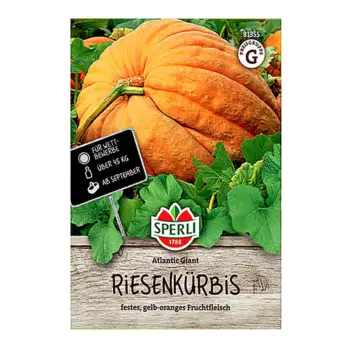
Atlantic Giant Pumpkin — officially known as Dill’s Atlantic Giant — is the most famous and record-breaking pumpkin variety in the world, developed by Nova Scotia farmer Howard Dill through 30 years of dedicated selective breeding and first patented in 1978. This extraordinary Cucurbita maxima variety routinely produces fruits weighing 90 to 150 kg or more in home gardens without special treatment, and has set world records exceeding 1,000 kg in competitive growing. Long, sprawling vines of 5 to 10 meters require substantial growing space, rich soil, and consistent watering. In Kuwait, grown in the warm autumn and spring seasons for spectacular garden display, seasonal decoration, and events. Days to harvest: 120 to 130 days.
In stock
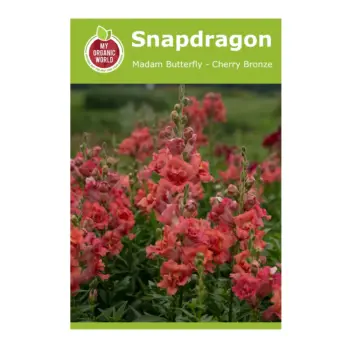
Madam Butterfly Cherry Bronze snapdragon produces elegant double azalea-like flowers in warm cherry bronze tones on tall plants about 60–75 cm. A premium variety for cutting gardens and ornamental borders.
Packet Size: Contains 25 seeds.
Repacked in Kuwait
In stock
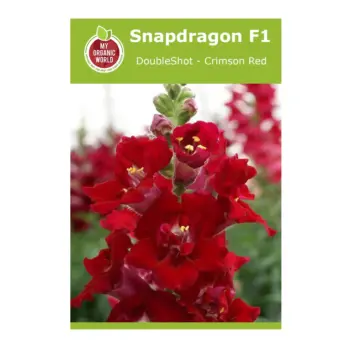
Snapdragon F1 DoubleShot Crimson Red produces deep crimson red double flowers on compact plants about 45–50 cm tall. A colorful variety suitable for containers, borders, and cool season garden displays.
Packet Size: Contains 25 seeds
Repacked in Kuwait
In stock
Reviews
There are no reviews yet.