 English
 العربية
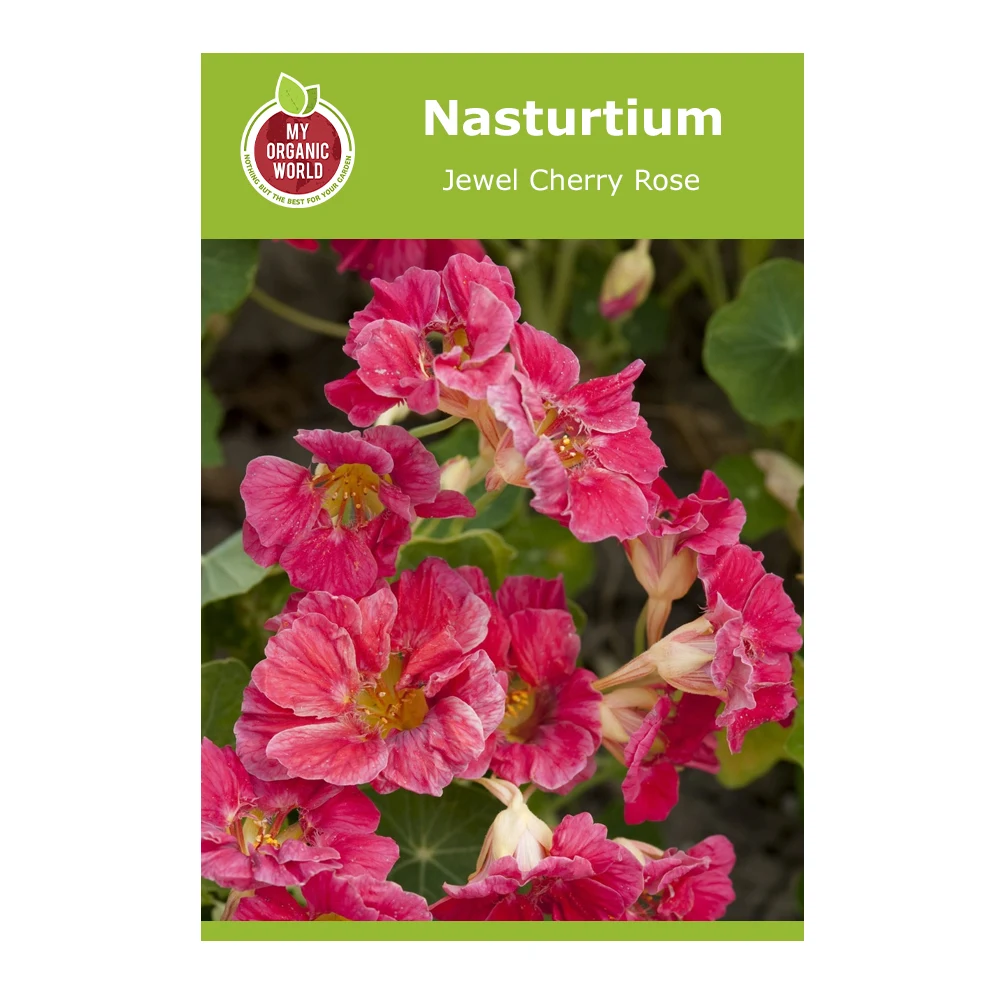
Nasturtium Jewel Cherry Rose
1,500 KWD
Nasturtium Jewel Cherry Rose is a reselected, compact, early, and uniform Tropaeolum minus delivering a single, saturated cherry-rose flower color with outstanding consistency across the planting. A classic dwarf nasturtium of the Jewel series, it produces upward-facing blooms held clearly above the foliage on neat mounding plants of 25–30 cm — combining the clean habit of a top-flowering variety with the warm, high-visibility color of cherry rose. Fully edible flowers and leaves, outstanding companion plant value, and proven performance in borders, containers, and as a cut flower for floral design.
Repacked in Kuwait
Packet Size: Contains 25 seeds.
Out of stock
Nasturtium Jewel Cherry Rose Seeds
(Tropaeolum minus — Jewel Series — Compact Dwarf — Open-Pollinated)
Nasturtium Jewel Cherry Rose is a Tropaeolum minus — the Small Nasturtium — an open-pollinated dwarf annual of 25–30 cm producing a uniform, saturated cherry-rose flower color on compact mounding plants. It belongs to the Jewel series, a group of dwarf nasturtiums selected for compactness, early flowering, and color uniformity — varieties that priorities a clean, controlled habit over the sprawling vigor of trailing types. Within the Jewel series, Cherry Rose is the warm-pink representative, occupying a distinct color position in the nasturtium palette that sits between the deep reds and the soft creams — a pure, glowing cherry rose that carries both warmth and luminosity simultaneously.
The variety has been reselected for compactness, early flowering, and color uniformity — three breeding objectives that together produce a plant of exceptional garden reliability. Reselection in an open-pollinated variety involves repeated cycles of selecting only the most uniform, true-to-type individuals for seed production, progressively concentrating the desired characteristics within the population. The result in Jewel Cherry Rose is a nasturtium where the cherry-rose color, compact habit, and early flowering onset are expressed with considerably more consistency than in an unselected open-pollinated population — approaching the predictability of a hybrid while retaining open-pollinated seed-saving viability.
The flowers of Jewel Cherry Rose are held above the foliage — a characteristic that distinguishes it from standard nasturtium varieties where blooms sit at or below the leaf canopy. In the compact dwarf habit of Tropaeolum minus, the upward-facing flower position means the cherry-rose color registers with maximum visual impact against the plain green foliage background. The flowers carry a sweet, spicy scent alongside the characteristic nasturtium peppery fragrance — an aromatic quality that adds sensory value to container plantings and border edges where the planting is encountered at close range.
As a cut flower, Jewel Cherry Rose performs with the stem length and flower quality that supports floral design use — the glowing cherry-coral tone mixing with considerable versatility across warm-toned arrangements. The upward-facing bloom orientation means flowers present naturally without manipulation in arrangements, and the vase life of 7 to 10 days is reliable for a nasturtium variety.
Variety Details
- Botanical Name: Tropaeolum minus
- Series: Jewel
- Variety: Jewel Cherry Rose
- Seed Type: Open-pollinated — reselected for compactness, early flowering, and color uniformity
- Plant Type: Hardy annual
- Family: Tropaeolaceae
- Habit: Compact dwarf mounding — non-trailing, non-climbing, top-flowering
- Flower Form: Single, open-faced, upward-facing — 5–6 cm diameter
- Flower Color: Saturated cherry rose — uniform across plants; a small percentage may produce off-type colors
- Foliage: Rounded, parasol-like — plain mid-green, no variegation
- Edible: Flowers, leaves, and unripe seed pods
- Uses: Bedding, border edging, containers, hanging baskets, cut flower, edible flower, companion planting, seed saving
- Germination: 7–14 days at 13–18°C
Key Features
- Reselected open-pollinated Tropaeolum minus — compactness, early flowering, and color uniformity bred into the population
- Single saturated cherry-rose color — uniform, high-visibility warm pink across the planting
- Top-flowering, upward-facing habit — blooms held clearly above foliage for maximum color impact
- Compact dwarf mounding habit 25–30 cm — non-trailing, self-contained, ideal for containers and border edging
- Sweet, spicy floral scent — aromatic quality adds sensory value at close range
- Cut flower performance — stem length and 7–10-day vase life suitable for floral design
- Fully edible — flowers, leaves, and unripe seeds with characteristic peppery nasturtium flavor
- Direct sowing strongly preferred — resents root disturbance
- Poor soil preferred — fertilizing reduces flowering
- Outstanding pollinator and beneficial insect value
- Darkness required for germination — seeds must be fully covered
- Fast germination: 7–14 days at 13–18°C
Plant Information
- Height: 25–30 cm
- Spread: 25–30 cm
- Plant Type: Hardy annual
- Habit: Compact dwarf mounding — non-trailing, non-climbing, top-flowering, upward-facing blooms
- Flower Form: Single, open-faced, upward-facing — 5–6 cm diameter
- Flower Color: Saturated cherry rose — uniform; small percentage may produce off-type colour
- Foliage: Rounded, parasol-like — plain mid-green, no variegation
- Scent: Sweet, spicy floral with peppery undertone
- Edible: Flowers, leaves, and unripe seeds
Germination Instructions
- Direct sowing is strongly preferred — nasturtiums resent root disturbance and perform best when sown in their final position.
- Sow seeds 1–2 cm deep directly into moist, well-drained soil.
- Seeds require darkness for germination — ensure full soil coverage.
- Nick the seed coat lightly and soak in warm water for 12–24 hours before sowing to soften the tough outer coat and improve germination speed.
- Keep soil evenly moist but not waterlogged during the germination period.
- Germination occurs within 7–14 days at a soil temperature of 13–18°C. As seedlings develop, thin to 25–30 cm spacings.
- If starting indoors, use individual biodegradable peat or coir pots to avoid root disturbance at transplanting — do not use standard trays.
- Allow 70–80 days from sowing to first flowering under typical conditions.
Growing Tips
- Jewel Cherry Rose thrives in full sun in poor to average, well-drained soil. Do not fertilize — rich soil or any fertilizing produces lush foliage growth at the direct expense of flower production.
- The compact dwarf habit of Jewel Cherry Rose means the plant is naturally self-contained and does not require staking or support, but the upward-facing flowers benefit from a position where they receive unobstructed light from above to maintain their upright orientation and color intensity.
- Water consistently but avoid waterlogging — nasturtiums are drought-tolerant once established but perform best with regular moisture during the flowering season.
- Deadhead spent flowers regularly to extend the blooming season and maintain the clean, uniform appearance that reselected Jewel series varieties are capable of sustaining.
- Leave some seed pods to mature at the end of the season for self-seeding and seed saving. The unripe green seed pods can be pickled as a caper substitute before the seed coat hardens.
Gulf Planting Season
- Direct sowing outdoors: October to November
- Peak flowering season: December to March
- Note: Jewel Cherry Rose occupies a distinct color position in the nasturtium collection — the only variety delivering a pure, uniform cherry-rose tone across the planting.
- Where Bloody Mary explores the full crimson-to-cream spectrum through open-pollinated natural variation, and Sahin’s Paso Doble pairs dark red and cream in a deliberate formula bicolor, Jewel Cherry Rose concentrates the warm-pink register into a single cohesive color statement.
Companion Planting
- Jewel Cherry Rose carries the full companion planting value of the Tropaeolum genus.
- It acts as a trap crop for aphids, drawing the insects preferentially to nasturtium foliage and away from neighboring vegetables.
- It deters whitefly and attracts beneficial predatory insects that contribute to natural pest management across the kitchen garden.
- The compact dwarf habit of Jewel Cherry Rose makes it particularly suited to close border planting alongside vegetables — its contained footprint allows it to provide companion plant benefits without competing with or overrunning adjacent crops.
- Ideal companions include tomatoes, cucumbers, brassicas, melons, and radishes.
Garden & Culinary Uses
- Jewel Cherry Rose is suited to bedding, border edging, container planting, hanging baskets, cut flower production, and edible flower use.
- In the garden, the uniform cherry-rose color of the reselected Jewel series delivers a more controlled, design-conscious appearance than the spontaneous color variation of open-pollinated mixes such as Bloody Mary — a planting of Jewel Cherry Rose presents as a cohesive block of warm pink that anchors color schemes with precision.
- Planted alongside Bloody Mary, the solid cherry-rose uniformity of Jewel Cherry Rose provides the structural color definition that Bloody Mary’s natural variation cannot — the two varieties complement each other in a combined planting where Jewel Cherry Rose sets the dominant tone and Bloody Mary introduces movement and complexity within the same warm-pink register.
- As a cut flower, the upward-facing blooms and sufficient stem length of Jewel Cherry Rose support floral design use — the glowing cherry-coral tone combining with exceptional versatility across warm seasonal arrangements.
- The sweet, spicy floral scent adds value in close-range applications such as table arrangements and edible garnishes.
- As an edible flower, the uniform cherry-rose petals present with striking consistency on the plate — the saturated color reading with intensity against white and pale food backgrounds.
- Flowers, leaves, and unripe seed pods are all edible with the characteristic peppery nasturtium flavor.
Only logged in customers who have purchased this product may leave a review.
Related Products
Madam Butterfly Cherry Bronze snapdragon produces elegant double azalea-like flowers in warm cherry bronze tones on tall plants about 60–75 cm. A premium variety for cutting gardens and ornamental borders.
Packet Size: Contains 25 seeds.
Repacked in Kuwait
In stock
Amaranthus Cruentus Autumn’s Touch A tall 100 cm high, architectural annual producing large, feathery upright plumes that open in soft apple-green then deepen through pistachio, buff, and peach to rich bronze-copper tones as the season matures. Bold vertical accent for borders, outstanding as a fresh and dried cut flower, and edible from leaf to seed.
Repacked in Kuwait
Packet Size: Contains 250 seeds.
In stock
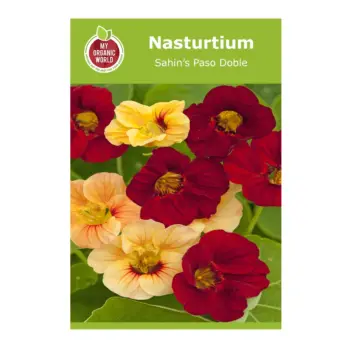
Nasturtium Sahin’s Paso Doble is a unique formula mix offering a great color combination of top-flowering dark red and cream varieties — the only nasturtium that delivers a deliberate bicolor design using two separate complementary varieties combined in a single packet. Tropaeolum minus, Sahin’s series, Paso Doble, 30 cm height, formula mix, suitable as a bedding plant, pot plant, edible flower, attractive to beneficial insects and hummingbirds, and suitable for microgreen, baby leaf or sprouting.
Repacked in Kuwait
Packet Size: Contains 25 seeds.
Only 2 left in stock
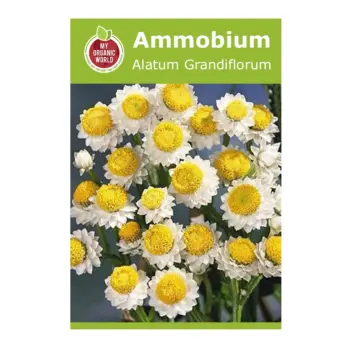
Ammobium alatum Grandiflorum produces bright white papery flowers with yellow centers on upright plants about 60–80 cm tall. A classic flower for cutting gardens and dried flower arrangements.
Repacked in Kuwait
Packet Size: Contains 100 seeds.
In stock
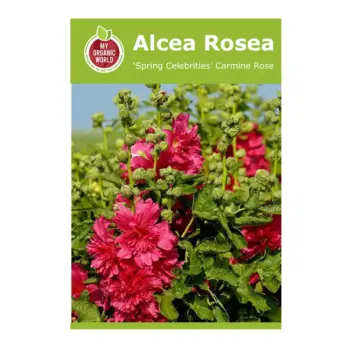
Spring Celebrities Carmine Rose hollyhock seeds, a striking dwarf hollyhock producing large, ruffled double blooms in brilliant carmine-rose shades from its first year. Compact habit makes it ideal for containers, small gardens, and raised bed plantings throughout the Gulf cool season.
Repacked in Kuwait
Packet Size: Contains 10 seeds.
In stock
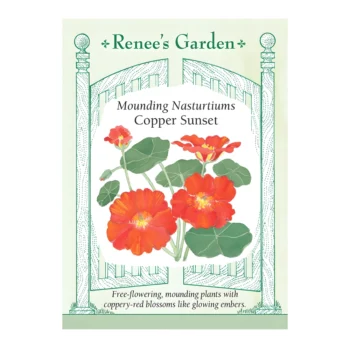
EXCLUSIVE Mounding Nasturtium Copper Sunset: Unique spurless semi-double blooms in warm coppery-red hues resemble a sunset. Mounding habit, deep green foliage, attracts hummingbirds.
Edible leaves & flowers with a spicy kick. Ideal for beds & baskets.
30-35 seeds.
Only 1 left in stock
Reviews
There are no reviews yet.