 English
 العربية
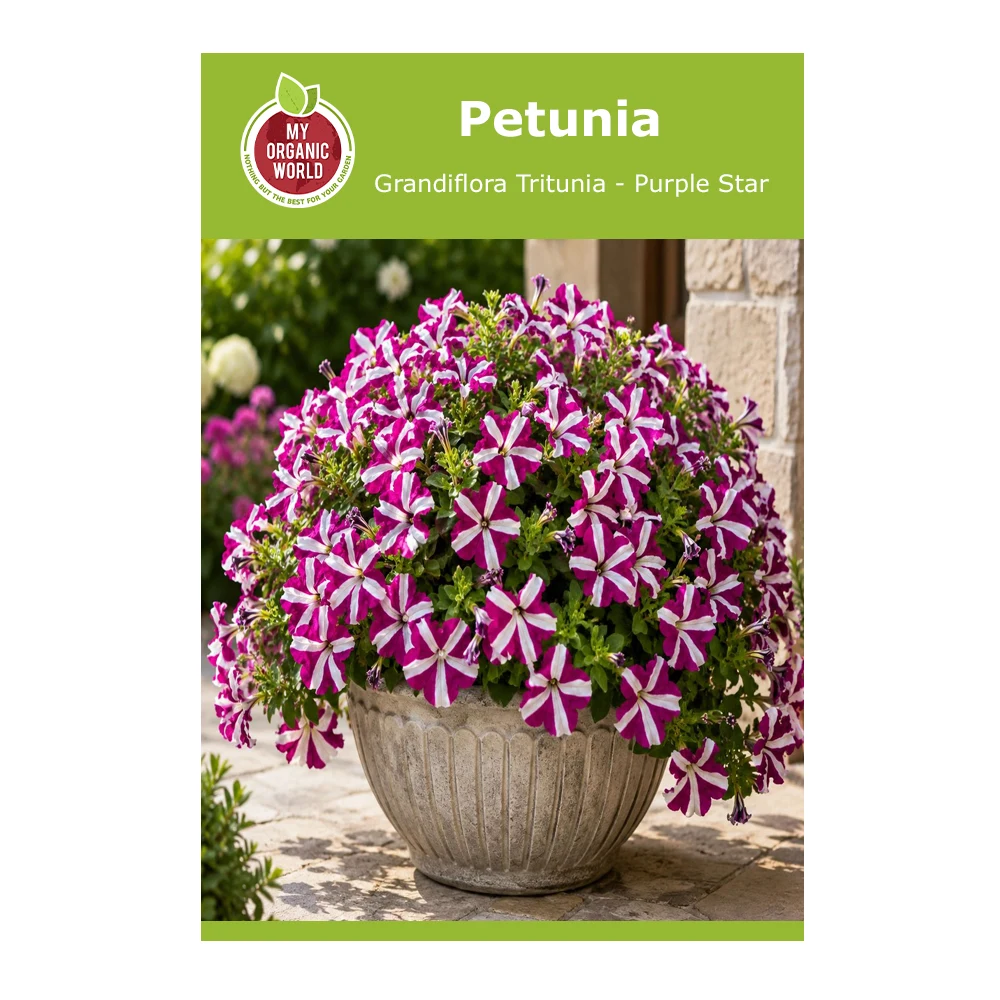
Petunia Grandiflora Tritunia Purple Star
1,950 KWD
Petunia Grandiflora Tritunia Purple Star is a complete range of traditional large-flowered grandiflora petunias from Syngenta Flowers — combining the best performing varieties of Ultra, Bravo and Storm into one streamlined high-performance series. All varieties match for uniformity in habit and flower timing, with excellent performance from the grower bench to retail to the garden. The earliest flowering traditional petunia, especially under short day conditions — with large, trumpet-shaped blooms of 8–10 cm on compact upright mounding plants of 25–30 cm.
Repacked in Kuwait
Packet Size: Contains 30 pelleted seeds
In stock
Petunia grandiflora Tritunia Purple Star Seeds
(Petunia grandiflora — TriTunia Series — Syngenta Flowers)
Petunia Grandiflora Tritunia Purple Star represents the consolidation of three long-standing grandiflora petunia series — Ultra, Bravo, and Storm — into one simplified, high-performance line. The breeders combined the best performing varieties from each predecessor series, and all TriTunia varieties match for uniformity in habit and flower timing, ensuring consistent display in mixed plantings across different colors.
Petunia grandiflora is the large-flowered class of petunia — distinct from multifloras, which produce smaller but more numerous flowers, and from the spreading Wave types that priorities ground coverage. Grandiflora petunias produce large-flowered blossoms of 8–10 cm of both single and double-flowering cultivars forming mounds of colorful solid, striped, deeply veined, variegated, or picotee-edged blooms. Best in a cool, dry, sunny environment in protected areas — they dislike hot, wet, or windy conditions. TriTunia delivers the classic large grandiflora flower in a compact, upright plant that is specifically suited for containers, retail pots, and border edging rather than the wide-spreading landscape coverage of the Wave series.
The earliest flowering traditional petunia, especially under short day conditions — this is TriTunia’s most commercially significant characteristic for Kuwait growers. The short-day early flowering response means that plants sown in September and transplanted in October will be actively stimulated by Kuwait’s naturally shortening November days to flower earlier and more freely than they would in the long-day conditions of a northern European summer. This accelerated flowering under short days makes TriTunia one of the best-timed cool-season petunias for the Gulf calendar.
The Star pattern varieties — Purple Star — carry a distinctive bicolor pattern: a vivid white star radiates from the center of the flower against the background color, creating a five-pointed starlike mark that extends down the center of each petal. This star pattern is characteristic of the grandiflora petunia’s natural petal pigmentation and is most vivid in direct sunlight.
TriTunia Purple Star Large single blooms in rich purple-violet with a white star from the center — the deepest and most saturated of the three Star colors. Purple in the grandiflora class has a richness that smaller-flowered petunia types cannot fully express — the large 8–10 cm bloom surface area allows the purple pigmentation to develop its full depth, and the white star provides a luminous contrast center.
Variety Details
- Botanical Name: Petunia grandiflora (Petunia x hybrida — grandiflora type)
- Series: TriTunia
- Breeder: Syngenta Flowers
- Series Origin: Consolidation of Ultra, Bravo, and Storm series
- Seed Type: F1 Hybrid, pelleted
- Plant Type: Half-hardy annual
- Family: Solanaceae
- Flowe Color: Purple Star
- Key characteristic: Earliest flowering traditional petunia under short day conditions
Key Features
- Syngenta TriTunia — combines the best of three established grandiflora series: Ultra, Bravo, and Storm
- Earliest flowering traditional petunia under short day conditions — ideal for Kuwait’s short winter days
- Large grandiflora blooms of 8–10 cm — significantly larger than multiflora and spreading types
- Compact upright mounding habit of 25–30 cm — no staking, ideal for containers and borders
- High uniformity across all colors — all varieties matched for habit and flower timing
- Purple Star: rich purple-violet with white star — deepest color in the Star range
- Seeds require light to germinate — surface sow without covering
- Recommended containers: 9–10.5 cm pots and above
Plant Information
- Height: 25–30 cm
- Spread: 25–30 cm
- Recommended Pot Size: 9–10.5 cm minimum
- Plant Type: Half-hardy annual
- Habit: Compact, upright, mounding
- Flower Size: 8–10 cm across (large grandiflora)
- Flower Form: Single, large trumpet-shaped open bloom
- Days to Flower: 9–11 weeks from sowing (short day conditions accelerate this)
Germination Instructions
- Sow TriTunia petunia seed on the surface of moist, good quality seed compost and press gently in without covering — petunias require light to germinate.
- Maintain 22–24°C.
- Germination takes 7–10 days. Place the tray in a propagator or seal in a clear plastic bag to maintain humidity until germination. Once seedlings are large enough to handle with two to three true leaves, transplant into individual 7–8 cm pots and grow on at 18–20°C before moving to the final outdoor position.
- Final spacing: 20–25 cm between plants. Deadhead spent flowers regularly to encourage continuous blooming — unlike Wave and Tidal Wave spreading petunias, grandiflora types benefit from regular deadheading to maintain their best display.
- For Kuwait: sow indoors in air-conditioned conditions in September for transplanting in October–November.
- TriTunia’s short-day early flowering response means October-transplanted plants will be actively stimulated by Kuwait’s naturally shortening November and December days — expect first flowers within 9–10 weeks of sowing in cool-season conditions.
Growing Tips
- Grow in full sun to part shade in moderately fertile, well-drained soil enriched with organic matter.
- Grandiflora petunias prefer a cool, dry sunny environment in protected areas — they dislike hot, wet, or windy conditions. Water regularly but allow the top 2–3 cm of soil to dry between waterings — consistent overwatering promotes foot rot and botrytis.
- Feed with a balanced liquid fertilizer every two weeks throughout the flowering season.
- Deadhead spent blooms by pinching or snapping cleanly at the peduncle — with grandiflora petunias this is important because the large spent blooms are heavier and more prominent than those of smaller-flowered types.
- Pinch back young plants at 10–15 cm height to encourage branching and a fuller display.
- In Kuwait, position in full sun November through February and transition to afternoon shade as temperatures rise from March onward to extend the display season.
- The compact 25–30 cm habit makes
Gulf Planting Season
- Indoor sowing (air-conditioned, surface sow): September to mid-October
- Transplant outdoors: mid-October to November
- Peak flowering season: November to March — earliest flowering response triggered by Kuwait’s short winter days
- Note: TriTunia’s defining advantage for Kuwait’s cool-season garden is its short-day early flowering response — the variety flowers earlier than most conventional grandiflora petunias when day length is short, meaning Kuwait’s November–February short days actively accelerate the display rather than limiting it.
- This makes TriTunia one of the best-timed seed petunias for the Gulf calendar.
- The compact 25–30 cm habit and large 8–10 cm blooms position it as the premium container and border petunia for gardeners who want the full visual drama of the large grandiflora flower in a manageable, container-appropriate plant.
Garden Uses
TriTunia occupies a distinct position in the petunia range — between the compact bedding types and the vigorous spreading Hedgiflora types.
Its large 8–10 cm grandiflora blooms provide the maximum flower size and visual drama available from a seed-grown petunia, while its compact 25–30 cm upright habit keeps it fully manageable in containers, window boxes, and border edging without the sprawling infrastructure requirements of Tidal Wave.
Only logged in customers who have purchased this product may leave a review.
Related Products
Petunia grandiflora Limbo GP Blue Veined is an F1 hybrid grandiflora petunia producing large, light blue flowers with distinct darker blue veining on compact, non-stretching plants reaching 20–25 cm. A refined, patterned variety that adds visual depth and detail to containers, borders, and ornamental displays throughout the Gulf winter season.
Packet Size: Contains 20 seeds.
Repacked in Kuwait
In stock
Petunia Single Merlin Morn Pink seeds: large pink/white blooms (3″+), sweet scent, fast-growing, compact (10″x14″), pelleted. Great for baskets/planters.
25 seeds.
Repacked in Kuwait
In stock
Petunia Spreading Easy Wave Mix seeds: fast-growing, versatile (baskets/beds), wide color range, 30″ spread, heat/cool tolerant, attracts bees. Needs light.
10 pelleted seeds.
Repacked in Kuwait
In stock
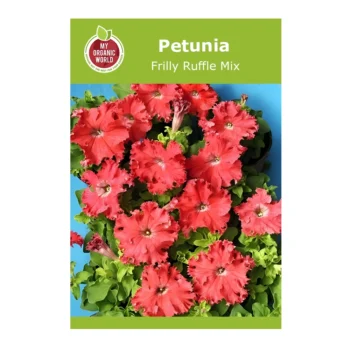
Grow Petunia Frilly Ruffle Mix seeds for huge 5″ ruffled and waved grandiflora blooms in a dramatic mix of contrasting, often veined, colors. Grows to 8″. Needs light to germinate.
50 seeds.
Repacked in Kuwait
In stock
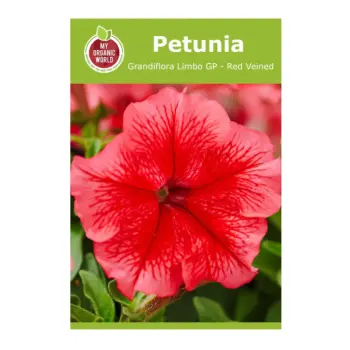
Petunia grandiflora Limbo GP Red Veined is an F1 hybrid producing large red flowers with distinct darker red veining on naturally compact, well-branched plants reaching 20–30 cm in height. A striking choice for containers, borders, and high-impact color displays throughout the Gulf winter season.
Packet Size: Contains 20 seeds.
Repacked in Kuwait
In stock
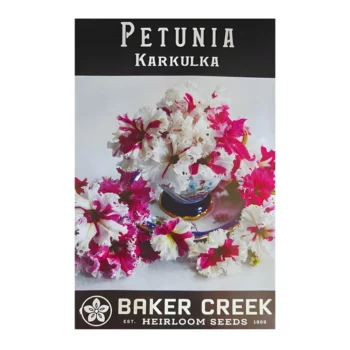
Petunia Karkulka: Cheerful bubblegum-pink and white bicolored blooms with ruffled edges. Compact plants (1 ft) ideal for beds and containers. Czech variety.
In stock
Reviews
There are no reviews yet.