 English
 العربية
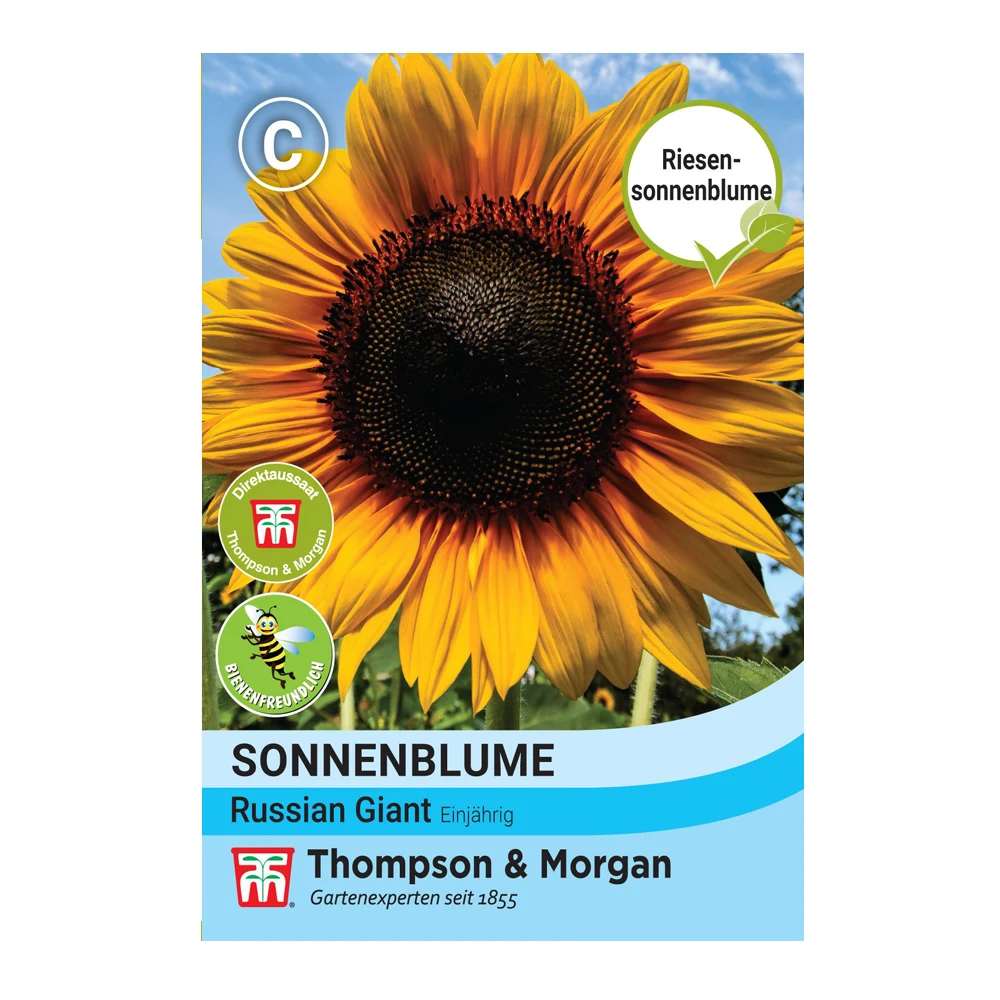
Sunflower Russian Giant
1,950 KWD
Sunflower Russian Giant is the original heirloom giant sunflower — the annual sunflower that was cultivated and harvested for food by Native Americans for centuries, introduced to Europe by the Spanish in the 1500s, developed as a major oil crop during the 18th century by Russian farmers, and returned to North America by the 1880s with the introduction of the Mammoth Russian Sunflower. Growing up to 3 m tall with huge golden-yellow flower heads of 30 cm in diameter on thick, sturdy stalks, it is the image of summer — a garden spectacle, a pollinator magnet, a bird feeder, and a source of large edible seeds all in a single easily grown plant
Out of stock
Sunflower Russian Giant Seeds
(Helianthus annuus — Giant Heirloom Sunflower — Open Pollinated)
Helianthus annuus ‘Russian Giant’ is the heirloom variety that established the template for all subsequent giant single-headed sunflowers. The annual sunflower is a North American species cultivated and harvested for food by Native Americans for centuries. The Spanish introduced it to Europe by the 1500s, where it became widespread as an oil crop and an ornamental. During the 18th century Russian farmers were manufacturing sunflower oil on a commercial scale and a cultivated variety returned to America by the 1880s with the introduction of Mammoth Russian Sunflower.
This centuries-long journey — from North American wildflower to Russian oil crop to global ornamental — is one of the most remarkable stories in agricultural botany, and Russian Giant is the direct descendant of the Russian oil-crop selection that completed that journey.
Given perfect conditions, Russian Giant can get to 3 meters high and produces the famous-looking yellow sunflower with a diameter of up to 30–45 cm. The structure of the plant at this scale is genuinely impressive — the stem thickens progressively from ground to apex, developing a woody core by the time the plant reaches full height, and the single enormous flower head that terminates it is supported by this natural structural reinforcement rather than branching.
The flower head itself is a composite of two distinct flower types: the golden-yellow ray florets that form the outer ring of petals, and the hundreds of individual disc florets that make up the dark brown central face — each disc floret capable of producing a single edible seed.
Russian Giant is a beautiful variety with huge yellow flowers 30 cm in diameter. The seeds are also delicious and can be eaten as a snack — toasted with a sprinkling of soya sauce they make a nutritious and satisfying food. The seeds of Russian Giant are the large, striped, grey-and-white variety familiar from commercial sunflower products — distinctly different from the small, oil-type black seeds of commercial oilseed sunflowers. They are large enough to shell by hand and have a pleasant, slightly nutty flavor when roasted.
Companion planting: growing sunflowers with chives deters aphids — a useful pairing for the kitchen garden. In the vegetable garden, sunflowers are also valued as a trap crop for aphids — the tall stems attract blackfly and other aphid species that would otherwise attack neighboring crops, and the concentration of pests on the sunflower makes them easier to manage. The deep roots of Russian Giant also help to break up compacted soil layers, and the decomposing stem adds bulk organic matter to the bed after the growing season.
Variety Details
- Botanical Name: Helianthus annuus
- Variety: ‘Russian Giant’ (syn. ‘Giant Russian’, ‘Mammoth Russian’)
- Common Names: Russian Giant Sunflower, Giant Sunflower, Mammoth Sunflower
- Origin: North American species — developed as giant heirloom in Russia, returned to cultivation c.1880s
- Seed Type: Open pollinated heirloom
- Plant Type: Hardy annual
- Family: Asteraceae
- Seed Color: Large, striped grey and white — edible
Key Features
- Classic heirloom variety — part of the same lineage that returned to North America in the 1880s and established the giant sunflower tradition
- Single enormous golden-yellow flower head of 30 cm — up to 45 cm under ideal conditions
- Grows to 2.5–3 m on thick, self-supporting woody stems
- Large, striped, edible seeds — excellent for roasting, snacking, and bird feeding
- Open pollinated — seeds can be saved year to year
- Outstanding pollinator value — one of the most important summer pollen and nectar sources for bees
- Birds feed heavily on the ripe seed heads in autumn — high wildlife value
- Excellent companion plant — deters aphids from neighboring crops when grown alongside
- Fast germination: 7–10 days at 20–25°C
- Requires staking in exposed positions — heavy flower head vulnerable to wind damage
- Best grown in ground rather than containers — deep roots require unrestricted depth
Plant Information
- Height: 2.5–3 m (up to 3.5 m in ideal conditions)
- Spread: 30–45 cm
- Habit: Single upright stem, largely unbranched, dominant central flower head
- Flower Head Diameter: 30 cm typical — up to 45 cm in ideal conditions
- Flower Colour: Bright golden-yellow ray petals, dark brown-black central disc
- Seed: Large, striped grey and white — edible, suitable for roasting
- Days to Flower: 85–95 days from sowing
Germination Instructions
- For really giant sunflowers, sow indoors in late winter or early spring individually in 7.5 cm pots at a temperature of 15–18°C.
- Grow on in good light conditions, harden off and plant out when all risk of frost has passed. Sow one seed per pot at a depth of 1.5 cm — sunflowers develop a long taproot early and individual pots avoid the root disturbance caused by separating seedlings from shared trays.
- Keep consistently moist until germination which occurs in 7–10 days. For direct outdoor sowing, sow 12 mm deep in rows 45 cm apart, placing 2 seeds per position and thinning to the strongest seedling once established.
- Final spacing: 30–45 cm between plants — wider spacing produces taller plants with larger heads as competition for water and nutrients is reduced.
- Plant into a spot enriched with organic matter as sunflowers are heavy feeders — for maximum height, generous soil preparation makes a significant difference. B&Q + 2
- For Kuwait: direct sow outdoors in October for cool-season growth and winter flowering.
- Kuwait’s warm October soil temperature ensures fast, reliable germination within 7–10 days without any indoor setup.
- Russian Giant can also be sown in February–March for a spring crop.
- Unlike High Hopes, Russian Giant’s slightly lower ultimate height makes it more manageable in Kuwait’s occasionally windy transitional season conditions.
Growing Tips
- Grow in full sun — ideally 8 hours of direct sun daily — in fertile, well-drained soil enriched with generous organic matter.
- Sunflowers are heavy feeders; enriching the planting spot with organic matter before sowing makes a measurable difference to final height and head size.
- Water consistently and deeply — sunflowers are drought-tolerant once established but produce their largest heads when moisture is consistent throughout the rapid stem elongation phase.
- Stake tall plants particularly as the main plant develops — the heavy flower heads and tall stems are vulnerable to wind damage; sturdy canes or stakes will keep sunflowers upright and protect them from damage.
- Insert a stake of at least 1.5 m alongside each plant at transplanting time and tie the stem loosely at regular intervals as it grows.
- Companion planting with chives deters aphids. For edible seed harvest, allow the head to dry fully on the stem — cover with a paper bag or mesh netting to keep birds away once the seeds begin to ripen.
- To harvest, cut the seed head leaving 30 cm of stem, hang in an airy place safe from rodents and birds, and allow to dry for 2–3 weeks.
- Remove seeds by rubbing two heads together.
Gulf Planting Season
- Direct sowing outdoors: October to November and February to March
- Peak flowering season: January to March (from October sowing) and April to May (from February sowing)
- Note: Russian Giant is more manageable in Kuwait’s cool-season conditions than High Hopes — its 2.5–3 m final height is substantial but achievable without the extreme staking requirements of a 4.5 m plant.
- October sowing in Kuwait’s warm soil delivers fast, reliable germination and plants will reach full flowering height by January–February, providing the full spectacle of the giant sunflower display through the finest months of the Kuwait garden calendar. Position against a sheltered wall or fence — wind protection is essential for a plant that produces a flower head of this weight at this height.
- Russian Giant’s open-pollinated status means seeds can be saved from the best plants each season for the following year’s sowing — a practical advantage over F1 hybrid sunflowers where seed-saving does not reproduce the parent plant reliably.
Garden & Culinary Uses
- Russian Giant is the quintessential back-of-border sunflower — the variety that delivers the full romantic promise of the giant sunflower tradition at a height that is spectacular without being unmanageable.
- Tall, impressive plants produce massive golden-yellow flower heads with dark centres, creating a dramatic statement in the garden.
- Thick, sturdy stalks support the oversized blooms, making this variety a standout for height and flower size as well as a favourite for birds and pollinators.
- In the Kuwait cool-season garden, a row of Russian Giant planted against a wall or fence in October creates a living backdrop of golden giant flowers from January through March that provides structural height, pollinator value, and visual drama simultaneously.
- The spent heads left on the plant after flowering attract birds — an extension of the plant’s garden value well beyond its primary ornamental season.
- Culinarily, the large striped seeds are the most versatile part of the plant. Roasted with salt and olive oil they make a nutritious snack. Ground, they provide a base for sunflower seed butter.
- The yellow ray petals, while not commonly used in Gulf kitchens, are edible and can be used as a garnish in the same manner as other edible flower petals.
- The fresh green flower buds can also be harvested before they open and cooked in butter sauce as an unusual side dish — a preparation that works particularly well with the large, fleshy buds of the Russian Giant type.
Only logged in customers who have purchased this product may leave a review.
Related Products
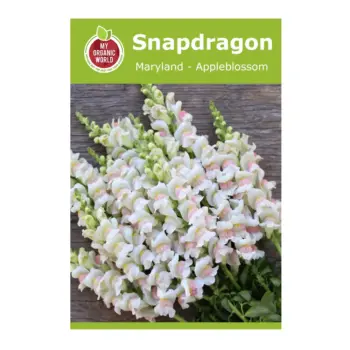
Snapdragon Maryland Appleblossom produces soft blush pink flowers with creamy tones on medium-tall plants about 100 cm. A refined variety ideal for cutting gardens and borders.
Packet Size: Contains 25 seeds.
Repacked in Kuwait
In stock
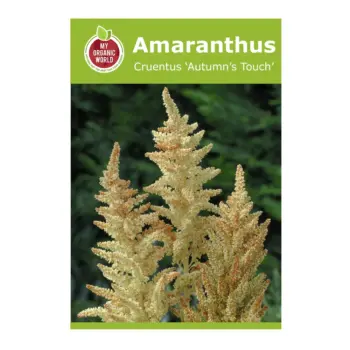
Amaranthus Cruentus Autumn’s Touch A tall 100 cm high, architectural annual producing large, feathery upright plumes that open in soft apple-green then deepen through pistachio, buff, and peach to rich bronze-copper tones as the season matures. Bold vertical accent for borders, outstanding as a fresh and dried cut flower, and edible from leaf to seed.
Repacked in Kuwait
Packet Size: Contains 250 seeds.
In stock
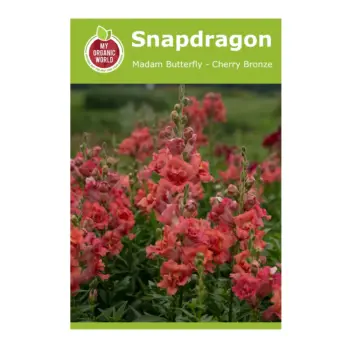
Madam Butterfly Cherry Bronze snapdragon produces elegant double azalea-like flowers in warm cherry bronze tones on tall plants about 60–75 cm. A premium variety for cutting gardens and ornamental borders.
Packet Size: Contains 25 seeds.
Repacked in Kuwait
In stock
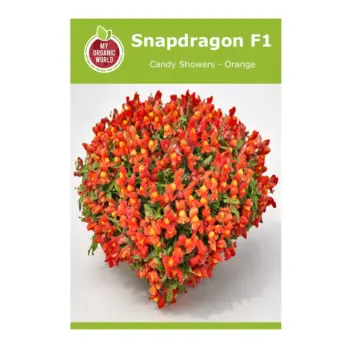
Candy Showers Orange snapdragon produces bright orange flowers on compact trailing plants about 15–25 cm tall. A colorful variety ideal for containers, hanging baskets, and garden borders.
Packet SizeL Contains 25 seeds.
Repacked in Kuwait
In stock
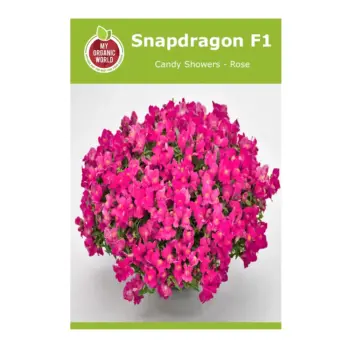
Candy Showers Rose snapdragon produces rose pink flowers on compact trailing plants about 15–25 cm tall. A colorful variety ideal for containers, hanging baskets, and garden borders.
Packet Size: Contains 25 seeds.
Repacked in Kuwait
In stock
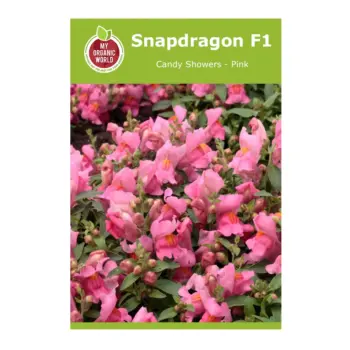
Candy Showers Pink snapdragon produces soft pink flowers on compact trailing plants about 15–25 cm tall. A colorful variety ideal for containers, hanging baskets, and garden borders.
Packet Size: Contains 25 seeds.
Repacked in Kuwait
In stock
Reviews
There are no reviews yet.