 English
 العربية
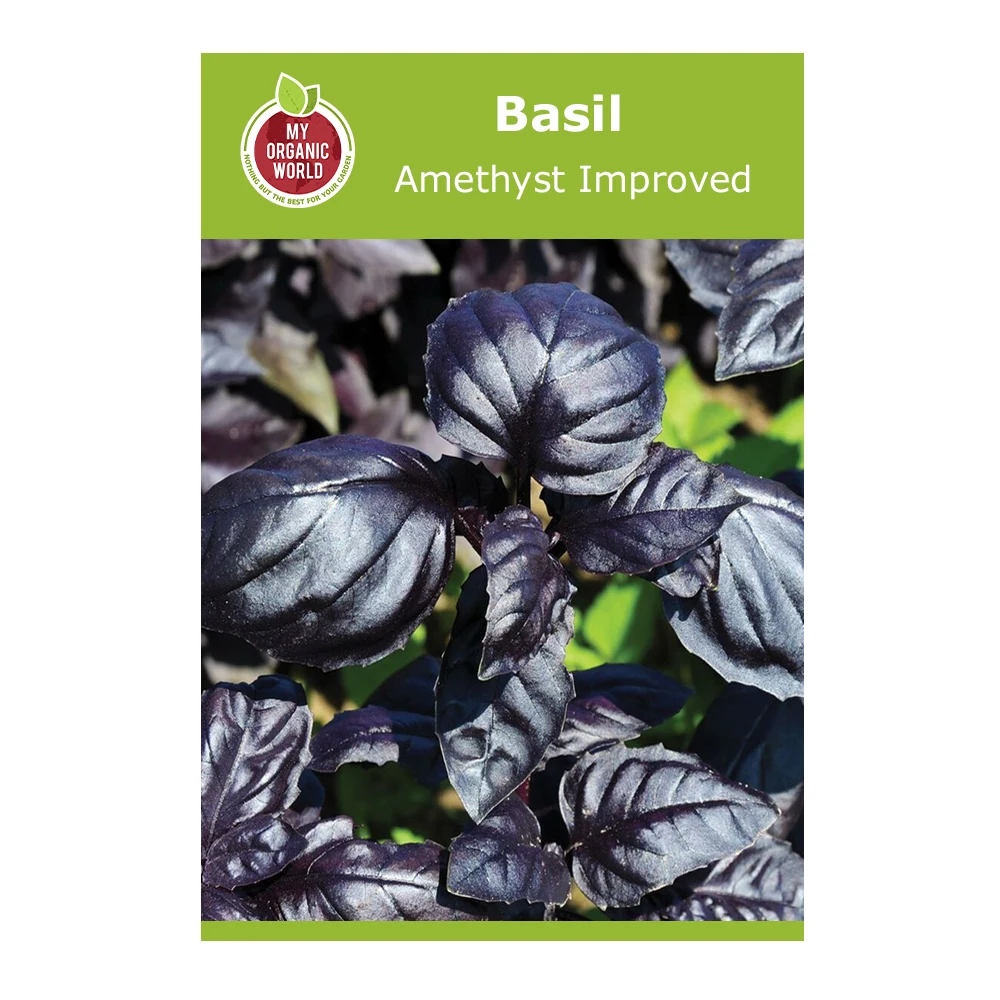
Basil Amethyst Improved
1,500 KWD
Amethyst Improved Basil is a Genovese-type culinary basil distinguished by dramatically dark purple, near-black broad leaves and exceptional slow-bolting performance compared to standard purple basil varieties. Delivers the intense, classic sweet basil flavor with subtle notes of mint and clove, in a hardy, long-producing plant equally at home in the kitchen and the ornamental garden.
Repacked in Kuwait
Packet Size: Contains 100 seeds.
Out of stock
Basil Amethyst Improved Seeds
Amethyst Improved Purple Basil is a stunning Genovese-type variety that offers gardeners and chefs alike a unique twist on traditional basil. This annual herb boasts leaves so dark purple they are almost black, making it a true standout in both the garden and the kitchen. Developed as an improvement on classic purple basils, Amethyst brings unparalleled color and flavor to culinary creations.
The only purple Genovese-type basil available. Large 2–3 inch wide, turned-down leaves give this stunning basil its near-black appearance. Purple flowers and red leaves make an attractive garnish.
The key distinction of Amethyst Improved over other purple basil varieties lies in its bolting behavior. While many purple basil strains are quick to bolt, Amethyst Improved is more in line with other green Genovese-types.
Plants produce broad, dark purple foliage that is slightly spicier than green types, but the plants are also hardier and tend to hold longer in the garden.
The flavor contains familiar hints of mint and clove — full and robust. With its dark leaves and small purple florets, it is as beautiful as a garnish as it is in bouquets and companion-planted in the garden.
Amethyst is the only purple basil with the flavor of traditional Italian basil. Glossy thick leaves make a stunning addition to salads and hors d’oeuvres.
Variety Details
- Botanical name: Ocimum basilicum Amethyst Improved
- Type: Genovese-type culinary basil — open pollinated, non-GMO
- Family: Lamiaceae
- Common names: Purple Basil, Amethyst Basil
- Height: 40–50 cm (16–20 inches)
- Leaf size: Large, 5–7.5 cm wide, broad, turned-down
- Leaf color: Deep purple to near-black with occasional red tones
- Flower color: Purple, with red leaf bracts — edible
- Days to maturity: 60–70 days from sowing
- Growth habit: Upright, bushy, well-branched
Key Features
- The only Genovese-type purple basil — near-black foliage unmatched in color depth among purple basils.
- Superior slow-bolting performance compared to standard purple basil varieties — stays productive far longer in the garden.
- Large, broad leaves carry the classic sweet basil flavor enhanced by subtle notes of mint and clove — suitable for any recipe calling for traditional basil.
- Edible flowers ideal for garnishing salads, soups, pasta, drinks, and desserts with intense basil flavor.
- Dual ornamental and culinary value.
- Suitable for raised beds, containers, and indoor herb growing.
- More cold-hardy than standard Genovese-type green basils.
- Open-pollinated — seeds can be saved year to year.
Plant Information
- Sun: Full sun — minimum 6–8 hours daily. Insufficient light causes pale, washed-out leaf color and poor flavor development.
- Soil: Moderately rich, moist, well-draining soil. Basil is not drought tolerant and can be damaged by heat stress. Regular moisture throughout the growing season is essential.
- Watering: Consistent moisture is critical — never allow to fully dry out. Water the soil, not the leaves, to avoid mildew and leaf burn. In Kuwait’s dry conditions, water at the base daily during warm periods.
- Feeding: Apply a balanced liquid organic fertilizer every 2–3 weeks to maintain vigorous leaf production. Avoid excess nitrogen which promotes leafy growth but reduces flavor intensity.
- Pinching: Pinch flower buds as they appear to keep tender leaves coming and extend the harvest season. Pinch tops when plants reach 15 cm to encourage bushier growth.
- Harvesting: Begin light harvesting after plants become established. Best done in the early morning when temperature is cooler and leaves are less likely to wilt. A full harvest should be completed just before plants start to flower. Cut the entire plant 10–15 cm above the ground to promote a second growth.
- Pest and disease: Basil is sensitive to fungal issues in humid conditions — ensure good air circulation and water at the base only. Watch for aphids and whitefly; treat with diluted Neem oil spray applied in the early morning.
- Cold sensitivity: Basil is highly sensitive to frost — protect from any cold exposure below 10°C.
Seed Germination
- Days to germination: 5–10 days at 18–21°C. Sow seeds 6 mm deep.
- Keep at 21°C for best germination. Maintain even moisture — do not allow the seed-starting mix to dry out between waterings.
- Place in a warm, bright position.
- Once seedlings develop 3–4 sets of true leaves, transplant to final positions in the garden or containers.
- Do not transplant until nighttime temperatures are reliably above 15°C.
- Germination rate: 80% or better under correct conditions
- Days to germination: 5–10 days
Growing Tips
- In Kuwait, Amethyst Improved is best grown as a cool-season herb from October through March.
- Unlike many herbs that thrive in Kuwait’s warmest months, basil prefers temperatures of 18–30°C and will bolt rapidly and decline when heat exceeds 35°C.
- Start seeds indoors in September in a shaded, ventilated space and transplant in October once outdoor temperatures moderate.
- In raised beds, use a rich, moisture-retentive mix with compost — unlike other herbs that prefer lean soils, basil rewards fertile, well-watered conditions.
- Space plants 15–20 cm apart for good airflow. Pinch flower buds weekly to extend the productive leaf harvest by weeks.
- The deep purple color is most intense in full sun — any shade will cause the leaves to revert toward green.
- For the fullest flavor, harvest in the morning before heat builds, and use leaves fresh as cooking diminishes the purple color significantly.
Gulf Planting Season
- Indoor sowing: September to October
- Transplanting outdoors: October to November
- Active growing and harvest season: October to April
- Not recommended for outdoor growing: May to August (extreme heat causes rapid bolting and decline)
- Best treated as a cool-season annual herb in Kuwait.
- Unlike temperate regions where basil is a summer crop, in Kuwait it performs best through the October-to-April growing window.
- Keep well-watered throughout and protect from any cold spells below 10°C in January–February.
Only logged in customers who have purchased this product may leave a review.
Related Products
Basil Kitchen Herbs Windowbox Mini seeds: Compact, richly aromatic Italian basil with tiny leaves. Ideal for windowsills and containers.
Approx. 600 seeds.
In stock
Basil Mammolo seeds: Superb for containers, high leaf ratio, classic Italian flavor (no mint). Compact & bushy.
In stock
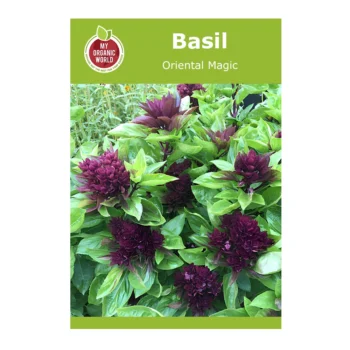
Basil Oriental Magic seeds: Superlative aroma & flavor! Maroon bracts & stems, green leaves. Great in salads, valuable cuts. Grows to 30″.
Packet 10 seeds.
Repacked in Kuwait
In stock
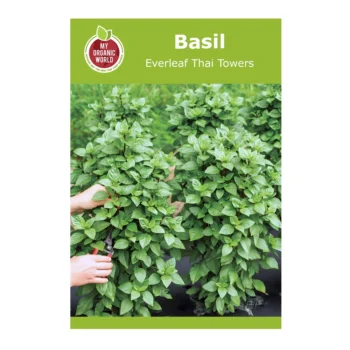
Grow abundant, flavorful Thai basil with Basil Everleaf Thai Towers seeds! This exceptional variety is slow to bolt, highly productive with large leaves, and boasts a strong Thai/anise aroma.
Upright plants with purple stems reach 20-24″. Perfect for both garden and containers.
Packet: 25 seeds.
Repacked in Kuwait
In stock
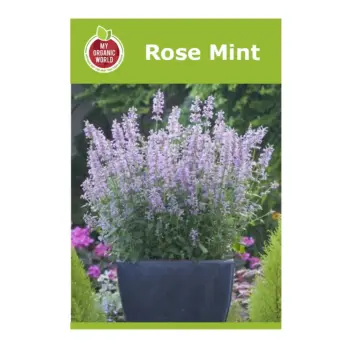
Rose Mint seeds produce aromatic lavender-rose flower spikes on compact plants about 45–60 cm tall. A fragrant herb suitable for pollinator gardens, herb beds, borders, and containers.
Repacked in Kuwait
Packet Size: Contains 50 seeds.
In stock
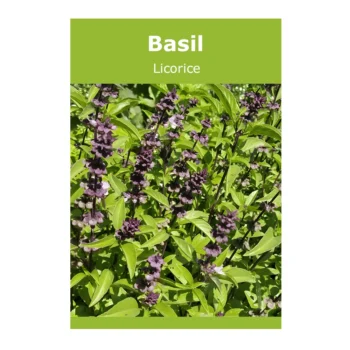
Basil Licorice seeds: Mild licorice flavor, great with fish & salads, even candy! Attractive purple flower spikes add garden beauty.
In stock
Reviews
There are no reviews yet.