 English
 العربية
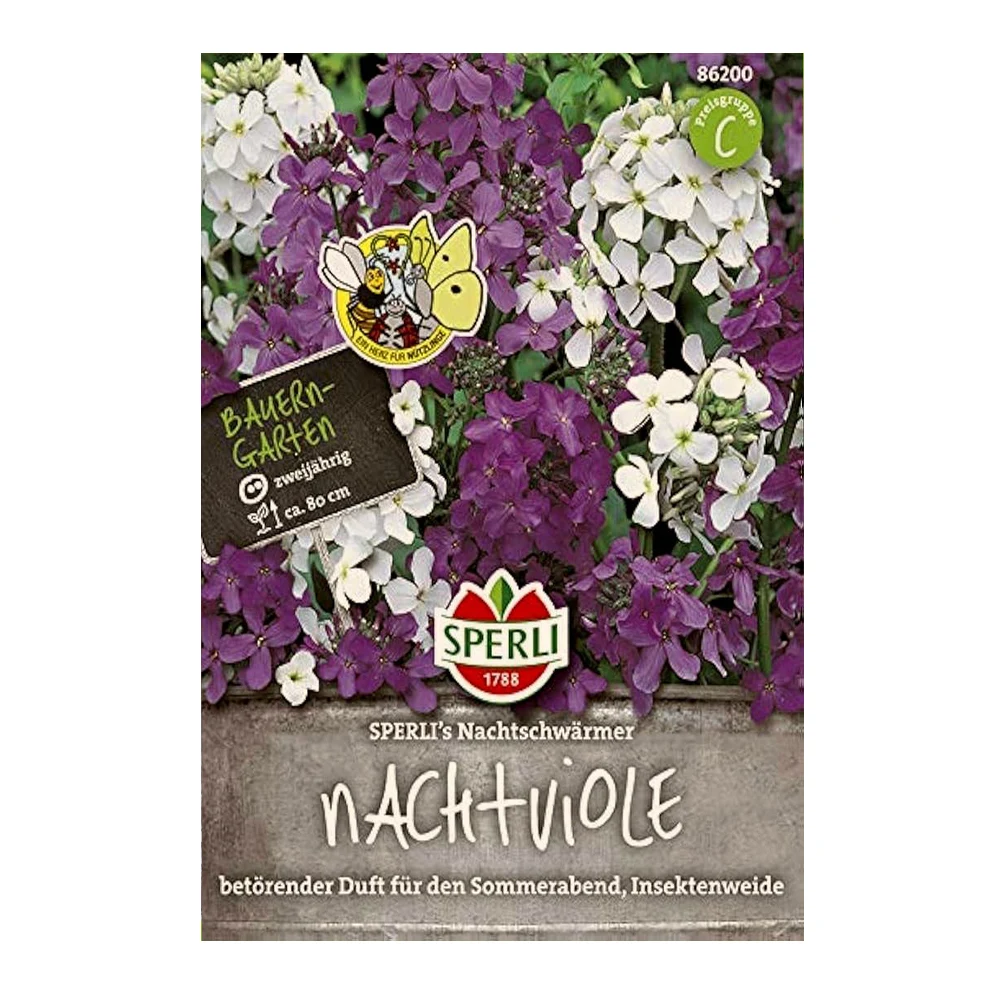
Sweet Rocket Hesperis matronalis
1,950 KWD
Sweet Rocket Hesperis matronalis is one of the most enduring cottage garden classics — a tall, branching biennial producing loose clusters of sweetly fragrant four-petaled flowers in purple, mauve, pink, and white on elegant stems reaching 60 to 90 cm. Its most remarkable quality is the fragrance: little or no scent during the day, then at dusk the flowers release an intense, heady perfume reminiscent of violets and cloves that fills the evening garden and attracts night-flying moths. Listed on the RHS (Royal Horticultural Society) Plants for Pollinators list and a specific food plant for the Orange Tip butterfly. Fully edible. An outstanding cut flower with a 7-to-10-day vase life. In Kuwait, grown as a cool-season biennial or annual for a spring flowering display.
In stock
Sweet Rocket Hesperis matronalis Seeds
(Dame’s Rocket / Dame’s Violet — Mixed Colors)
Hesperis matronalis — Sweet Rocket, Dame’s Rocket, or Mother of the Evening — is a cottage garden plant with ancient credentials. It has been cultivated in gardens since the Roman Empire and has been a beloved ornamental biennial throughout European gardens for centuries. The genus name Hesperis was given because the fragrance of the flowers becomes most conspicuous towards evening — Hespera being the Greek word for evening.
The species name matronalis refers to the Roman Festival of the Matrons, as the plant begins blooming around the time of that festival. One of the most frequently used common names for this species is “sweet rocket,” though it also carries a remarkable number of other names: dame’s violet, damask violet, mother of the evening, vesper flower, night-scented, summer lilac, and more.
Hesperis matronalis is a cottage garden classic. It produces tall, branching stems topped with loose clusters of four-petaled flowers in a rich, vibrant range from violet-purple through mauve and pink to white. While beautiful during the day, this plant truly comes alive at dusk. As the sun sets, it releases a powerful, sweet fragrance reminiscent of violets and cloves, designed to attract night-flying moths.
It thrives in those semi-shaded spots under trees or along fences, filling them with color and perfume just when you want to sit out and relax.The flowers are very aromatic with a clove-like fragrance, especially apparent in the evening. They usually have very little scent during the day and thus obtained a reputation in folklore for deceit. The plant is a good bee, butterfly, and moth plant, and is a specific food plant for the Orange Tip butterfly.
Often mistaken for phlox, sweet rocket graces evening gardens with its full blooms releasing a delightful fragrance reminiscent of violets and cloves. This captivating scent is also an irresistible lure for night pollinators, mainly moths. A quick note on identification: Sweet Rocket is frequently confused with garden phlox, as both produce clustered flowers in similar colors on tall stems.
The reliable way to tell them apart is petal count — Sweet Rocket has four petals per flower (being a member of the Brassicaceae family, like mustard, cabbage, and radish) while phlox has five. Sweet Rocket also has alternate, toothed leaves while phlox has smooth opposite leaves.
In Kuwait’s growing context, Hesperis matronalis performs as a cool-season biennial or annual sown in late summer to flower in winter and spring. The long cool months of Kuwait’s October-to-April season provide the extended cool period that Sweet Rocket needs to establish strong basal foliage before sending up its flowering stems.
The evening fragrance that defines this plant — barely perceptible by day, intoxicating by dusk — is of particular value in Kuwait’s mild winter evenings when outdoor sitting and entertaining make a fragrant garden especially rewarding.
Variety Details
- Hesperis matronalis was given its modern scientific name by Carl Linnaeus in Species Plantarum in 1753.
- The genus name Hesperis means “of the evening,” possibly referring to the strong fragrance of the flowers late in the day.
- The species name matronalis means “of older married women,” a reference to the Roman Festival of the Matrons.
- Hesperis matronalis grows 100 cm or taller with multiple branching stems.
- Mixed color varieties produce plants in purple, mauve, pink, and white, often with variation visible across seedlings from the same packet.
- The plant is noted by the RHS as a caterpillar food plant with nectar- and pollen-rich flowers and is listed on the RHS Plants for Pollinators list.
Key Features
- Intense evening fragrance — violet and clove-scented, strongest after dark.
- Tall, elegant branching stems 60 to 90 cm.
- Mixed colors: purple, mauve, pink, and white.
- RHS (Royal Horticultural Society) Plants for Pollinators — specific food plant for the Orange Tip butterfly.
- Outstanding cut flower — 7-to-10-day vase life.
- Fully edible flowers and young leaves (spicy mustard family flavor).
- Hardy and easy to grow — self-seeds freely once established.
- Tolerates partial shade and poor soils.
- Deer resistant.
- Ideal for cottage gardens, wildlife gardens, evening gardens, and naturalized areas.
Plant Information
- Family: Brassicaceae.
- Botanical name: Hesperis matronalis.
- Common names: Sweet Rocket, Dame’s Rocket, Dame’s Violet, Mother of the Evening, Vesper Flower, Night-Scented, Summer Lilac.
- Type: Biennial or short-lived perennial grown as cool-season biennial or annual.
- Height: 60 to 90 cm.
- Spread: 45 to 60 cm.
- Flower: Four-petaled, in loose terminal clusters, purple to mauve to pink and white; intensely fragrant in the evening.
- Fragrance: Violet and clove, minimal during the day, very strong at dusk and through the night.
- Foliage: Alternate, lance-shaped to oval, toothed, medium green.
- Exposure: Full sun to partial shade.
- Water: Moderate — prefers moist, well-drained conditions.
- Soil: Adaptable — tolerates poor, sandy, and clay soils; pH 6.1 to 7.5.
- Self-seeding: Freely, especially in cool climates.
- Edible: Yes — flowers (spicy) and young leaves.
Seed Germination
- Sow indoors 3 mm deep in moist, well-drained seed compost in 5 cm pots.
- Ideal germination temperature: 15 to 18 degrees Celsius.
- Germination in 21 to 28 days.
- Seed depth for direct sowing is 1 to 2 mm.
- Germination time is 10 to 30 days.
- For Gulf home gardeners:
- sow seeds in small pots or cell trays using a moist, well-drained seed-starting mix.
- Cover seeds with approximately 3 mm of fine compost or vermiculite.
- Place in a cool location at 15 to 20 degrees Celsius.
- Keep consistently moist but never waterlogged.
- Do not use high heat for germination — temperatures above 24 degrees Celsius will inhibit germination.
- Germination typically occurs in 14 to 28 days.
- Once seedlings develop several true leaves, transplant to individual pots and grow on in a cool, bright location before planting to final position.
- Alternatively, sow directly in prepared garden beds in October and November at 3 mm depth.
Growing Tips
- Sweet rocket is a large plant so give plants plenty of room — at least 30 cm apart.
- Harvest when the first flowers on a stem are open.
- Wrap in paper to keep the stems straight.
- Expect a vase life of 7 to 10 days.
- Sweet rocket is best grown as a biennial, which means they flower in the second year of growing.
- You get flowers in that awkward gap in June when nothing else seems to be in flower, so they are extremely useful.
- Bramble and Beyond
- Deadhead spent blooms to prolong flowering but allow some flowers to develop seeds so plants can self-seed around the garden.
- Space plants 30 to 45 cm apart.
- Suitable for light, medium, and heavy soils; prefers well-drained soil but can grow in nutritionally poor soil.
- Can grow in semi-shade or no shade.
- In the Gulf garden, water consistently during the cool growing season — Sweet Rocket prefers moist conditions but tolerates periods of drought once established.
- Apply a balanced fertilizer once in autumn and once when flower buds appear in late winter.
- Allow some seed heads to mature at the end of the season for natural self-seeding and a returning colony in subsequent seasons.
Gulf Planting Season
- Sow indoors in cool protected nursery conditions: August through October.
- Transplant to garden beds, borders, or large containers: October through November.
- Expected flowering: January through April, depending on sowing time and conditions.
- Sweet Rocket can also be treated as a fast annual by sowing in August to September and providing consistent cool growing conditions — expect flowering from December onward.
- Plants will decline as Kuwait’s temperatures rise above 25 degrees Celsius in late spring.
- Allow some seed heads to mature before the plant declines in April to May for potential self-sown seedlings in the following autumn season.
Garden and Floral Uses
- It looks good when allowed to drift naturally through an informal sunny or partially shaded border, especially in a cottage garden or wildlife garden scheme.
- As a cut flower, Sweet Rocket delivers something distinctive that few other cool-season annuals can offer — airy, romantic clusters of lightly fragrant blossoms on long, branching stems that bring a naturalistic, wildflower quality to mixed bouquets.
- A classic cottage garden favorite offering elegant, fragrant blooms in soft lavender-mauve, violet, and white tones.
- This old-fashioned biennial is loved for its tall, airy stems covered in billowy, perfumed flowers that fill the garden — and any bouquet — with a sweet, candy-like scent.
- It is a magnet for pollinators and makes a beautiful filler in both fresh and naturalistic arrangements.
- In the Gulf evening garden, Sweet Rocket is uniquely valuable.
- Plant it near terraces, seating areas, garden walls, and entryways where the evening fragrance — absent by day, then suddenly and intensely present as the sun goes down — creates an extraordinary sensory experience during Kuwait’s mild winter evenings.
- The edible flowers carry a mild, spicy mustard-family flavor and can be scattered over salads, used as an unusual garnish, or floated in drinks for a romantic culinary touch.
Only logged in customers who have purchased this product may leave a review.
Related Products
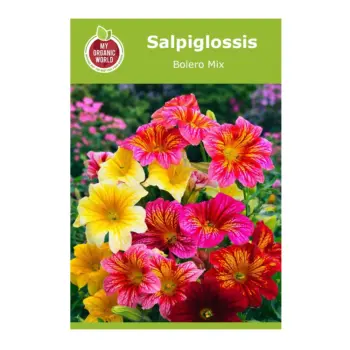
Salpiglossis Bolero Mix seeds: velvety, veined blooms in a rich color mix, excellent cut flower, great for cottage/vegetable gardens. Start indoors (darkness needed for germination).
Repacked in Kuwait
In stock
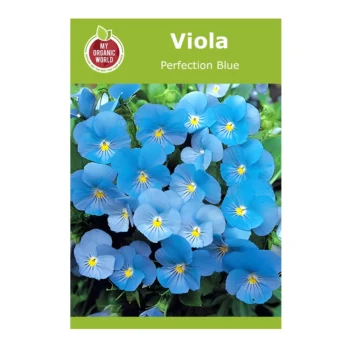
Low-growing, compact perennial with large, showy blue blooms.
Fragrant flowers attract butterflies and bees.
Edible blooms add a colorful touch to salads and teas.
Versatile for window boxes, pots, beds, and cut flowers.
Repacked in Kuwait
Packet 25 seeds
In stock
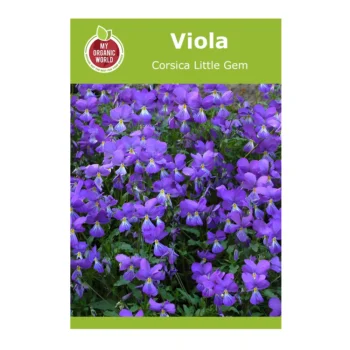
Viola Corsica Little Gem seeds. Perennial pansy with fragrant blue-purple flowers.
Great for rock gardens & containers, spreads to 12″.
Long bloom season, profuse fall/winter flowers.
Sow indoors now. Transplant outdoors in fall for winter blooms.
Repacked in Kuwait
Packet 25 seeds
In stock
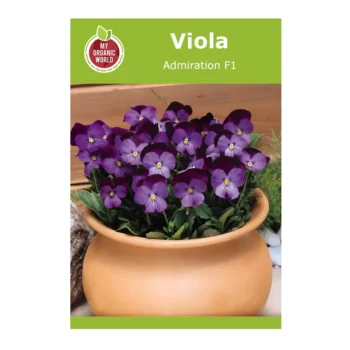
Viola Cornuta Admiration F1 seeds produce large, deep navy blue flowers with yellow eyes.
Great for cut flowers with long vase life. Attracts butterflies, bees, and birds.
Low maintenance and easy to grow in full sun to partial shade.
Ideal for beds, baskets, containers, and ground cover.
Repacked in Kuwait
Packet 50 seeds
In stock
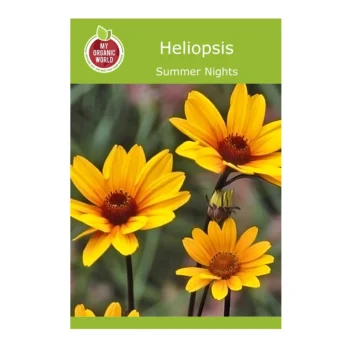
Heliopsis Summer Nights seeds. Bright yellow flowers with reddish centers on burgundy stems.
Blooms mid-summer to fall. Great cut flower.
Drought tolerant, full sun.
DO NOT COVER SEED.
Repacked in Kuwait
Packet 10 seeds
Only 2 left in stock
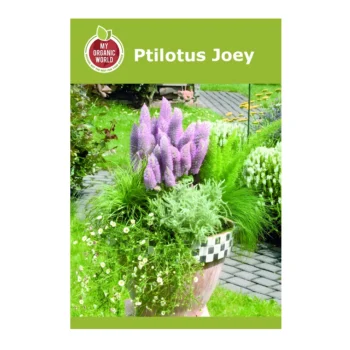
Ptilotus Joey seeds: silver-green foliage, neon pink feathery spikes (2-3″), heat/drought tolerant, low maintenance.
Repacked in Kuwait
In stock
Reviews
There are no reviews yet.