 English
 العربية
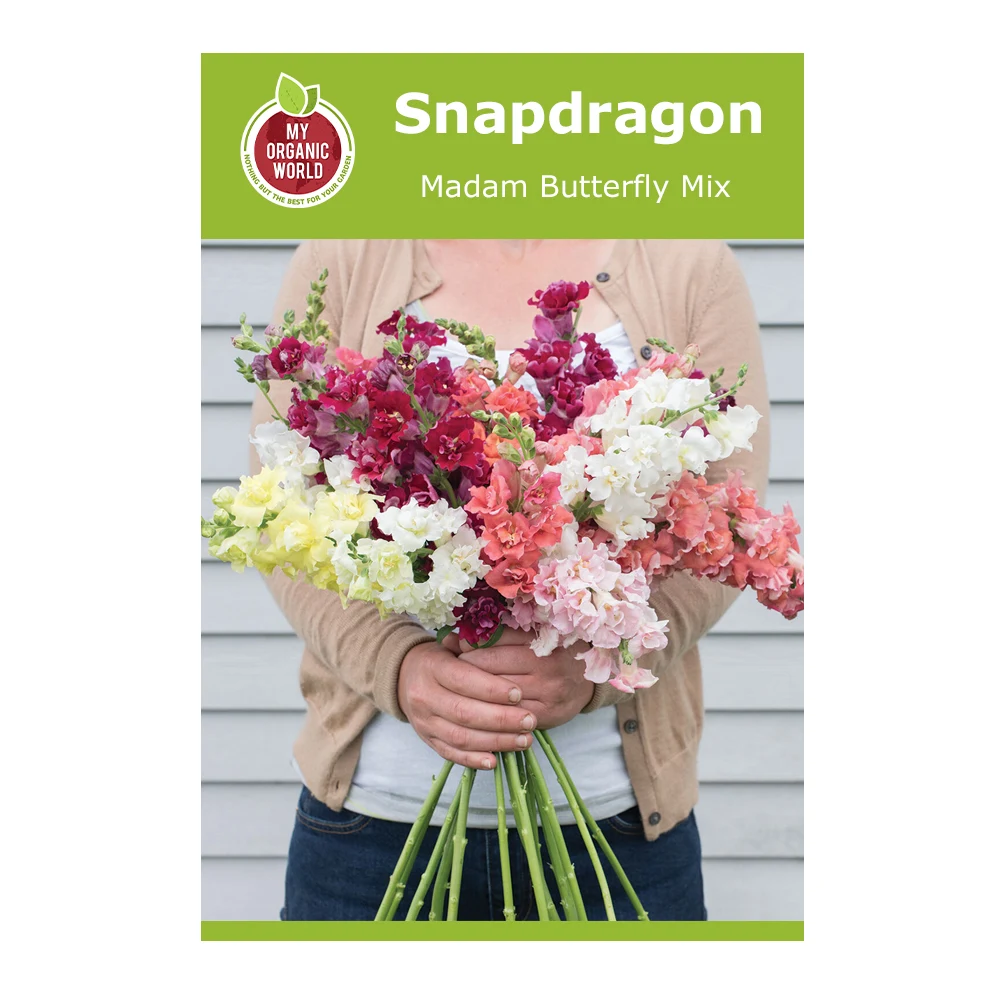
Snapdragon Madame Butterfly Mix
1,750 KWD
Madame Butterfly (Antirrhinum majus) Mix is one of the most celebrated and visually extraordinary snapdragon varieties available — an All-America Selections Award winner producing the unique azalea-type double flower form where every individual floret on the spike is fully doubled, ruffled, and open-faced rather than the classic closed “snap” tube. The result is a flower spike of exceptional fullness and Victorian elegance in a rich mix of ivory, cherry, bronze, pink, red, rose, yellow, and bronze-white bicolor blooms. Sweetly fragrant. Outstanding cut flower with an exceptionally long vase life — the double petals prevent easy insect pollination, keeping blooms fresh longer. Group 3 to 4 cool-season annual reaching 60 to 90 cm. In Kuwait, sown in August through September for a full cool-season display from December through April.
Packet Size: Contains 25 seeds.
Repacked in Kuwait
Only 2 left in stock
Snapdragon Madame Butterfly Mix Seeds
(Azalea-Type Double Snapdragon (Antirrhinum majus)— All-America Selections Winner)
Often referred to as azalea snapdragons, these double-petaled beauties are a rare and special treat. This stunning, ultra-ruffled mix includes ivory, cherry, pink, yellow, bronze, and peach flowers. Because of their fullness, they are difficult for insects to pollinate, so their blooms last longer in the vase than other single-flowered types.
Also known as an azalea type, Madame Butterfly’s double petals create full, fluffy blooms with a Victorian look. This mix consists of bronze/white, cherry/bronze, ivory, pink, red, rose, yellow, and bronze blooms. For outdoor or greenhouse production. Bloom time comparable to group 3 to 4 main season or all-season varieties. AAS Winner. Edible flowers — the flowers are a colorful garnish for use in salads, desserts, and drinks. The flavor is floral and slightly bitter, so use sparingly.
A ruffled romance in full bloom, Madame Butterfly Mix Snapdragon brings together a painterly collection of azalea-type double snapdragons in softly glowing tones. Expect fluttering, open-faced flowers in shades of light pink, ivory, bronze, red, cherry bronze, yellow, and bronze with white — each one full, textured, and elegantly vintage. With tall, strong stems and an old-world silhouette, this mix evokes the charm of a Victorian cutting garden, where each bloom tells its own story in ruffles and light.
Madame Butterfly Mix snapdragons produce a wealth of large, entirely double, azalea-shaped blooms in shades of red, pink, purple, lavender, orange, yellow, and white. They are superb cut flowers. Hummingbirds love snapdragons, and the butterfly types are the easiest flowers on which to feed. Snapdragons are cold tolerant to about minus 8 degrees Celsius, are cool weather plants often grown with pansies. Bloom cycle is complete when temperatures consistently top 27 degrees Celsius. Snapdragon plants are deer and rabbit resistant.
The azalea-type flower form of Madame Butterfly represents a significant departure from the classic snapdragon that most gardeners know. In standard Antirrhinum majus, the flower tube remains closed until a pollinator with sufficient weight lands and forces the mouth open — hence the name “snapdragon.” In azalea types like Madame Butterfly, this mechanism is replaced entirely by a fully open, multi-petaled rosette of ruffled petals that completely fills the flower head and creates a bloom of entirely different character — closer to a ruffled azalea, peony, or double ranunculus than a traditional snapdragon.
In Kuwait’s cool growing season, Madame Butterfly Mix is one of the most rewarding and visually spectacular cut flowers available. Sown in August to September and transplanted in October, the long cool season from November through April provides the extended mild conditions that snapdragons require to perform at their best. Snapdragons are sweetly scented and have a sweet scent that adds fragrance to bouquets and garden spaces.
Variety Details
- Plant height: 24 to 36 inches (60 to 90 cm).
- Light requirements: full sun to part shade.
- Soil preference: average fertility and moist soil, pH 6 to 7.
- Germination: 7 to 14 days at 21 to 24 degrees Celsius, light required for germination.
- Days to maturity: 110 to 120 days.
- Madame Butterfly Mix is classified as a Group 3 to 4 snapdragon — the main season to all-season classification, performing reliably from autumn through spring.
- The mix includes bronze/white, cherry/bronze, ivory, pink, red, rose, yellow, and bronze bicolor forms.
Key Features
- All-America Selections (AAS) Award winner.
- Unique azalea-type double flower form — every floret fully doubled and ruffled open-faced.
- Exceptional Victorian elegance — unlike any standard snapdragon. Rich mix: ivory, cherry, bronze, pink, red, rose, yellow, and bronze/white bicolors. Sweetly fragrant.
- Outstanding cut flower — double petals extend vase life by resisting insect pollination.
- Tall strong stems 60 to 90 cm. Group 3 to 4 — main season to all-season performer.
- Seeds require light to germinate — surface sow.
- Pinching recommended for bushier plants with more stems. Edible flowers — floral flavor, use sparingly.
- Attracts hummingbirds and butterflies. Deer and rabbit resistant.
Plant Information
- Family: Plantaginaceae.
- Botanical name: Antirrhinum majus.
- Common name: Snapdragon, Dragon Flower.
- Cultivar: Madame Butterfly Mix.
- Group: 3 to 4.
- Type: Cool-season hardy annual.
- Height: 60 to 90 cm.
- Spread: 25 to 35 cm.
- Flower: Fully double azalea-type open-faced ruffled florets on tall spikes; ivory, cherry, bronze, pink, red, rose, yellow, and bronze/white bicolor; sweetly fragrant.
- Exposure: Full sun to partial shade.
- Water: Moderate — consistent moisture, well-drained; avoid overhead watering.
- Soil: Moderately fertile, moist, well-drained.
- pH preference: 6.0 to 7.0.
- Edible: Yes — flowers, use sparingly (floral, slightly bitter).
- Toxicity: Generally non-toxic to humans; avoid in quantity; mildly toxic to dogs and cats.
Seed Germination
- Critical note: Snapdragon seeds require light to germinate — surface sow and do not cover with soil.
- Seeds are very small — bottom watering or gentle misting is strongly recommended to avoid displacing seeds.
- Transplant (recommended) — surface-sow into 128-cell flats or preferred seedling container 8 to 10 weeks before planting out.
- Light is required for germination; cover just enough to hold seeds in place.
- A fine layer of vermiculite covering the seeds can maintain moisture levels and prevent algae growth.
- Bottom water or mist lightly to avoid covering the seed with displaced soil.
- Transplant to cell packs or larger containers when the first true leaves appear, approximately 3 to 4 weeks after sowing.
- For best results, freeze seeds for 48 hours prior to sowing to improve germination rates.
- For Gulf home gardeners:
- place seed packet in the freezer for 48 hours before sowing.
- Then surface-sow seeds onto a moist, fine-textured, well-drained seed-starting mix.
- Press seeds very lightly into the surface without covering — or cover with the thinnest possible layer of fine vermiculite just enough to anchor the seeds.
- Place in a warm, very bright location at 18 to 21 degrees Celsius. Bottom water or mist with a fine spray to keep consistently moist. Germination occurs within 7 to 14 days.
- Once seedlings develop their first true leaves (approximately 3 to 4 weeks), transplant to individual 7 cm pots and grow on in a cool, bright location.
Growing Tips
- If desired, for a bushier plant that produces more flower-producing side branches, pinch young plants back by half their height
- when plants have formed 4 to 6 leaves or are approximately 8 to 10 cm tall.
- Pinching will delay the crop time by a few weeks.
- The Space transplants 23 cm apart in the garden.
- Grows 60 to 90 cm tall.
- Make the first cut of the central stem at almost ground level, just above the lowest two to three side shoots.
- Future cuts should be made at stem base.
- Harvest when the first bottom flower opens.
- Space plants 20 to 25 cm apart for cutting garden rows, or 25 to 35 cm for border planting.
- Avoid overhead watering — wet foliage in cool, humid conditions promotes Botrytis (grey mold) and rust, the two most common snapdragon diseases.
- Water at the base. Fertilize every 2 to 3 weeks with a balanced fertilizer throughout the cool growing season.
- Deadhead or cut regularly to encourage new lateral flowering stems — the more you cut, the more the plant produces.
- For cut flowers, harvest when the bottom one third to half of florets on the spike have opened.
Gulf Planting Season
- Sow indoors in cool protected nursery conditions: August through October.
- Transplant to cutting garden rows, containers, or borders: October through November.
- Expected flowering: December through April, depending on sowing time and Group classification.
- Note: Snapdragons are cool-season plants. Bloom cycle ends when temperatures consistently exceed 27 degrees Celsius.
- In Kuwait this typically means plants will decline in May.
- The full October-to-April cool season provides excellent conditions for Madame Butterfly Mix to deliver its full 3 to 4 month flowering performance.
- Pinching at transplanting extends the productive season by creating more flowering stems per plant.
Garden and Floral Uses
- Madame Butterfly Snapdragon is a double-azalea type with extra full, ruffled flower spikes.
- Grow in a cutting garden or a flower bed, placing them in the middle to back for a striking exhibit that lasts until the end of the season.
- The stems are stunning in arrangements or displayed on their own as mixed color bunches.
- Harvest a handful for an instant bouquet of juicy delicious colors.
- The delicate sweetly scented ruffled florets are long-lasting in the vase.
- In the Gulf cutting garden, Madame Butterfly Mix is among the highest-value cool-season stems available — combining the extraordinary doubled ruffled flower form, the wide warm-to-cool color palette, the sweet fragrance, and the exceptionally long vase life into a single variety of Victorian grandeur.
- Use as a feature stem in mixed bouquets alongside Ranunculus, Lisianthus, Sweet William, and Anemone.
- Mass in single-color bunches for dramatic monochromatic arrangements.
- Use the bronze and cherry-bronze tones to create sophisticated warm-toned autumn-themed arrangements.
- In the ornamental border, plant in the mid-section where the tall spikes create vertical accents of ruffled texture that contrast beautifully with rounded or daisy-form companions.
Only logged in customers who have purchased this product may leave a review.
Related Products
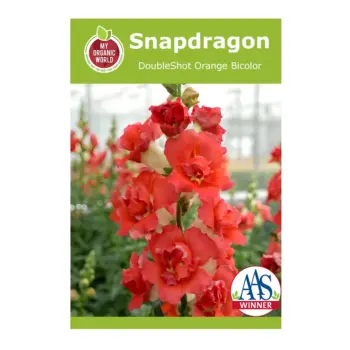
Snapdragon DoubleShot Orange Bicolor (AAS Winner 2023) features stunning orange and white double blooms on strong, heat-tolerant stems.
Blooms fall to spring, attracts pollinators, and makes great cut flowers. Easy to grow in sun.
Packet: 25 seeds.
Repacked in Kuwait
In stock
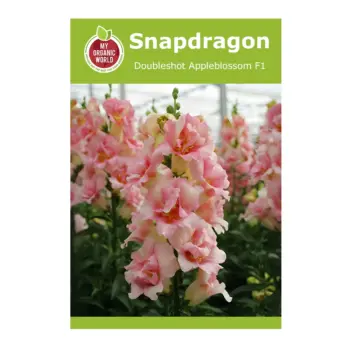
Snapdragon Doubleshot Appleblossom F1produces soft blush pink double flowers with creamy tones on compact plants about 40–60 cm tall. A unique variety ideal for containers, borders, and cool season displays.
Packet Size:Contains 25 seeds.
Repacked in Kuwait
In stock
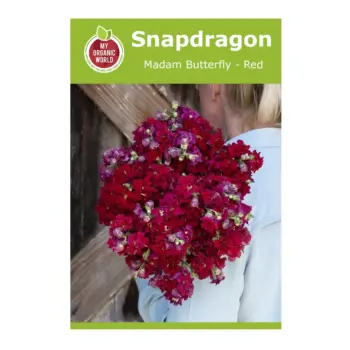
Snapdragon Madam Butterfly Red produces rich red double azalea-like flowers on tall plants about 60–75 cm. A striking variety ideal for cutting gardens and ornamental borders.
Packet Size: Contains 25 seeds.
Repacked in Kuwait
In stock
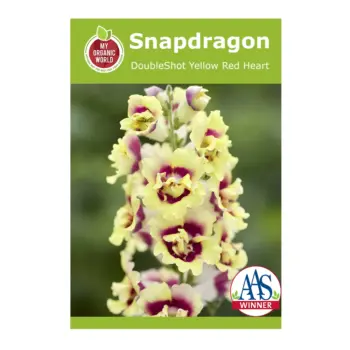
Snapdragon DoubleShot Yellow Red Heart (2025 AAS Winner) features striking yellow flowers with a red heart on tall (18-20″), branched plants. Blooms fall to spring, attracts pollinators, excellent cut flower.
Good frost and heat tolerance.
Packet 25 seeds.
Repacked in Kuwait
In stock
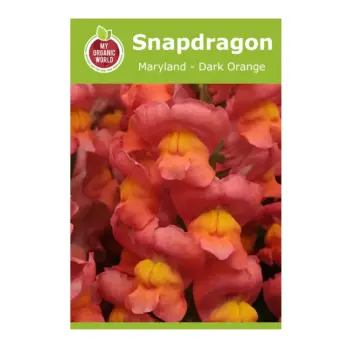
Snapdragon Maryland Dark Orange produces rich deep orange flower spikes on strong plants about 100 cm tall. A reliable variety for cutting gardens and bold border displays.
Packet Size: Contains 25 seeds.
Repacked in Kuwait
In stock
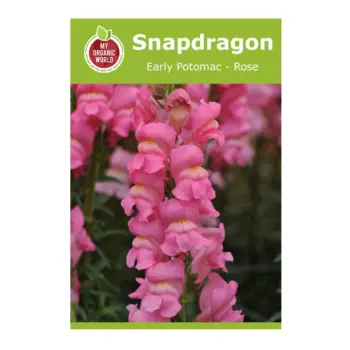
Early Potomac Rose snapdragon produces tall spikes of soft rose-pink flowers on strong stems about 100 cm tall. An excellent variety for cutting gardens, borders, and pollinator friendly plantings.
Packet Size: Contains 25 seeds.
Repacked in Kuwait
In stock
Reviews
There are no reviews yet.